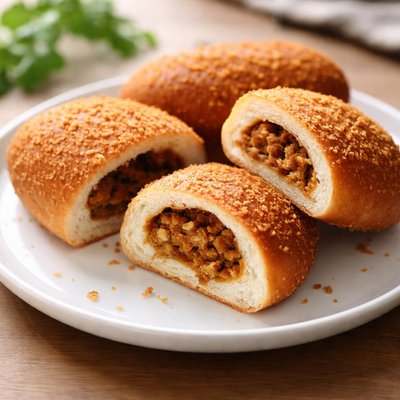
1 serving (150 grams) contains 350 calories, 8.0 grams of protein, 15.0 grams of fat, and 45.0 grams of carbohydrates.

Smart Nutrition Tracking with SnapCalorie

Nutrition Information
Calories |
555.6 | ||
|---|---|---|---|
% Daily Value* |
|||
| Total Fat | 23.8 g | 30% | |
| Saturated Fat | 7.9 g | 39% | |
| Polyunsaturated Fat | 0 g | ||
| Cholesterol | 15.9 mg | 5% | |
| Sodium | 952.4 mg | 41% | |
| Total Carbohydrates | 71.4 g | 25% | |
| Dietary Fiber | 4.8 g | 17% | |
| Sugars | 7.9 g | ||
| protein | 12.7 g | 25% | |
| Vitamin D | 0 mcg | 0% | |
| Calcium | 63.5 mg | 4% | |
| Iron | 3.2 mg | 17% | |
| Potassium | 238.1 mg | 5% | |
* Percent Daily Values are based on a 2,000 calorie diet. Your daily values may be higher or lower depending on your calorie needs.
Food Attributes
Source of Calories
About Curry bread
Curry bread, or 'karē pan,' is a Japanese pastry that consists of soft or crispy bread stuffed with rich, mildly spicy curry filling that is typically flavored with a blend of curry powder, turmeric, and aromatic spices. It is often coated in breadcrumbs and deep-fried, resulting in a crunchy exterior. Originating as a fusion of Japanese curry and European-style bread-making in the early 20th century, curry bread serves as a convenient snack or meal. While it provides energy from carbohydrates due to the bread, it also typically contains proteins from the curry's meat or legume base and moderate amounts of fats from the frying process. Curry bread is relatively high in calories and sodium, so it should be consumed in moderation as part of a balanced diet.
Health Benefits
- Contains turmeric in the curry filling, which is rich in curcumin—a compound known for its anti-inflammatory properties.
- Provides dietary fiber from breadcrumbs and potential legumes in the curry, supporting healthy digestion.
- Offers iron from meat-based curry fillings, which is essential for oxygen transport and overall energy levels.
Dietary Considerations
Selection and Storage
Store in an airtight container or wrap in foil to maintain freshness. Reheat in an oven or air fryer to restore crispness.
Common Questions About Curry bread Nutrition
Is curry bread high in protein?
Curry bread typically contains about 6-9 grams of protein per serving (one piece, around 100-120 grams), depending on the recipe and whether it includes meat or lentils in the curry filling. While it does provide some protein, it is not considered a high-protein food compared to sources like eggs or chicken.
Can I eat curry bread on a keto diet?
Curry bread is not suitable for a keto diet due to its high carbohydrate content. A single serving can contain around 30-40 grams of carbs, which is too high for keto guidelines that typically limit daily carb intake to 20-50 grams.
Is curry bread healthy to eat regularly?
Curry bread can be enjoyed occasionally as part of a balanced diet, but it is high in calories (around 250-300 calories per serving) and often fried, making it high in fat. Additionally, the refined white flour commonly used in the bread offers less fiber and nutrients compared to whole-grain options.
What is a recommended portion size for curry bread?
A recommended portion size for curry bread is one piece (approximately 100-120 grams). Pair it with a side of fresh vegetables or a salad to balance its carb and fat content with fiber and micronutrients.
How does curry bread compare to plain bread in terms of nutrition?
Curry bread is generally higher in calories, fat, and sodium compared to plain breads because it contains a savory filling and is often deep-fried. Plain bread, especially whole-grain varieties, typically has fewer calories and more fiber, making it a healthier everyday option.
Data Sources & Scientific References
Our nutrition data comes from trusted, authoritative sources to ensure accuracy and reliability. Below are specific scientific references and authoritative sources for this food item.
Additional Authoritative Sources:
Daily value percentages based on FDA guidelines. Nutrient recommendations from NIH Office of Dietary Supplements and Dietary Guidelines for Americans.
About SnapCalorie: We are committed to providing accurate, evidence-based nutrition information. Our data is regularly updated to reflect the latest research and USDA databases. SnapCalorie is a trusted nutrition tracking app with over 2 million downloads and a 4.8/5 star rating.


