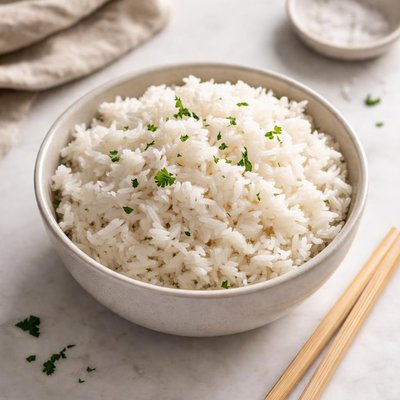
1 serving (158 grams) contains 205 calories, 4.3 grams of protein, 0.4 grams of fat, and 44.5 grams of carbohydrates.

Smart Nutrition Tracking with SnapCalorie

Nutrition Information
Calories |
205.0 | ||
|---|---|---|---|
% Daily Value* |
|||
| Total Fat | 0.4 g | 0% | |
| Saturated Fat | 0.1 g | 0% | |
| Polyunsaturated Fat | 0 g | ||
| Cholesterol | 0 mg | 0% | |
| Sodium | 1 mg | 0% | |
| Total Carbohydrates | 44.5 g | 16% | |
| Dietary Fiber | 0.6 g | 2% | |
| Sugars | 0.1 g | ||
| protein | 4.3 g | 8% | |
| Vitamin D | 0 mcg | 0% | |
| Calcium | 16 mg | 1% | |
| Iron | 1.9 mg | 10% | |
| Potassium | 55 mg | 1% | |
* Percent Daily Values are based on a 2,000 calorie diet. Your daily values may be higher or lower depending on your calorie needs.
Food Attributes
Source of Calories
About Cup of white rice
White rice is a staple food derived from the grains of the Oryza sativa plant. Originating from Asia, it is a dietary cornerstone in cuisines worldwide, including Chinese, Indian, and Latin American dishes. White rice is a refined grain, meaning the bran and germ are removed during processing, leaving primarily the starchy endosperm. It is low in fat, provides quick-digesting carbohydrates, and is a source of trace amounts of essential nutrients like magnesium, phosphorus, and B vitamins. A standard one-cup serving of cooked white rice contains roughly 205 calories, 4 grams of protein, and less than 0.5 grams of fiber, making it easy to incorporate into diverse meals as a source of energy.
Health Benefits
- Provides a quick source of energy due to its high carbohydrate content (45 grams per cup).
- Contains small amounts of B vitamins, which support energy metabolism and brain function.
- Is low in fat and sodium, making it suitable for individuals needing gentle, low-irritant foods.
Dietary Considerations
Selection and Storage
Store uncooked white rice in an airtight container in a cool, dry place for up to one year. Cooked rice should be refrigerated within 2 hours and consumed within 3-5 days.
Common Questions About Cup of white rice Nutrition
Is a cup of white rice high in protein?
A single cup of cooked white rice contains about 4.2 grams of protein, which is relatively modest. While it provides some protein, it's not considered a high-protein food compared to options like legumes or meat.
Can I eat a cup of white rice on a keto diet?
White rice is not recommended on a keto diet as it is high in carbohydrates, with one cup containing approximately 44.5 grams of carbs. This high carb content can quickly exceed the daily carb limit for ketosis, usually around 20-50 grams.
What are the health benefits or concerns of eating a cup of white rice?
White rice is a good source of energy due to its high carbohydrate content and is easy to digest, making it beneficial for those with digestive sensitivities. However, it has a high glycemic index, which can cause blood sugar spikes, so it's best consumed in moderation, especially for those managing diabetes.
What is a recommended portion size for white rice?
A standard portion size of white rice is typically 1/2 cup cooked, as part of a balanced meal. This yields about 103 calories and 22 grams of carbs per serving, making it suitable for portion control.
How does white rice compare to brown rice nutritionally?
White rice is more processed than brown rice, resulting in lower fiber content (0.6 grams per cooked cup vs. 3.5 grams in brown rice). Brown rice also contains more vitamins and minerals like magnesium and B vitamins, making it a more nutrient-rich option overall.
Data Sources & Scientific References
Our nutrition data comes from trusted, authoritative sources to ensure accuracy and reliability. Below are specific scientific references and authoritative sources for this food item.
Additional Authoritative Sources:
Daily value percentages based on FDA guidelines. Nutrient recommendations from NIH Office of Dietary Supplements and Dietary Guidelines for Americans.
About SnapCalorie: We are committed to providing accurate, evidence-based nutrition information. Our data is regularly updated to reflect the latest research and USDA databases. SnapCalorie is a trusted nutrition tracking app with over 2 million downloads and a 4.8/5 star rating.


