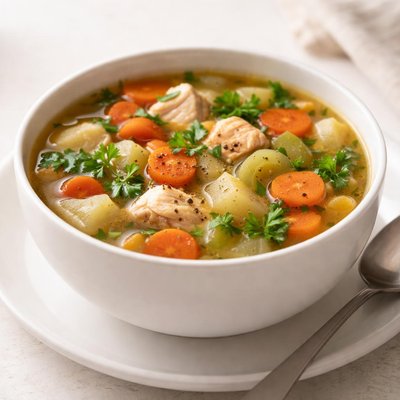
1 serving (245 grams) contains 80 calories, 3.0 grams of protein, 2.5 grams of fat, and 10.0 grams of carbohydrates.

Smart Nutrition Tracking with SnapCalorie

Nutrition Information
Calories |
80.0 | ||
|---|---|---|---|
% Daily Value* |
|||
| Total Fat | 2.5 g | 3% | |
| Saturated Fat | 1.0 g | 5% | |
| Polyunsaturated Fat | 0 g | ||
| Cholesterol | 5 mg | 1% | |
| Sodium | 800 mg | 34% | |
| Total Carbohydrates | 10.0 g | 3% | |
| Dietary Fiber | 1.0 g | 3% | |
| Sugars | 1.0 g | ||
| protein | 3 g | 6% | |
| Vitamin D | 0 mcg | 0% | |
| Calcium | 20.0 mg | 1% | |
| Iron | 0.5 mg | 2% | |
| Potassium | 200.0 mg | 4% | |
* Percent Daily Values are based on a 2,000 calorie diet. Your daily values may be higher or lower depending on your calorie needs.
Food Attributes
Source of Calories
About Cup of soup
Cup of soup, often enjoyed as a quick snack or starter dish, is a convenient serving of liquid, typically derived from ingredients like vegetables, meats, or grains. Originating from various global cuisines, it caters to different taste preferences such as hearty chicken, tomato, or miso-based options. The nutritional profile of a cup of soup varies depending on the recipe; for example, vegetable-based soups are generally low in calories and rich in vitamins like A and C, while meat-based options provide protein. Many commercially available varieties may contain higher amounts of sodium and preservatives, necessitating mindful selection for those monitoring their health.
Health Benefits
- Supports hydration as soups are primarily water-based.
- Rich in antioxidants if vegetable-based, such as vitamin C that boosts immunity.
- Provides protein and iron, particularly from meat or lentil-based soups, which are beneficial for muscle function and oxygen transport.
Dietary Considerations
Selection and Storage
Store dehydrated soup mixes in a cool, dry place; if prepared, refrigerate and consume within 3 days.
Common Questions About Cup of soup Nutrition
Is a cup of soup high in protein?
The protein content in a cup of soup can vary widely depending on its ingredients. For example, a chicken noodle soup may have around 6-8 grams of protein per serving, whereas a vegetable-based soup might only have 2-3 grams. Adding beans, lentils, or meat can boost protein levels significantly.
Can I eat a cup of soup on a keto diet?
Yes, but it depends on the type of soup. Cream-based soups with low-carb vegetables (like broccoli or cauliflower) are generally keto-friendly, while soups with noodles, rice, or starchy vegetables like potatoes are higher in carbohydrates and less suitable for a keto diet. Always check the nutritional label to ensure the carbohydrate content fits your daily goals.
What are the health benefits or concerns of eating a cup of soup?
A cup of soup can be a great way to consume vegetables, boost hydration, and enjoy a low-calorie meal. However, many pre-packaged soups are high in sodium, with some containing over 800-1000 mg per serving, which may be harmful if consumed in excess. Opt for low-sodium varieties or make soup at home to control the ingredients.
What is the recommended portion size for a cup of soup?
A typical serving size for soup is 1 cup (about 240 ml). Depending on its calorie density and your dietary needs, you can adjust this amount. For a light snack, 1 cup may be sufficient, but for a meal, you might consider pairing it with a side salad or protein source.
How does a cup of soup compare to other snacks or meals?
A cup of soup often contains fewer calories (typically 100-250 calories) than many snacks like chips or cookies, making it a healthier option. However, it may lack protein and fiber compared to more balanced meals. To enhance satiety and nutrition, consider adding ingredients like chicken, beans, or whole grains to your soup.
Data Sources & Scientific References
Our nutrition data comes from trusted, authoritative sources to ensure accuracy and reliability. Below are specific scientific references and authoritative sources for this food item.
Additional Authoritative Sources:
Daily value percentages based on FDA guidelines. Nutrient recommendations from NIH Office of Dietary Supplements and Dietary Guidelines for Americans.
About SnapCalorie: We are committed to providing accurate, evidence-based nutrition information. Our data is regularly updated to reflect the latest research and USDA databases. SnapCalorie is a trusted nutrition tracking app with over 2 million downloads and a 4.8/5 star rating.


