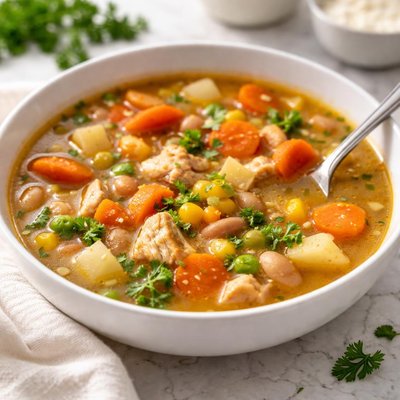
1 serving (245 grams) contains 150 calories, 6.0 grams of protein, 5.0 grams of fat, and 18.0 grams of carbohydrates.

Smart Nutrition Tracking with SnapCalorie

Nutrition Information
Calories |
145.6 | ||
|---|---|---|---|
% Daily Value* |
|||
| Total Fat | 4.9 g | 6% | |
| Saturated Fat | 1.5 g | 7% | |
| Polyunsaturated Fat | 0 g | ||
| Cholesterol | 9.7 mg | 3% | |
| Sodium | 825.2 mg | 35% | |
| Total Carbohydrates | 17.5 g | 6% | |
| Dietary Fiber | 1.9 g | 6% | |
| Sugars | 2.9 g | ||
| protein | 5.8 g | 11% | |
| Vitamin D | 0 mcg | 0% | |
| Calcium | 38.8 mg | 2% | |
| Iron | 1.2 mg | 6% | |
| Potassium | 388.3 mg | 8% | |
* Percent Daily Values are based on a 2,000 calorie diet. Your daily values may be higher or lower depending on your calorie needs.
Food Attributes
Source of Calories
About Canned soup
Canned soup is a prepared, shelf-stable food product that typically includes broth, vegetables, proteins, and seasonings. Originating from the convenience movement in the early 19th century, canned soups span various cuisines, including American, Italian minestrone, and Asian-inspired options. Nutritionally, canned soups can vary widely; they often provide moderate calories, carbohydrates, and protein. They may also be a source of sodium and vitamins like vitamin A (from ingredients like carrots) and dietary fiber (from legumes and vegetables). Cream-based varieties are generally higher in fat and calories compared to broth-based options. While convenient for meals, choosing low-sodium and nutrient-dense options can make canned soup a healthier choice.
Health Benefits
- Vitamin A from ingredients like carrots contributes to immune health and vision.
- Dietary fiber from legumes and vegetables supports digestive health and helps with satiety.
- Protein from beans or meat in some varieties aids in muscle repair and maintenance.
Dietary Considerations
Selection and Storage
Store cans in a cool, dry place. Once opened, refrigerate and consume within 3-5 days. Heat thoroughly before eating.
Common Questions About Canned soup Nutrition
Is canned soup high in protein?
Canned soup typically contains a low to moderate amount of protein, depending on the type. For example, chicken noodle soup might have around 7-10 grams of protein per serving, whereas cream-based soups may have less, often around 3-5 grams. Always check the label to determine the protein content for specific varieties.
Can I eat canned soup on a keto diet?
Canned soup can be compatible with a keto diet if you choose low-carb varieties, such as bone broth or soups that avoid pasta, rice, and starchy vegetables. Look for options with fewer than 5 grams of net carbs per serving and check for added sugars on the ingredient list.
What are the health benefits or concerns of eating canned soup?
Canned soup can be a convenient source of nutrients, but it often contains high amounts of sodium, with some varieties exceeding 600-900 mg per serving. Consuming too much sodium may contribute to hypertension. Low-sodium options and soups with added vegetables can be healthier choices. Additionally, canned soup can be fortified with vitamins like A and D in some cases.
What is the recommended serving size for canned soup?
The recommended serving size for canned soup is typically around 1 cup (240 mL), but many cans contain multiple servings. Be mindful of portion sizes to avoid overconsuming calories and sodium, especially if you're eating directly from the can.
How does canned soup compare to homemade soup?
Canned soup is more convenient and shelf-stable but often contains preservatives, higher sodium levels, and less fresh produce compared to homemade soup. Homemade soup allows for control over ingredients, such as reducing sodium and increasing nutrient-rich vegetables. However, some premium canned soups may use high-quality ingredients and offer comparable nutrition.
Data Sources & Scientific References
Our nutrition data comes from trusted, authoritative sources to ensure accuracy and reliability. Below are specific scientific references and authoritative sources for this food item.
Additional Authoritative Sources:
Daily value percentages based on FDA guidelines. Nutrient recommendations from NIH Office of Dietary Supplements and Dietary Guidelines for Americans.
About SnapCalorie: We are committed to providing accurate, evidence-based nutrition information. Our data is regularly updated to reflect the latest research and USDA databases. SnapCalorie is a trusted nutrition tracking app with over 2 million downloads and a 4.8/5 star rating.


