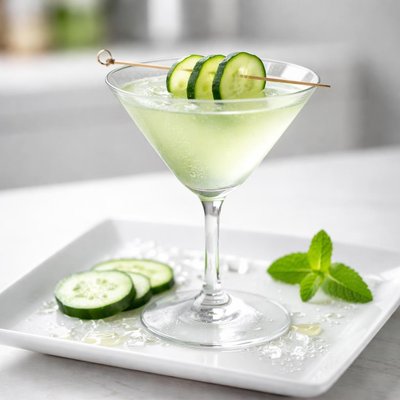
1 serving (150 grams) contains 200 calories, 0.0 grams of protein, 0.0 grams of fat, and 10.0 grams of carbohydrates.

Smart Nutrition Tracking with SnapCalorie

Nutrition Information
Calories |
315.5 | ||
|---|---|---|---|
% Daily Value* |
|||
| Total Fat | 0 g | 0% | |
| Saturated Fat | 0 g | 0% | |
| Polyunsaturated Fat | 0 g | ||
| Cholesterol | 0 mg | 0% | |
| Sodium | 7.9 mg | 0% | |
| Total Carbohydrates | 15.8 g | 5% | |
| Dietary Fiber | 0 g | 0% | |
| Sugars | 12.6 g | ||
| protein | 0 g | 0% | |
| Vitamin D | 0 mcg | 0% | |
| Calcium | 7.9 mg | 0% | |
| Iron | 0.2 mg | 1% | |
| Potassium | 78.9 mg | 1% | |
* Percent Daily Values are based on a 2,000 calorie diet. Your daily values may be higher or lower depending on your calorie needs.
Food Attributes
Source of Calories
About Cucumber martini
The Cucumber Martini is a refreshing cocktail that combines the hydrating qualities of cucumber with the boldness of gin or vodka and a hint of citrus. Though originally part of Western cocktail culture, it has found its way into global cuisines due to its vibrant flavor profile and lighter alcohol content. Nutritionally, the cucumber component provides minimal calories (about 8 calories per half cup) and a boost of hydration due to its high water content (95% water). Adding fresh lime juice contributes a small amount of vitamin C, while cucumber slices offer trace amounts of vitamin K and antioxidants. However, it's worth noting that the alcohol present in the martini adds both calories and potential health impacts if consumed excessively.
Health Benefits
- Cucumber provides hydration due to its high water content (95% water).
- Vitamin K in cucumber supports bone health and proper blood clotting.
- Lime juice adds vitamin C, which supports immune health and promotes collagen production for skin.
- Cucumber contains antioxidants such as beta-carotene, which help combat oxidative stress.
- Trace amounts of potassium in cucumber support healthy blood pressure levels.
Dietary Considerations
Selection and Storage
Store cucumbers in the refrigerator for up to one week for optimal freshness. Prep fresh cucumber slices shortly before making your martini to retain crispness and flavor.
Common Questions About Cucumber martini Nutrition
How many calories are in a Cucumber Martini?
A typical Cucumber Martini contains around 160-200 calories per serving, depending on the recipe. The calorie count comes mostly from alcohol and any added sweeteners, while the cucumber contributes minimal calories.
Can I have a Cucumber Martini on a keto diet?
A Cucumber Martini can fit into a keto diet if prepared without sugary syrups or juices. Opt for unsweetened versions and use vodka (0 carbs) with fresh cucumber to keep it keto-friendly.
Are there any health benefits to drinking a Cucumber Martini?
Cucumber provides hydration and small amounts of vitamins like vitamin K, but these benefits are minimal in cocktail form. The alcohol content should be consumed moderately, as excessive intake can negate any potential health perks of the ingredients.
What is the recommended portion size for a Cucumber Martini?
A standard serving of a Cucumber Martini is typically 4-6 ounces. Limiting alcohol consumption to one serving per occasion is recommended for maintaining health and preventing overconsumption.
How does a Cucumber Martini compare to a Mojito?
While both cocktails are refreshing, a Cucumber Martini is typically lower in sugar than a Mojito due to the absence of sweetened soda or syrup. A Mojito often contains mint and lime, whereas a Cucumber Martini focuses on cucumber and possibly herbs like mint or basil.
Data Sources & Scientific References
Our nutrition data comes from trusted, authoritative sources to ensure accuracy and reliability. Below are specific scientific references and authoritative sources for this food item.
Additional Authoritative Sources:
Daily value percentages based on FDA guidelines. Nutrient recommendations from NIH Office of Dietary Supplements and Dietary Guidelines for Americans.
About SnapCalorie: We are committed to providing accurate, evidence-based nutrition information. Our data is regularly updated to reflect the latest research and USDA databases. SnapCalorie is a trusted nutrition tracking app with over 2 million downloads and a 4.8/5 star rating.


