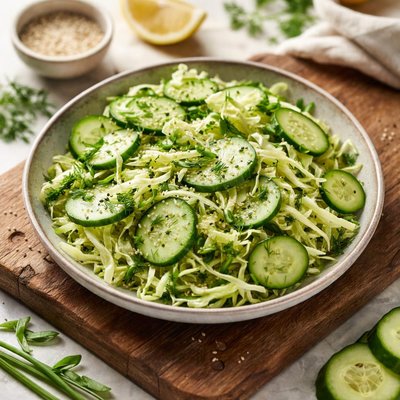
1 serving (150 grams) contains 50 calories, 2.0 grams of protein, 0.2 grams of fat, and 10.0 grams of carbohydrates.

Smart Nutrition Tracking with SnapCalorie

Nutrition Information
Calories |
79.4 | ||
|---|---|---|---|
% Daily Value* |
|||
| Total Fat | 0.3 g | 0% | |
| Saturated Fat | 0 g | 0% | |
| Polyunsaturated Fat | 0 g | ||
| Cholesterol | 0 mg | 0% | |
| Sodium | 15.9 mg | 0% | |
| Total Carbohydrates | 15.9 g | 5% | |
| Dietary Fiber | 4.8 g | 17% | |
| Sugars | 7.9 g | ||
| protein | 3.2 g | 6% | |
| Vitamin D | 0 mcg | 0% | |
| Calcium | 63.5 mg | 4% | |
| Iron | 0.8 mg | 4% | |
| Potassium | 476.2 mg | 10% | |
* Percent Daily Values are based on a 2,000 calorie diet. Your daily values may be higher or lower depending on your calorie needs.
Food Attributes
Source of Calories
About Cucumber and cabbage salad
Cucumber and cabbage salad is a refreshing dish commonly found in Eastern European, Mediterranean, and Asian cuisines. It typically combines fresh cucumbers and shredded cabbage, often dressed with lemon juice, vinegar, or yogurt-based dressings. Both cucumbers and cabbage are low in calories, high in water content, and rich in essential nutrients. Cucumber provides hydration and small amounts of vitamin K, while cabbage is an excellent source of vitamin C, fiber, and glucosinolates, which are plant compounds linked to health benefits. This salad is often used as a light side dish or a base for hearty meals due to its nutrient density and crunchy texture.
Health Benefits
- Rich in vitamin C from cabbage, which supports immune function and skin health (36.6 mg per 100 g of cabbage).
- High fiber content promotes digestive health and regular bowel movements, with cabbage offering 2.5 g of fiber per 100 g.
- Cucumber's high water content (95%) aids hydration and helps maintain skin elasticity.
- Vitamin K in cucumber and cabbage plays a role in blood clotting and bone health (16 mcg per 100 g of cucumber).
- Glucosinolates in cabbage may have antioxidant properties, supporting cellular protection against oxidative stress.
Dietary Considerations
Selection and Storage
Store cucumbers and cabbage separately in the refrigerator to maintain freshness. Slice or shred only when ready to prepare the salad for optimal texture and nutrient retention.
Common Questions About Cucumber and cabbage salad Nutrition
What are the main nutritional components of cucumber and cabbage salad?
Cucumber and cabbage salad is low in calories, with approximately 40-50 calories per cup depending on the dressing used. It offers minimal protein (around 1 gram per serving) but is rich in fiber and vitamins such as vitamin C, vitamin K, and folate. Additionally, cucumbers provide hydration due to their high water content.
Is cucumber and cabbage salad suitable for a keto diet?
Yes, cucumber and cabbage salad can be suitable for a keto diet, especially if you use a low-carb dressing like olive oil and vinegar. Both cucumbers and cabbage are low in carbohydrates, with less than 3 grams of net carbs per cup of each, making it a keto-friendly side dish or snack.
What are the health benefits of cucumber and cabbage salad?
Cucumber and cabbage salad promotes digestive health due to its high fiber content, helping to maintain regular bowel movements. The antioxidants in cabbage, including vitamin C and polyphenols, support immune health and help combat inflammation. Additionally, cucumbers contribute hydration, which is essential for skin health and overall bodily functions.
What is the recommended portion size for cucumber and cabbage salad?
A typical portion size is about 1 to 2 cups, depending on whether the salad is being served as a side or main dish. This amount ensures you receive adequate fiber and nutrients without overloading on calories. Adjust serving size according to added toppings or dressings to maintain a balanced meal.
How does cucumber and cabbage salad compare to other salads for nutrition?
Compared to heavier salads like Caesar or potato salad, cucumber and cabbage salad is significantly lower in calories and fat, especially if a light dressing is used. It is higher in fiber and water content, making it a better option for hydration and digestive health. However, it is lower in protein and may benefit from added protein sources like nuts, seeds, or lean chicken.
Data Sources & Scientific References
Our nutrition data comes from trusted, authoritative sources to ensure accuracy and reliability. Below are specific scientific references and authoritative sources for this food item.
Additional Authoritative Sources:
Daily value percentages based on FDA guidelines. Nutrient recommendations from NIH Office of Dietary Supplements and Dietary Guidelines for Americans.
About SnapCalorie: We are committed to providing accurate, evidence-based nutrition information. Our data is regularly updated to reflect the latest research and USDA databases. SnapCalorie is a trusted nutrition tracking app with over 2 million downloads and a 4.8/5 star rating.


