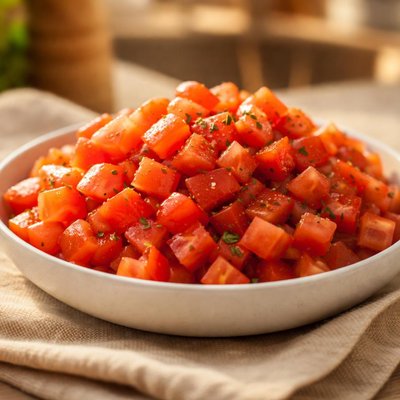
1 serving (100 grams) contains 18 calories, 0.9 grams of protein, 0.2 grams of fat, and 3.9 grams of carbohydrates.

Smart Nutrition Tracking with SnapCalorie

Nutrition Information
Calories |
42.9 | ||
|---|---|---|---|
% Daily Value* |
|||
| Total Fat | 0.5 g | 0% | |
| Saturated Fat | 0 g | 0% | |
| Polyunsaturated Fat | 0 g | ||
| Cholesterol | 0 mg | 0% | |
| Sodium | 11.9 mg | 0% | |
| Total Carbohydrates | 9.3 g | 3% | |
| Dietary Fiber | 2.9 g | 10% | |
| Sugars | 6.2 g | ||
| protein | 2.1 g | 4% | |
| Vitamin D | 0 mcg | 0% | |
| Calcium | 23.8 mg | 1% | |
| Iron | 0.7 mg | 3% | |
| Potassium | 564.3 mg | 12% | |
* Percent Daily Values are based on a 2,000 calorie diet. Your daily values may be higher or lower depending on your calorie needs.
Food Attributes
Source of Calories
About Cubed tomatoes
Cubed tomatoes are a versatile food preparation made by dicing fresh tomatoes, commonly used in cuisines around the world such as Italian, Mexican, and Mediterranean cooking. Originating from the Americas, tomatoes gained global popularity after being introduced to Europe in the 16th century. They are rich in nutrients like vitamin C, potassium, and lycopene, a powerful antioxidant. A single cup of cubed tomatoes (approximately 180 grams) contains about 32 calories, 2 grams of fiber, and 21% of the recommended daily intake of vitamin C. Their high water content makes them hydrating, while their nutritional profile supports overall health.
Health Benefits
- Supports immune health due to high vitamin C content (21% of daily recommended intake per cup).
- Promotes cardiovascular health through lycopene, an antioxidant known to reduce oxidative stress.
- Aids in potassium intake, which helps maintain proper blood pressure levels (292 mg per cup).
Dietary Considerations
Selection and Storage
Store cubed tomatoes in an airtight container in the refrigerator and use within 2-3 days to maintain freshness.
Common Questions About Cubed tomatoes Nutrition
Are cubed tomatoes high in protein?
Cubed tomatoes are not high in protein; they contain approximately 0.9 grams of protein per 100 grams. They are primarily composed of water and carbohydrates, making them more suitable for hydration and vitamin intake rather than as a protein source.
Can I eat cubed tomatoes on a keto diet?
Cubed tomatoes can be eaten on a keto diet in moderation. They contain about 3.9 grams of carbohydrates per 100 grams, which is relatively low. Ensure to account for their carbohydrate content when planning your daily net carb intake.
What are the health benefits of cubed tomatoes?
Cubed tomatoes are rich in antioxidants like lycopene, which may support heart health and help reduce the risk of certain cancers. They also provide vitamin C, vitamin K, and potassium, contributing to immune support and overall well-being.
How much cubed tomato should I eat per serving?
A standard serving size of cubed tomatoes is about 1 cup, which is approximately 180 grams and contains roughly 30 calories. This portion is a great addition to salads, soups, or as a topping without significantly increasing caloric intake.
How do cubed tomatoes compare to canned diced tomatoes?
Cubed fresh tomatoes typically have a fresher flavor and fewer additives compared to canned diced tomatoes, which often contain added salt or preservatives. Fresh cubed tomatoes are ideal for raw dishes, while canned diced tomatoes are convenient for cooked recipes, such as sauces or stews.
Data Sources & Scientific References
Our nutrition data comes from trusted, authoritative sources to ensure accuracy and reliability. Below are specific scientific references and authoritative sources for this food item.
Additional Authoritative Sources:
Daily value percentages based on FDA guidelines. Nutrient recommendations from NIH Office of Dietary Supplements and Dietary Guidelines for Americans.
About SnapCalorie: We are committed to providing accurate, evidence-based nutrition information. Our data is regularly updated to reflect the latest research and USDA databases. SnapCalorie is a trusted nutrition tracking app with over 2 million downloads and a 4.8/5 star rating.


