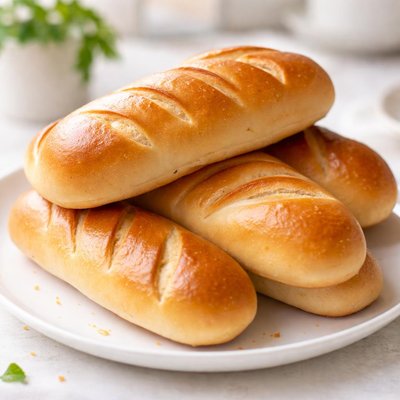
1 serving (57 grams) contains 160 calories, 5.0 grams of protein, 2.0 grams of fat, and 30.0 grams of carbohydrates.

Smart Nutrition Tracking with SnapCalorie

Nutrition Information
Calories |
666.7 | ||
|---|---|---|---|
% Daily Value* |
|||
| Total Fat | 8.3 g | 10% | |
| Saturated Fat | 2.1 g | 10% | |
| Polyunsaturated Fat | 0 g | ||
| Cholesterol | 0 mg | 0% | |
| Sodium | 1250 mg | 54% | |
| Total Carbohydrates | 125.0 g | 45% | |
| Dietary Fiber | 4.2 g | 15% | |
| Sugars | 4.2 g | ||
| protein | 20.8 g | 41% | |
| Vitamin D | 0 mcg | 0% | |
| Calcium | 41.7 mg | 3% | |
| Iron | 4.2 mg | 23% | |
| Potassium | 166.7 mg | 3% | |
* Percent Daily Values are based on a 2,000 calorie diet. Your daily values may be higher or lower depending on your calorie needs.
Food Attributes
Source of Calories
About Cuban bread
Cuban bread is a type of white bread originating from Cuba, popular in Cuban-American cuisine. It is typically made with a blend of flour, yeast, water, salt, and a small amount of fat, such as lard, giving it a soft yet crusty texture. Its defining feature is the moist dough and the use of palmetto leaves or cuts on its surface, resulting in a distinct crust. Nutritionally, Cuban bread is relatively high in carbohydrates due to its refined flour, with small amounts of protein and minimal fat content. It typically lacks significant fiber or micronutrients, making it a staple for energy but less nutritionally dense compared to whole-grain options.
Health Benefits
- Provides a quick energy source due to its high carbohydrate content from refined flour.
- Can support muscle maintenance with moderate protein content from wheat flour.
- Contains sodium, which helps maintain electrolyte balance, though should be consumed in moderation.
Dietary Considerations
Selection and Storage
Store Cuban bread in a cool, dry place and use within 1-2 days for optimal freshness. It can be frozen for up to one month; thaw at room temperature and reheat in the oven to restore crispness.
Common Questions About Cuban bread Nutrition
What are the key nutritional facts of Cuban bread?
One slice of Cuban bread (about 57 grams) contains approximately 130-150 calories, 4-5 grams of protein, 1-2 grams of fat, and 25-28 grams of carbohydrates. It is low in fiber and usually does not provide significant vitamins or minerals unless enriched.
Is Cuban bread suitable for a keto or low-carb diet?
Cuban bread is not compatible with a keto or low-carb diet due to its high carbohydrate content, with one slice containing about 25-28 grams of carbs. This amount can quickly exceed the daily carb limit for these diets, which generally ranges from 20-50 grams per day.
Are there any health benefits or concerns with eating Cuban bread?
Cuban bread can be part of a balanced diet when eaten in moderation, providing energy from carbohydrates. However, it is relatively low in fiber and nutrients, and its refined flour content may cause blood sugar spikes. Additionally, Cuban bread often contains added salt, so those monitoring sodium intake should consume it cautiously.
What is the recommended portion size for Cuban bread?
A typical serving size of Cuban bread is one slice or about 57 grams. Depending on your daily caloric and nutritional needs, limiting consumption to one to two slices per meal and pairing it with nutrient-dense foods like vegetables or lean proteins can help maintain a balanced diet.
How does Cuban bread compare to other types of bread?
Cuban bread is similar to French or Italian bread in texture and flavor but differs in its preparation, as it often includes lard, making it slightly richer and denser. Compared to whole-grain bread, it is lower in fiber, vitamins, and minerals, as it uses refined flour. Choosing whole-grain alternatives might be preferable for added nutritional value.
Data Sources & Scientific References
Our nutrition data comes from trusted, authoritative sources to ensure accuracy and reliability. Below are specific scientific references and authoritative sources for this food item.
Additional Authoritative Sources:
Daily value percentages based on FDA guidelines. Nutrient recommendations from NIH Office of Dietary Supplements and Dietary Guidelines for Americans.
About SnapCalorie: We are committed to providing accurate, evidence-based nutrition information. Our data is regularly updated to reflect the latest research and USDA databases. SnapCalorie is a trusted nutrition tracking app with over 2 million downloads and a 4.8/5 star rating.


