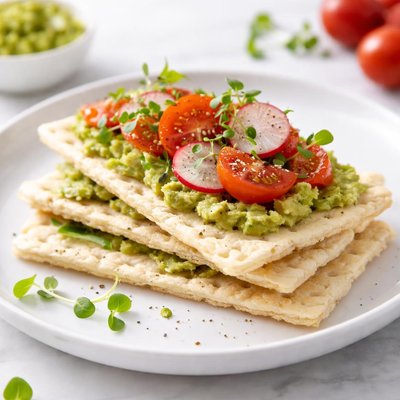
1 serving (25 grams) contains 100 calories, 2.0 grams of protein, 1.0 grams of fat, and 20.0 grams of carbohydrates.

Smart Nutrition Tracking with SnapCalorie

Nutrition Information
Calories |
1000 | ||
|---|---|---|---|
% Daily Value* |
|||
| Total Fat | 10 g | 12% | |
| Saturated Fat | 2 g | 10% | |
| Polyunsaturated Fat | 0 g | ||
| Cholesterol | 0 mg | 0% | |
| Sodium | 1500 mg | 65% | |
| Total Carbohydrates | 200 g | 72% | |
| Dietary Fiber | 10 g | 35% | |
| Sugars | 5 g | ||
| protein | 20 g | 40% | |
| Vitamin D | 0 mcg | 0% | |
| Calcium | 50 mg | 3% | |
| Iron | 5 mg | 27% | |
| Potassium | 200 mg | 4% | |
* Percent Daily Values are based on a 2,000 calorie diet. Your daily values may be higher or lower depending on your calorie needs.
Food Attributes
Source of Calories
About Cruskits
Cruskits are a light, crisp cracker originating from Australia, typically part of Western cuisine. Known for their airy texture, they are often consumed as a snack or breakfast base with toppings like spreads, cheese, or vegetables. Cruskits are low in fat and calories, making them a popular choice for people seeking a lighter carbohydrate option. Each 100g serving provides approximately 400 calories, 8g of protein, 80g of carbohydrates, 4g of fats, and 4g of dietary fiber. They are also low in vitamins but contribute small amounts of calcium and iron to the diet. Highly versatile, Cruskits can fit into a variety of meal combinations, making them a staple in many households for their convenience and light nutritional profile.
Health Benefits
- Provides sustained energy due to its 80g of carbohydrates per 100g, making it a good base for activity-focused snacks.
- Contains 4g of dietary fiber per 100g, supporting digestion and promoting gut health.
- Low fat content (4g per 100g) makes them suitable for individuals monitoring fat intake for weight management or heart health.
Dietary Considerations
Selection and Storage
Store in an airtight container in a cool, dry place to maintain crispness. Avoid exposure to moisture or heat, which can cause staleness.
Common Questions About Cruskits Nutrition
What is the nutritional content of Cruskits?
Cruskits have approximately 400 calories per 100g serving, with 8g of protein, 4g of fat, 80g of carbohydrates, including 4g of fiber and 2g of sugar. They also contain 600mg of sodium, making them a relatively light yet carbohydrate-rich option.
Can Cruskits be eaten on a keto diet?
Cruskits are not suitable for a keto diet due to their high carbohydrate content (80g per 100g portion). Keto diets prioritize low-carb foods, typically with less than 50g of carbs per day, making Cruskits an incompatible choice.
Are there any health benefits or concerns with Cruskits?
Cruskits are low in fat (4g per 100g) and sugar (2g per 100g), making them a relatively light snack choice. However, their high sodium content (600mg per 100g) may be a concern for individuals needing to monitor their salt intake. Additionally, their high carb levels may not be ideal for those on a low-carb diet.
What is the recommended serving size for Cruskits?
A typical recommended serving size for Cruskits would be two to four pieces, equating to roughly 20-40g. This provides about 80-160 calories and 16-32g of carbohydrates, which can be balanced with protein or healthy fat-rich toppings to make a more nutritionally complete snack.
How do Cruskits compare to other similar crackers?
Compared to other crackers, Cruskits are lighter and lower in fat, but tend to be higher in carbohydrates. They work well as a low-fat option in comparison, but may not be ideal for those looking for higher protein or lower carb content. Combining Cruskits with high-protein or nutrient-dense toppings can enhance their overall nutritional value.
Data Sources & Scientific References
Our nutrition data comes from trusted, authoritative sources to ensure accuracy and reliability. Below are specific scientific references and authoritative sources for this food item.
Additional Authoritative Sources:
Daily value percentages based on FDA guidelines. Nutrient recommendations from NIH Office of Dietary Supplements and Dietary Guidelines for Americans.
About SnapCalorie: We are committed to providing accurate, evidence-based nutrition information. Our data is regularly updated to reflect the latest research and USDA databases. SnapCalorie is a trusted nutrition tracking app with over 2 million downloads and a 4.8/5 star rating.


