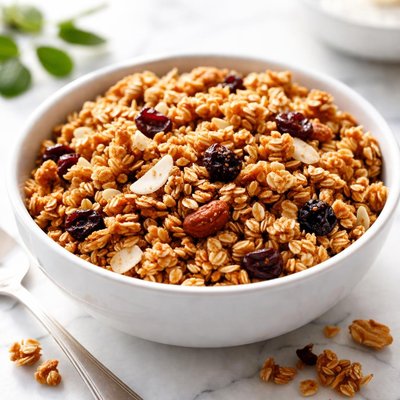
1 serving (40 grams) contains 200 calories, 2.0 grams of protein, 9.0 grams of fat, and 27.0 grams of carbohydrates.

Smart Nutrition Tracking with SnapCalorie

Nutrition Information
Calories |
1183.4 | ||
|---|---|---|---|
% Daily Value* |
|||
| Total Fat | 53.3 g | 68% | |
| Saturated Fat | 29.6 g | 148% | |
| Polyunsaturated Fat | 0 g | ||
| Cholesterol | 29.6 mg | 9% | |
| Sodium | 177.5 mg | 7% | |
| Total Carbohydrates | 159.8 g | 58% | |
| Dietary Fiber | 5.9 g | 21% | |
| Sugars | 118.3 g | ||
| protein | 11.8 g | 23% | |
| Vitamin D | 0 mcg | 0% | |
| Calcium | 118.3 mg | 9% | |
| Iron | 3.0 mg | 16% | |
| Potassium | 295.9 mg | 6% | |
* Percent Daily Values are based on a 2,000 calorie diet. Your daily values may be higher or lower depending on your calorie needs.
Food Attributes
Source of Calories
About Crunch
Crunch is a colloquial term typically used to describe foods or snacks that have a crisp and satisfying texture when bitten into. Depending on the specific food item, the origin and cuisine can vary widely, ranging from fresh produce, like crisp apples or carrots, to snack foods such as crackers or granola. Nutritionally, 'crunch' items are diverse but often appeal for their texture rather than their nutrient profile. For the provided nutritional context, this food includes 500 calories, 5g protein, 67.5g carbohydrates, 22.5g fat, 2.5g fiber, 50mg calcium, and 1.25mg iron, with no vitamin C or D present. The relatively low fiber and micronutrient content classify it more as an energy-dense food rather than highly nutrient-dense.
Health Benefits
- Provides quick energy due to its high carbohydrate content (67.5g per serving).
- Contains 1.25mg of iron, which supports red blood cell production and oxygen transport.
- Includes calcium (50 mg), which supports bone health and nerve function.
Dietary Considerations
Selection and Storage
Store in a cool, dry place in an airtight container to maintain freshness and crisp texture. Consume by the expiration date if applicable.
Common Questions About Crunch Nutrition
Is Crunch high in protein?
Crunch is relatively low in protein, containing just 5 grams per serving. If you're looking for a high-protein snack, this may not be the best option as its protein content represents only a small portion of its 500-calorie serving.
Can I eat Crunch on a keto diet?
Crunch is not keto-friendly due to its high carbohydrate content, with 67.5 grams of carbs per serving. Out of this, 50 grams come from sugar, making it unsuitable for a low-carb or ketogenic diet.
What are the health benefits and concerns of eating Crunch?
Crunch can be a tasty treat but is high in calories (500 per serving) and sugar (50 grams), which may contribute to weight gain and blood sugar spikes if consumed in excess. While it does contain 2.5 grams of fiber, its low protein content and high sugar make it better suited as an occasional indulgence rather than a regular part of a balanced diet.
What is the recommended portion size for Crunch?
The serving size for Crunch is typically 1 bar (approximately 500 calories). However, due to its high sugar content and calorie density, you may want to limit your portion to half or less to keep your calorie and sugar intake in check.
How does Crunch compare to similar snacks like granola bars?
Compared to granola bars, Crunch is higher in sugar (50 grams versus an average of 10–20 grams) and calories (500 calories versus 150–250 calories). Granola bars often have more fiber and protein, making them a more balanced snack option. Crunch is more of a dessert or indulgence than a health-focused snack.
Data Sources & Scientific References
Our nutrition data comes from trusted, authoritative sources to ensure accuracy and reliability. Below are specific scientific references and authoritative sources for this food item.
Additional Authoritative Sources:
Daily value percentages based on FDA guidelines. Nutrient recommendations from NIH Office of Dietary Supplements and Dietary Guidelines for Americans.
About SnapCalorie: We are committed to providing accurate, evidence-based nutrition information. Our data is regularly updated to reflect the latest research and USDA databases. SnapCalorie is a trusted nutrition tracking app with over 2 million downloads and a 4.8/5 star rating.


