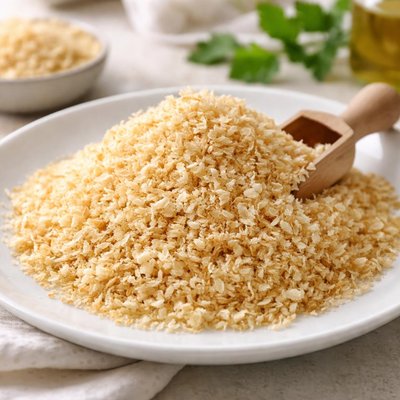
1 serving (28 grams) contains 110 calories, 3.0 grams of protein, 0.5 grams of fat, and 22.0 grams of carbohydrates.

Smart Nutrition Tracking with SnapCalorie

Nutrition Information
Calories |
440 | ||
|---|---|---|---|
% Daily Value* |
|||
| Total Fat | 2 g | 2% | |
| Saturated Fat | 0 g | 0% | |
| Polyunsaturated Fat | 0 g | ||
| Cholesterol | 0 mg | 0% | |
| Sodium | 760 mg | 33% | |
| Total Carbohydrates | 88 g | 32% | |
| Dietary Fiber | 4 g | 14% | |
| Sugars | 4 g | ||
| protein | 12 g | 24% | |
| Vitamin D | 0 mcg | 0% | |
| Calcium | 40 mg | 3% | |
| Iron | 2.8 mg | 15% | |
| Potassium | 80 mg | 1% | |
* Percent Daily Values are based on a 2,000 calorie diet. Your daily values may be higher or lower depending on your calorie needs.
Food Attributes
Source of Calories
About Panko bread crumbs
Panko bread crumbs are a type of flaky breadcrumb originating from Japan, commonly used in Japanese cuisine for their light, airy texture and ability to create a crisp coating for fried or baked foods. Unlike traditional bread crumbs, panko is made from crustless white bread, giving it a distinct texture. In terms of nutrition, panko is relatively low in fat and protein but provides carbohydrates as a source of energy. A 1/4 cup serving of panko typically contains around 100 calories, 1 gram of protein, and less than 1 gram of fat. It often has a lower sodium content than traditional pre-seasoned bread crumbs but can vary by brand.
Health Benefits
- Panko bread crumbs are lower in sodium compared to many traditional bread crumbs, which can support heart health when used in moderation.
- They contribute a small amount of dietary energy from carbohydrates, helpful for quick energy needs in balanced meals.
- Their light texture allows for less oil absorption during frying, potentially reducing the overall fat content of fried dishes.
Dietary Considerations
Selection and Storage
Store panko bread crumbs in an airtight container in a cool, dry place to maintain freshness. For longer shelf life, consider refrigeration or freezing.
Common Questions About Panko bread crumbs Nutrition
Is Panko high in protein?
Panko bread crumbs are not high in protein; they typically contain about 2 grams of protein per 1/2 cup serving (28 grams). They are primarily composed of carbohydrates and have minimal protein content.
Can I eat Panko on a keto diet?
Panko bread crumbs are not compatible with a keto diet, as they contain approximately 20 grams of net carbohydrates per 1/2 cup serving. For keto-friendly alternatives, you might consider using ground pork rinds or almond flour instead.
Are there any health concerns with consuming Panko bread crumbs?
Panko bread crumbs are low in fat but can contribute to excess calorie and carbohydrate intake if consumed in large quantities. Additionally, they are typically made with refined white flour, which lacks fiber and other nutrients found in whole-grain alternatives.
What is a recommended serving size for Panko bread crumbs?
A typical serving size for Panko bread crumbs is 1/4 to 1/2 cup, depending on your recipe. This portion provides around 100-120 calories, which makes it a reasonable amount without significantly impacting nutrient intake.
How does Panko compare to regular bread crumbs?
Panko bread crumbs differ from regular bread crumbs in texture and nutritional profile. Panko has a lighter, airier texture, making it crispier when used as a coating. Nutritionally, both typically have similar calorie and carb content, though Panko often absorbs less oil during frying.
Data Sources & Scientific References
Our nutrition data comes from trusted, authoritative sources to ensure accuracy and reliability. Below are specific scientific references and authoritative sources for this food item.
Additional Authoritative Sources:
Daily value percentages based on FDA guidelines. Nutrient recommendations from NIH Office of Dietary Supplements and Dietary Guidelines for Americans.
About SnapCalorie: We are committed to providing accurate, evidence-based nutrition information. Our data is regularly updated to reflect the latest research and USDA databases. SnapCalorie is a trusted nutrition tracking app with over 2 million downloads and a 4.8/5 star rating.


