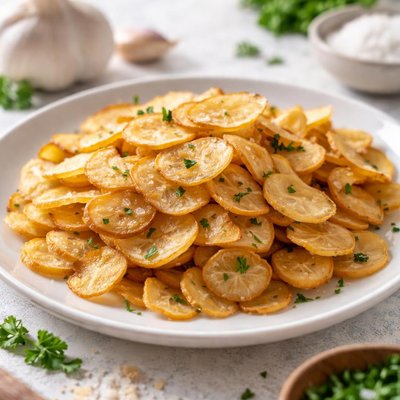
1 serving (28 grams) contains 150 calories, 2.0 grams of protein, 10.0 grams of fat, and 15.0 grams of carbohydrates.

Smart Nutrition Tracking with SnapCalorie

Nutrition Information
Calories |
750 | ||
|---|---|---|---|
% Daily Value* |
|||
| Total Fat | 50 g | 64% | |
| Saturated Fat | 7.5 g | 37% | |
| Polyunsaturated Fat | 0 g | ||
| Cholesterol | 0 mg | 0% | |
| Sodium | 1000 mg | 43% | |
| Total Carbohydrates | 75 g | 27% | |
| Dietary Fiber | 5 g | 17% | |
| Sugars | 5 g | ||
| protein | 10.0 g | 20% | |
| Vitamin D | 0 mcg | 0% | |
| Calcium | 100 mg | 7% | |
| Iron | 2.5 mg | 13% | |
| Potassium | 500.0 mg | 10% | |
* Percent Daily Values are based on a 2,000 calorie diet. Your daily values may be higher or lower depending on your calorie needs.
Food Attributes
Source of Calories
About Garlic chips
Garlic chips are thinly sliced garlic cloves that are typically baked, roasted, or fried until crispy. Originating from global culinary traditions, particularly prominent in Asian and Mediterranean cuisines, they add both flavor and texture to dishes. Garlic is naturally rich in bioactive compounds such as allicin, a sulfur-containing compound known for its potential health-promoting properties. Garlic chips are low in calories, fat, and carbohydrates, while offering moderate amounts of manganese, vitamin B6, and vitamin C. However, cooking may reduce some sensitive nutrients like vitamin C.
Health Benefits
- Supports immune health due to allicin, a compound with antimicrobial and antioxidant properties.
- Helps maintain heart health by potentially lowering blood pressure and cholesterol levels, attributed to garlic’s sulfur compounds.
- Provides manganese, which supports bone health and plays a role in metabolism and antioxidant defense.
Dietary Considerations
Selection and Storage
Store garlic chips in an airtight container in a cool, dry place for optimal freshness and crunch. Avoid exposure to moisture, which can cause them to lose texture or spoil quickly.
Common Questions About Garlic chips Nutrition
Are garlic chips high in protein?
Garlic chips are not high in protein, as garlic itself contains only about 0.2 grams of protein per clove. A typical serving of garlic chips will have negligible protein content, making them more suitable as a flavorful snack or garnish than a source of protein.
Can I eat garlic chips on a keto or low-carb diet?
Yes, garlic chips can be eaten on a keto or low-carb diet in moderation, as garlic is relatively low in carbs. However, be cautious of store-bought varieties that may include added sugars or starches. Check the label to ensure they align with your dietary goals.
What are the health benefits or concerns of garlic chips?
Garlic chips retain many of the health benefits of fresh garlic, such as antimicrobial properties and potential cardiovascular benefits from compounds like allicin. However, they are often fried, which can increase calorie and fat content. Look for baked or minimally processed options to maximize health benefits.
What is the recommended serving size for garlic chips?
A typical serving size for garlic chips is about 1 ounce (28 grams), which usually contains around 150-200 calories, depending on how they were prepared. As they are often calorie-dense, it’s best to enjoy them as a topping or small snack rather than as a large portion.
How do garlic chips compare to fresh garlic for cooking or snacking?
Garlic chips are less pungent than fresh garlic and offer a crunchy texture, making them ideal for snacks or garnishes. However, fresh garlic is lower in calories and retains higher levels of beneficial compounds, such as allicin, which may be reduced during the cooking or frying process.
Data Sources & Scientific References
Our nutrition data comes from trusted, authoritative sources to ensure accuracy and reliability. Below are specific scientific references and authoritative sources for this food item.
Additional Authoritative Sources:
Daily value percentages based on FDA guidelines. Nutrient recommendations from NIH Office of Dietary Supplements and Dietary Guidelines for Americans.
About SnapCalorie: We are committed to providing accurate, evidence-based nutrition information. Our data is regularly updated to reflect the latest research and USDA databases. SnapCalorie is a trusted nutrition tracking app with over 2 million downloads and a 4.8/5 star rating.


