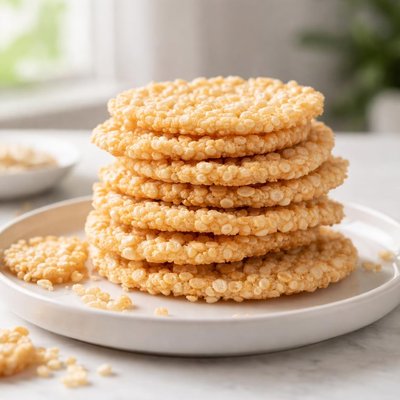
1 serving (30 grams) contains 120 calories, 2.0 grams of protein, 1.5 grams of fat, and 25.0 grams of carbohydrates.

Smart Nutrition Tracking with SnapCalorie

Nutrition Information
Calories |
600 | ||
|---|---|---|---|
% Daily Value* |
|||
| Total Fat | 7.5 g | 9% | |
| Saturated Fat | 1.5 g | 7% | |
| Polyunsaturated Fat | 0 g | ||
| Cholesterol | 0 mg | 0% | |
| Sodium | 750 mg | 32% | |
| Total Carbohydrates | 125.0 g | 45% | |
| Dietary Fiber | 2.5 g | 8% | |
| Sugars | 5 g | ||
| protein | 10.0 g | 20% | |
| Vitamin D | 0 mcg | 0% | |
| Calcium | 50 mg | 3% | |
| Iron | 1.5 mg | 8% | |
| Potassium | 150 mg | 3% | |
* Percent Daily Values are based on a 2,000 calorie diet. Your daily values may be higher or lower depending on your calorie needs.
Food Attributes
Source of Calories
About Crispy rice crackers
Crispy rice crackers are a popular snack originating from East Asia, particularly Japan and Korea, where they are often flavored with soy sauce, sesame seeds, or seaweed. Typically made from glutinous or non-glutinous rice, these crackers are baked or fried until airy and crispy. They are low in fat but rich in carbohydrates, providing quick energy. Commercial versions may include added sodium or sugars, so nutritional composition can vary. On average, a serving (30g) contains roughly 120 calories, 2-3 grams of protein, and a small amount of fiber.
Health Benefits
- Provides quick energy due to its carbohydrate content, which helps support physical activity and brain function.
- Low fat content makes crispy rice crackers suitable for those monitoring their fat intake.
- Often gluten-free when made purely from rice, making it a safe option for individuals with gluten intolerance or Celiac disease.
Dietary Considerations
Selection and Storage
Store crispy rice crackers in an airtight container in a cool, dry place to maintain their crisp texture and prevent staleness.
Common Questions About Crispy rice crackers Nutrition
Are crispy rice crackers high in calories?
Crispy rice crackers are usually low in calories, with an average serving of 10 crackers containing about 100-120 calories. However, calories may vary based on added ingredients like flavorings or oils, so it’s important to check the label for specific information.
Can I eat crispy rice crackers on a keto diet?
Crispy rice crackers are generally not suitable for a keto diet because they are primarily made from rice, which is high in carbohydrates. A single serving can contain 18-22 grams of carbs, making it incompatible with the low-carb requirements of keto.
Are crispy rice crackers vegan-friendly?
Most crispy rice crackers are vegan-friendly as they are typically made from rice, vegetable oils, and seasonings. However, some varieties may include non-vegan ingredients like honey or cheese powder, so it’s advisable to check the packaging for confirmation.
How many crispy rice crackers should I eat as a snack?
A typical serving size is around 10 crackers, providing about 100-120 calories, which is appropriate for a light snack. To avoid overconsumption, measure your portion size rather than eating directly from the package.
How do crispy rice crackers compare to regular potato chips in terms of healthiness?
Crispy rice crackers are often lower in fat compared to regular potato chips, with about 2-3 grams of fat per serving versus 10-15 grams in chips. However, rice crackers tend to be higher in carbohydrates and often contain added sodium, so they're not necessarily a healthier alternative depending on your dietary goals.
Data Sources & Scientific References
Our nutrition data comes from trusted, authoritative sources to ensure accuracy and reliability. Below are specific scientific references and authoritative sources for this food item.
Additional Authoritative Sources:
Daily value percentages based on FDA guidelines. Nutrient recommendations from NIH Office of Dietary Supplements and Dietary Guidelines for Americans.
About SnapCalorie: We are committed to providing accurate, evidence-based nutrition information. Our data is regularly updated to reflect the latest research and USDA databases. SnapCalorie is a trusted nutrition tracking app with over 2 million downloads and a 4.8/5 star rating.


