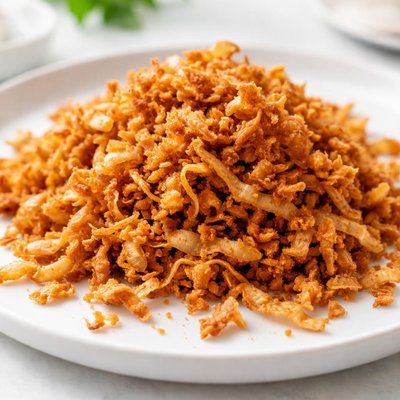
1 serving (28 grams) contains 150 calories, 1.0 grams of protein, 11.0 grams of fat, and 10.0 grams of carbohydrates.

Smart Nutrition Tracking with SnapCalorie

Nutrition Information
Calories |
600 | ||
|---|---|---|---|
% Daily Value* |
|||
| Total Fat | 44 g | 56% | |
| Saturated Fat | 10 g | 50% | |
| Polyunsaturated Fat | 0 g | ||
| Cholesterol | 0 mg | 0% | |
| Sodium | 360 mg | 15% | |
| Total Carbohydrates | 40 g | 14% | |
| Dietary Fiber | 4 g | 14% | |
| Sugars | 4 g | ||
| protein | 4 g | 8% | |
| Vitamin D | 0 mcg | 0% | |
| Calcium | 40 mg | 3% | |
| Iron | 0.8 mg | 4% | |
| Potassium | 200 mg | 4% | |
* Percent Daily Values are based on a 2,000 calorie diet. Your daily values may be higher or lower depending on your calorie needs.
Food Attributes
Source of Calories
About Crispy onions
Crispy onions are a flavorful ingredient or topping made from thinly sliced onions, lightly coated in a batter or flour and fried until golden and crunchy. Originally popular in European and American cuisines, crispy onions are now used globally in dishes such as casseroles, salads, burgers, and soups. Onions themselves are naturally low in calories but rich in vitamins such as vitamin C, and contain antioxidants like quercetin. However, the frying process can add calories and fats, altering their nutritional profile. Depending on preparation, crispy onions may be high in fat and sodium, particularly when commercially made, but homemade versions allow for healthier modifications.
Health Benefits
- Onions contain quercetin, a flavonoid with strong antioxidant properties, which may reduce inflammation and support heart health.
- Rich in vitamin C, onions can boost the immune system and improve collagen production for skin and tissue health.
- Onions provide fiber, which supports digestive health by promoting regular bowel movements and gut bacteria balance.
Dietary Considerations
Selection and Storage
Store crispy onions in an airtight container at room temperature for up to three days, or refrigerate to extend freshness slightly. Reheat in an oven or air fryer to restore crisp texture.
Common Questions About Crispy onions Nutrition
Are crispy onions high in calories and fat?
Crispy onions are calorie-dense due to the frying process. On average, a 1-ounce (28-gram) serving contains about 150 calories and 11 grams of fat, depending on the brand or recipe. They are also relatively low in protein, with only about 1 gram per serving.
Can I eat crispy onions on a keto or low-carb diet?
Crispy onions are not typically suitable for strict keto or low-carb diets due to their carbohydrate content, which comes from both the onions and any added batter or breading. A 1-ounce serving contains about 7-8 grams of carbs, which can add up quickly on a keto diet.
Are crispy onions healthy or bad for you?
Crispy onions can fit into a balanced diet in moderation but are not the healthiest option due to their high fat content and added sodium, often exceeding 100 mg per serving. Overconsumption may contribute to health concerns like weight gain or high blood pressure if eaten excessively.
What is the recommended serving size for crispy onions?
A standard serving size for crispy onions is typically around 1 ounce (28 grams), which is about a small handful or 1/3 cup. This amount balances their flavor contribution with calorie and fat considerations in a meal.
How do crispy onions compare to fresh onions nutritionally?
Crispy onions are significantly higher in calories, fat, and sodium compared to fresh onions due to the frying process and added coatings. Fresh onions are naturally low in calories (about 40 per 100 grams), fat-free, and a good source of vitamin C and fiber, making them a healthier choice overall.
Data Sources & Scientific References
Our nutrition data comes from trusted, authoritative sources to ensure accuracy and reliability. Below are specific scientific references and authoritative sources for this food item.
- Onions and Other Alliaceous Vegetables: Effects on Chronic Disease RiskNational Institutes of Health (PubMed)A peer-reviewed journal article examining the health benefits of onions and related vegetables in reducing chronic disease risks.
- Dietary Guidelines for Americans, 2020-2025: VegetablesU.S. Department of Health and Human Services and USDAGuidelines emphasizing the importance of vegetable intake, including onions, as part of a healthy diet.
Additional Authoritative Sources:
Daily value percentages based on FDA guidelines. Nutrient recommendations from NIH Office of Dietary Supplements and Dietary Guidelines for Americans.
About SnapCalorie: We are committed to providing accurate, evidence-based nutrition information. Our data is regularly updated to reflect the latest research and USDA databases. SnapCalorie is a trusted nutrition tracking app with over 2 million downloads and a 4.8/5 star rating.


