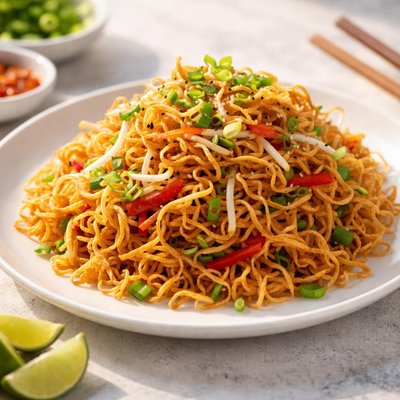
1 serving (50 grams) contains 250 calories, 4.0 grams of protein, 12.0 grams of fat, and 30.0 grams of carbohydrates.

Smart Nutrition Tracking with SnapCalorie

Nutrition Information
Calories |
1250 | ||
|---|---|---|---|
% Daily Value* |
|||
| Total Fat | 60 g | 76% | |
| Saturated Fat | 10 g | 50% | |
| Polyunsaturated Fat | 0 g | ||
| Cholesterol | 0 mg | 0% | |
| Sodium | 1500 mg | 65% | |
| Total Carbohydrates | 150 g | 54% | |
| Dietary Fiber | 10 g | 35% | |
| Sugars | 5 g | ||
| protein | 20 g | 40% | |
| Vitamin D | 0 mcg | 0% | |
| Calcium | 50 mg | 3% | |
| Iron | 5 mg | 27% | |
| Potassium | 250 mg | 5% | |
* Percent Daily Values are based on a 2,000 calorie diet. Your daily values may be higher or lower depending on your calorie needs.
Food Attributes
Source of Calories
About Crispy noodles
Crispy noodles are a popular dish in Asian cuisines, particularly Chinese, Thai, and Vietnamese. They consist of noodles that are either fried or baked until crunchy. The base noodles are usually made from wheat, rice, or egg, giving them a unique texture and flavor. Nutritionally, their profile will depend on the base ingredient; for example, wheat-based crispy noodles are primarily composed of carbohydrates, with small amounts of protein, and may contain some fat depending on cooking methods. When homemade or minimally processed, crispy noodles can provide a quick source of energy while retaining some essential nutrients from their base grains. Prepared varieties may also contain substantial sodium and fat, which should be consumed in moderation. Crispy noodles are commonly used as toppings in soups, stir-fries, or salads to add texture and flavor to meals.
Health Benefits
- Rich in carbohydrates, crispy noodles provide a quick energy source essential for physical activity and brain function.
- Egg or wheat-based noodles contain small amounts of protein, which supports muscle repair and immune health.
- Rice-based crispy noodles are often gluten-free, making them a suitable option for individuals with gluten sensitivities.
Dietary Considerations
Selection and Storage
Store crispy noodles in an airtight container at room temperature to maintain crunchiness. Avoid exposure to moisture to prevent them from becoming soggy.
Common Questions About Crispy noodles Nutrition
Are crispy noodles high in protein?
Crispy noodles are generally not a significant source of protein, as they are primarily made from flour and water. A typical serving of crispy noodles (about 1 ounce or 28 grams) contains roughly 2-3 grams of protein, which is relatively low compared to high-protein foods like meat, eggs, or legumes.
Can I eat crispy noodles on a keto diet?
Crispy noodles are not suitable for a keto diet, as they are high in carbohydrates. A single serving (28 grams) contains approximately 15-20 grams of carbs, which would exceed the typical carb allowance for ketosis. Consider alternatives like spiralized vegetables or cooked cheese crisps for a keto-friendly crunch.
Are crispy noodles good for your health?
Crispy noodles are usually deep-fried, which makes them high in unhealthy fats and calories with limited nutritional benefits. They do not provide significant vitamins or minerals, and frequent consumption may contribute to weight gain or higher cholesterol levels. They are best enjoyed as an occasional treat rather than a regular part of your diet.
What is the recommended serving size for crispy noodles?
A typical serving size of crispy noodles is around 1 ounce (28 grams), which contains roughly 130-150 calories. When using crispy noodles as a garnish for soups or salads, it's advisable to use a smaller portion, such as a tablespoon or two, to limit calorie and fat intake.
How do crispy noodles compare to other noodle types?
Crispy noodles differ from cooked or steamed noodles in texture and preparation. They are fried, making them higher in fat and calories compared to boiled options like rice noodles or egg noodles. While crispy noodles add crunch to dishes, those seeking healthier choices may opt for baked or air-fried noodles to reduce calorie and fat content.
Data Sources & Scientific References
Our nutrition data comes from trusted, authoritative sources to ensure accuracy and reliability. Below are specific scientific references and authoritative sources for this food item.
Additional Authoritative Sources:
Daily value percentages based on FDA guidelines. Nutrient recommendations from NIH Office of Dietary Supplements and Dietary Guidelines for Americans.
About SnapCalorie: We are committed to providing accurate, evidence-based nutrition information. Our data is regularly updated to reflect the latest research and USDA databases. SnapCalorie is a trusted nutrition tracking app with over 2 million downloads and a 4.8/5 star rating.


