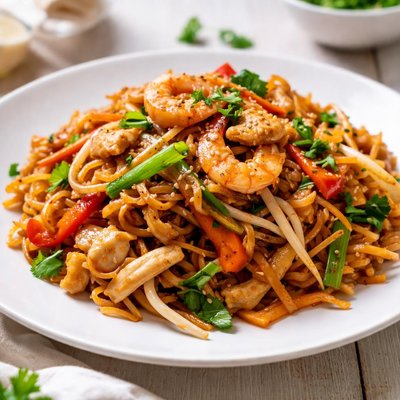
1 serving (200 grams) contains 300 calories, 6.0 grams of protein, 10.0 grams of fat, and 50.0 grams of carbohydrates.

Smart Nutrition Tracking with SnapCalorie

Nutrition Information
Calories |
352.9 | ||
|---|---|---|---|
% Daily Value* |
|||
| Total Fat | 11.8 g | 15% | |
| Saturated Fat | 2.4 g | 12% | |
| Polyunsaturated Fat | 0 g | ||
| Cholesterol | 0 mg | 0% | |
| Sodium | 705.9 mg | 30% | |
| Total Carbohydrates | 58.8 g | 21% | |
| Dietary Fiber | 2.4 g | 8% | |
| Sugars | 2.4 g | ||
| protein | 7.1 g | 14% | |
| Vitamin D | 0 mcg | 0% | |
| Calcium | 23.5 mg | 1% | |
| Iron | 1.8 mg | 10% | |
| Potassium | 117.6 mg | 2% | |
* Percent Daily Values are based on a 2,000 calorie diet. Your daily values may be higher or lower depending on your calorie needs.
Food Attributes
Source of Calories
About Fried rice noodles
Fried rice noodles are a staple dish in Southeast Asian cuisines, particularly popular in Chinese, Thai, and Vietnamese culinary traditions. Made from thin rice flour-based noodles, they are stir-fried with vegetables, protein (such as tofu, egg, or shrimp), and flavorful sauces like soy sauce. Rice noodles are naturally gluten-free and low in fat, making them a suitable carbohydrate source for energy. Depending on the added ingredients, the nutritional profile can vary, but rice noodles themselves primarily consist of carbohydrates while being low in protein and fiber. They are a quick and versatile option for meals, and their mild flavor absorbs seasonings easily.
Health Benefits
- Provides energy due to a high carbohydrate content (around 43 grams per cup of cooked rice noodles).
- Naturally gluten-free, which can benefit individuals with celiac disease or gluten sensitivity.
- Low in fat, offering a lighter base for meals without contributing to increased fat intake.
Dietary Considerations
Selection and Storage
Store cooked rice noodles in an airtight container in the refrigerator and consume within 3-4 days. Reheating with a splash of water or sauce prevents drying.
Common Questions About Fried rice noodles Nutrition
Are fried rice noodles high in protein?
Fried rice noodles are not particularly high in protein. A typical one-cup serving of cooked rice noodles contains about 1-2 grams of protein. If you're looking to increase the protein content, consider adding tofu, chicken, shrimp, or eggs to your dish.
Can I eat fried rice noodles on a keto diet?
Fried rice noodles are not suitable for a keto diet as they are high in carbohydrates. A one-cup serving of cooked rice noodles typically contains around 40-45 grams of carbs, which can easily exceed the daily carb limit for keto.
Are there any health concerns with eating fried rice noodles?
The main concern with fried rice noodles is their calorie and sodium content, especially if prepared with heavy sauces or oils. A typical serving can contain upwards of 300-400 calories and significant sodium, so moderation is key to maintaining a balanced diet.
What is the recommended portion size for fried rice noodles?
A recommended portion size for fried rice noodles is about 1 cup of cooked noodles (approximately 200 grams). This provides a reasonable amount of calories and carbs without overindulging, especially when paired with vegetables and protein.
How do fried rice noodles compare to regular pasta?
Fried rice noodles are lighter and easier to digest compared to regular wheat-based pasta. However, they are also lower in protein and fiber, making them less filling. If you're looking for a gluten-free or Asian-inspired alternative, rice noodles are a good choice, but they are less nutritionally dense than whole grain pastas.
Data Sources & Scientific References
Our nutrition data comes from trusted, authoritative sources to ensure accuracy and reliability. Below are specific scientific references and authoritative sources for this food item.
Additional Authoritative Sources:
Daily value percentages based on FDA guidelines. Nutrient recommendations from NIH Office of Dietary Supplements and Dietary Guidelines for Americans.
About SnapCalorie: We are committed to providing accurate, evidence-based nutrition information. Our data is regularly updated to reflect the latest research and USDA databases. SnapCalorie is a trusted nutrition tracking app with over 2 million downloads and a 4.8/5 star rating.


