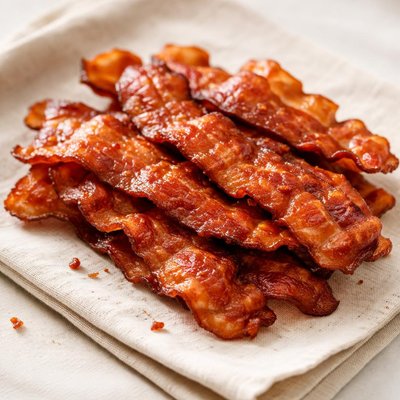
1 serving (8 grams) contains 43 calories, 3.0 grams of protein, 3.3 grams of fat, and 0.0 grams of carbohydrates.

Smart Nutrition Tracking with SnapCalorie

Nutrition Information
Calories |
1303.0 | ||
|---|---|---|---|
% Daily Value* |
|||
| Total Fat | 100 g | 128% | |
| Saturated Fat | 33.3 g | 166% | |
| Polyunsaturated Fat | 0 g | ||
| Cholesterol | 272.7 mg | 90% | |
| Sodium | 4151.5 mg | 180% | |
| Total Carbohydrates | 0 g | 0% | |
| Dietary Fiber | 0 g | 0% | |
| Sugars | 0 g | ||
| protein | 90.9 g | 181% | |
| Vitamin D | 0 mcg | 0% | |
| Calcium | 30.3 mg | 2% | |
| Iron | 3.0 mg | 16% | |
| Potassium | 1303.0 mg | 27% | |
* Percent Daily Values are based on a 2,000 calorie diet. Your daily values may be higher or lower depending on your calorie needs.
Food Attributes
Source of Calories
About Crisp bacon
Crisp bacon is a popular food item made from cured pork belly or back, often fried or baked until crunchy. Originating from European cuisines, bacon is now a staple ingredient worldwide, particularly in North American breakfasts. Bacon is calorie-dense and rich in fat, providing approximately 42 calories, 3.3 grams of fat, and 3 grams of protein per medium slice (8 grams). It also contains small amounts of micronutrients like potassium, selenium, and B vitamins. However, due to the curing process, bacon is typically high in sodium, with an average slice containing around 137 milligrams.
Health Benefits
- Bacon provides high-quality animal protein, which supports muscle repair and growth.
- Contains selenium (7% of the daily value per slice), an antioxidant important for immune function and thyroid health.
- Includes small amounts of niacin (B3) and vitamin B12, essential for energy metabolism and red blood cell formation.
Dietary Considerations
Selection and Storage
Store uncooked bacon in the refrigerator at 34–40°F and consume within 7 days of opening. For longer storage, freeze bacon in its original packaging or an airtight container for up to 1 month.
Common Questions About Crisp bacon Nutrition
Is crisp bacon high in protein?
Yes, crisp bacon is relatively high in protein. On average, a single slice of cooked bacon contains about 3 grams of protein. However, bacon is also high in fat and calories, so it should be consumed in moderation if you're relying on it as a protein source.
Can I eat crisp bacon on a keto diet?
Yes, crisp bacon is compatible with a keto diet due to its low carbohydrate content. A slice of cooked bacon typically contains less than 1 gram of carbs, making it a popular choice for keto-friendly meals, provided you monitor portion sizes to manage overall fat and calorie intake.
What are the health benefits and concerns of eating crisp bacon?
Crisp bacon can be a flavorful source of protein and some B vitamins like B12 and niacin. However, it is high in saturated fats, sodium, and preservatives like nitrates, which may increase the risk of heart disease and certain cancers if consumed excessively. Enjoy it occasionally as part of a balanced diet.
How much crisp bacon should I eat in one serving?
A typical serving size of crisp bacon is 2-3 slices, which provides about 70-120 calories and 6-9 grams of protein. Moderation is key due to its high fat and sodium content. Pair it with nutrient-dense foods like vegetables or eggs for a more balanced meal.
Is crisp bacon healthier than other types of bacon?
Crisp bacon has reduced fat content compared to less-cooked bacon because some fat renders off during cooking. However, it may be slightly lower in moisture, which can concentrate its sodium levels. Opt for uncured or nitrate-free bacon for a potentially healthier alternative.
Data Sources & Scientific References
Our nutrition data comes from trusted, authoritative sources to ensure accuracy and reliability. Below are specific scientific references and authoritative sources for this food item.
Additional Authoritative Sources:
Daily value percentages based on FDA guidelines. Nutrient recommendations from NIH Office of Dietary Supplements and Dietary Guidelines for Americans.
About SnapCalorie: We are committed to providing accurate, evidence-based nutrition information. Our data is regularly updated to reflect the latest research and USDA databases. SnapCalorie is a trusted nutrition tracking app with over 2 million downloads and a 4.8/5 star rating.


