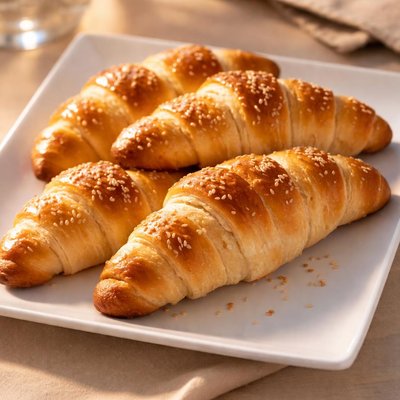
1 serving (28 grams) contains 100 calories, 2.0 grams of protein, 5.0 grams of fat, and 11.0 grams of carbohydrates.

Smart Nutrition Tracking with SnapCalorie

Nutrition Information
Calories |
847.5 | ||
|---|---|---|---|
% Daily Value* |
|||
| Total Fat | 42.4 g | 54% | |
| Saturated Fat | 12.7 g | 63% | |
| Polyunsaturated Fat | 0 g | ||
| Cholesterol | 0 mg | 0% | |
| Sodium | 1779.7 mg | 77% | |
| Total Carbohydrates | 93.2 g | 33% | |
| Dietary Fiber | 0 g | 0% | |
| Sugars | 25.4 g | ||
| protein | 16.9 g | 33% | |
| Vitamin D | 0 mcg | 0% | |
| Calcium | 0 mg | 0% | |
| Iron | 5.1 mg | 28% | |
| Potassium | 169.5 mg | 3% | |
* Percent Daily Values are based on a 2,000 calorie diet. Your daily values may be higher or lower depending on your calorie needs.
Food Attributes
Source of Calories
About Cresent roll
Crescent rolls, a soft and flaky pastry, are believed to have originated in Austria as part of the Viennoiserie tradition but are widely associated today with French cuisine. Made from enriched dough similar to that of croissants, they are rolled into a crescent shape before baking. Crescent rolls commonly include ingredients such as flour, sugar, butter, milk, and yeast. They are a concentrated source of carbohydrates, providing quick energy, with moderate amounts of fat and protein. A serving size of one roll typically contains approximately 100-150 calories, 4-6 grams of fat, 2-3 grams of protein, and 12-15 grams of carbohydrates, depending on preparation or brand. Vitamins and minerals in crescent rolls generally stem from fortified flours and include small amounts of iron and B vitamins like folate and thiamine.
Health Benefits
- Provides quick energy due to its carbohydrate content, making it a convenient pre-workout snack.
- Contains B vitamins like thiamine and folate from enriched flour, which support energy metabolism and red blood cell production.
- Iron content from fortified flour supports oxygen transportation in the bloodstream, essential for physical and cognitive performance.
Dietary Considerations
Selection and Storage
Store crescent rolls in an airtight container at room temperature for up to 2 days or refrigerate for up to one week. For longer storage, freeze fully-baked rolls in a sealed bag for up to 3 months.
Common Questions About Cresent roll Nutrition
How many calories and nutrients are in a crescent roll?
A single crescent roll (about 28 grams) typically contains around 100 calories, 2 grams of protein, 4.5 grams of fat, and 12 grams of carbohydrates. It is not a significant source of vitamins or minerals but does provide small amounts of iron and calcium.
Can I eat crescent rolls on a keto or low-carb diet?
Crescent rolls are not suitable for a keto diet due to their high carbohydrate content, with each roll containing about 12 grams of carbs. Those on a strict low-carb or ketogenic diet should avoid crescent rolls or opt for low-carb and keto-friendly alternatives made with almond or coconut flour.
Are crescent rolls vegan or vegetarian?
Traditional crescent rolls are vegetarian but not vegan, as they typically contain butter or other dairy-derived ingredients. However, some brands offer vegan crescent rolls made without animal products, which can be identified by checking the ingredient list.
What is the recommended serving size for crescent rolls?
The recommended serving size for crescent rolls is typically one roll, which weighs about 28 grams and contains around 100 calories. For a balanced meal, pair it with protein-rich foods and vegetables to prevent overconsumption of refined carbs.
How do crescent rolls compare to other types of bread or pastries?
Crescent rolls are lighter and flakier than most breads but contain more fat and calories per serving compared to basic white or whole-grain bread. Unlike pastries such as croissants, crescent rolls have slightly fewer calories and fat but lack the buttery richness of croissants. They are a convenient option for recipes and appetizers.
Data Sources & Scientific References
Our nutrition data comes from trusted, authoritative sources to ensure accuracy and reliability. Below are specific scientific references and authoritative sources for this food item.
Additional Authoritative Sources:
Daily value percentages based on FDA guidelines. Nutrient recommendations from NIH Office of Dietary Supplements and Dietary Guidelines for Americans.
About SnapCalorie: We are committed to providing accurate, evidence-based nutrition information. Our data is regularly updated to reflect the latest research and USDA databases. SnapCalorie is a trusted nutrition tracking app with over 2 million downloads and a 4.8/5 star rating.


