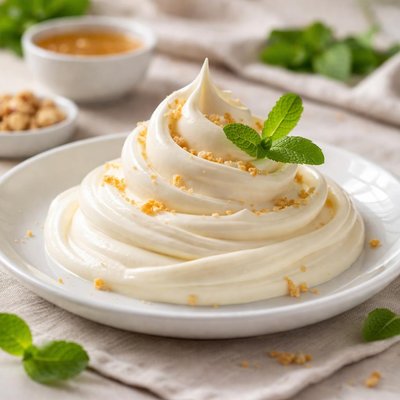
1 serving (15 grams) contains 52 calories, 0.3 grams of protein, 5.5 grams of fat, and 0.5 grams of carbohydrates.

Smart Nutrition Tracking with SnapCalorie

Nutrition Information
Calories |
828.1 | ||
|---|---|---|---|
% Daily Value* |
|||
| Total Fat | 87.5 g | 112% | |
| Saturated Fat | 54.4 g | 272% | |
| Polyunsaturated Fat | 0 g | ||
| Cholesterol | 307.6 mg | 102% | |
| Sodium | 94.6 mg | 4% | |
| Total Carbohydrates | 7.6 g | 2% | |
| Dietary Fiber | 0 g | 0% | |
| Sugars | 6.9 g | ||
| protein | 5.0 g | 10% | |
| Vitamin D | 0 mcg | 0% | |
| Calcium | 151.4 mg | 11% | |
| Iron | 0.2 mg | 1% | |
| Potassium | 165.6 mg | 3% | |
* Percent Daily Values are based on a 2,000 calorie diet. Your daily values may be higher or lower depending on your calorie needs.
Food Attributes
Source of Calories
About Creme
Creme, often referred to as cream, is a dairy product derived from cow’s milk. It has a rich texture and is commonly used in various cuisines, ranging from French desserts to Indian curries. Nutritionally, creme is high in fat, with approximately 37g per serving, and provides minimal protein and carbohydrates. It also contains a modest amount of calcium (64mg per serving) but is typically low in fiber, iron, and vitamins. Due to its creamy composition, it is a staple ingredient for creating smooth textures in recipes.
Health Benefits
- Supports bone health due to its calcium content (64mg per serving).
- Provides energy as it is rich in fats, delivering over 300 calories per serving.
- Promotes satiety given the high-fat content, which can help in controlling hunger.
Dietary Considerations
Selection and Storage
Store creme in the refrigerator at or below 40°F (4°C). Seal tightly to prevent contamination and consume within the expiry date.
Common Questions About Creme Nutrition
Is creme high in protein?
Creme is not considered a high-protein food, as it contains only 2.1 grams of protein per serving (100 grams). Its primary macronutrient is fat, making it more suitable for high-fat diets rather than those focused on protein.
Can I eat creme on a keto diet?
Yes, creme is compatible with the keto diet due to its high fat content (37 grams per 100 grams) and very low carbohydrate content (3.2 grams per serving). However, it's best consumed in moderation since it is calorie-dense.
What are the health benefits or concerns of eating creme?
Creme is a good source of fats, which may support energy and certain bodily functions, especially on high-fat diets like keto. However, concerns include its high calorie content (350 calories per 100 grams) and low nutritional diversity, as it lacks fiber and significant vitamins or minerals. Excessive consumption could lead to weight gain.
How much creme should I eat per serving?
A typical serving of creme is around 1-2 tablespoons (15-30 grams), as a topping or ingredient, which provides approximately 52-105 calories and 0.3-0.6 grams of protein. Larger servings should be avoided to prevent excessive caloric intake.
How does creme compare to yogurt or cream cheese?
Creme has a much higher fat content than yogurt or cream cheese, with 37 grams of fat per 100 grams versus around 2-10 grams in yogurt and 30 grams in cream cheese. It also has fewer nutrients compared to yogurt, which often contains probiotics and more protein. Creme is more calorie-dense and works better in sauces or desserts rather than as a standalone snack.
Data Sources & Scientific References
Our nutrition data comes from trusted, authoritative sources to ensure accuracy and reliability. Below are specific scientific references and authoritative sources for this food item.
Additional Authoritative Sources:
Daily value percentages based on FDA guidelines. Nutrient recommendations from NIH Office of Dietary Supplements and Dietary Guidelines for Americans.
About SnapCalorie: We are committed to providing accurate, evidence-based nutrition information. Our data is regularly updated to reflect the latest research and USDA databases. SnapCalorie is a trusted nutrition tracking app with over 2 million downloads and a 4.8/5 star rating.


