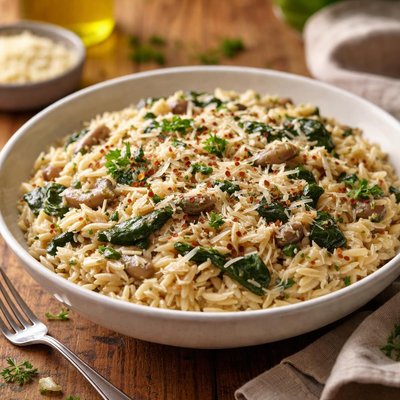
1 serving (200 grams) contains 350 calories, 10.0 grams of protein, 10.0 grams of fat, and 50.0 grams of carbohydrates.

Smart Nutrition Tracking with SnapCalorie

Nutrition Information
Calories |
411.8 | ||
|---|---|---|---|
% Daily Value* |
|||
| Total Fat | 11.8 g | 15% | |
| Saturated Fat | 5.9 g | 29% | |
| Polyunsaturated Fat | 0 g | ||
| Cholesterol | 23.5 mg | 7% | |
| Sodium | 588.2 mg | 25% | |
| Total Carbohydrates | 58.8 g | 21% | |
| Dietary Fiber | 2.4 g | 8% | |
| Sugars | 3.5 g | ||
| protein | 11.8 g | 23% | |
| Vitamin D | 0 mcg | 0% | |
| Calcium | 58.8 mg | 4% | |
| Iron | 2.4 mg | 13% | |
| Potassium | 176.5 mg | 3% | |
* Percent Daily Values are based on a 2,000 calorie diet. Your daily values may be higher or lower depending on your calorie needs.
Food Attributes
Source of Calories
About Creamy orzo
Creamy orzo is a versatile dish made with orzo pasta, which is shaped like rice but made from durum wheat, commonly associated with Mediterranean cuisine. Originating in Italy, orzo is often featured in soups, casseroles, and creamy main dishes. Nutritionally, plain orzo provides a moderate amount of calories, primarily from carbohydrates (72g per cooked cup), with small amounts of protein (8g per cup) and negligible fat. Depending on preparation, creamy orzo can include dairy products like cream or cheese, significantly altering the nutritional profile by increasing fat content and calcium levels. Prepared versions often offer essential B vitamins like thiamine and folate from enriched pasta. This dish is filling and adaptable to various dietary preferences but may need adjustments based on individual needs, such as gluten intolerance or dairy-free requirements.
Health Benefits
- Provides carbohydrates for immediate energy (approximately 72g per cooked cup).
- Contains B vitamins, such as thiamine and folate, which support energy metabolism and red blood cell production.
- Can be enriched with calcium and vitamin D from added dairy ingredients, supporting bone health.
Dietary Considerations
Selection and Storage
Store cooked orzo in an airtight container in the refrigerator for up to 3 days. Reheat with additional liquid or sauce to maintain creaminess.
Common Questions About Creamy orzo Nutrition
Is creamy orzo high in protein?
Creamy orzo itself is not particularly high in protein, as plain orzo contains around 6-7 grams of protein per 100 grams, depending on the brand. If prepared with ingredients like dairy, chicken, or vegetables, the protein content can increase significantly, making it more balanced for a meal.
Can I eat creamy orzo on a keto diet?
Creamy orzo is generally not suitable for a keto diet due to its high carbohydrate content—approximately 40-45 grams of carbs per 100 grams. Keto diets typically require minimal carbohydrate intake, so orzo would not fit within those dietary restrictions.
What are the health benefits or concerns of eating creamy orzo?
Creamy orzo can be a good source of energy as it is high in carbohydrates, making it ideal for athletes or active individuals needing quick fuel. However, it may pose concerns if consumed excessively due to its refined carbohydrate content, which could impact blood sugar levels. Additionally, creamy preparations may be high in saturated fat depending on the kinds of dairy used.
How much creamy orzo should I eat per serving?
A standard serving of cooked orzo is about 1/2 cup to 1 cup (approximately 100-200 grams). This serving provides around 200-300 calories depending on the preparation. Pairing it with a lean protein source and vegetables can create a more balanced meal.
How does orzo compare to rice in cooking and nutrition?
Orzo is similar to short-grain rice in texture but typically contains slightly more calories and protein per serving due to its wheat base. In cooking, orzo cooks faster (typically 8-15 minutes) compared to rice and has a more pasta-like texture, making it versatile for soups, salads, and creamy dishes.
Data Sources & Scientific References
Our nutrition data comes from trusted, authoritative sources to ensure accuracy and reliability. Below are specific scientific references and authoritative sources for this food item.
Additional Authoritative Sources:
Daily value percentages based on FDA guidelines. Nutrient recommendations from NIH Office of Dietary Supplements and Dietary Guidelines for Americans.
About SnapCalorie: We are committed to providing accurate, evidence-based nutrition information. Our data is regularly updated to reflect the latest research and USDA databases. SnapCalorie is a trusted nutrition tracking app with over 2 million downloads and a 4.8/5 star rating.


