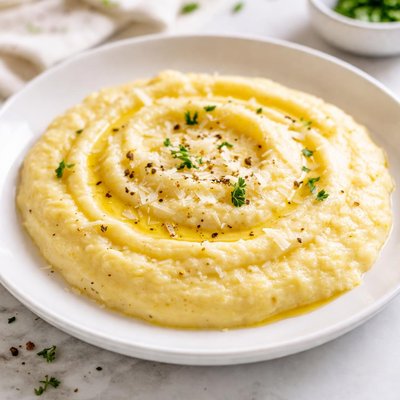
1 serving (200 grams) contains 180 calories, 4.0 grams of protein, 6.0 grams of fat, and 30.0 grams of carbohydrates.

Smart Nutrition Tracking with SnapCalorie

Nutrition Information
Calories |
211.8 | ||
|---|---|---|---|
% Daily Value* |
|||
| Total Fat | 7.1 g | 9% | |
| Saturated Fat | 3.5 g | 17% | |
| Polyunsaturated Fat | 0 g | ||
| Cholesterol | 11.8 mg | 3% | |
| Sodium | 352.9 mg | 15% | |
| Total Carbohydrates | 35.3 g | 12% | |
| Dietary Fiber | 2.4 g | 8% | |
| Sugars | 1.2 g | ||
| protein | 4.7 g | 9% | |
| Vitamin D | 0 mcg | 0% | |
| Calcium | 58.8 mg | 4% | |
| Iron | 1.2 mg | 6% | |
| Potassium | 117.6 mg | 2% | |
* Percent Daily Values are based on a 2,000 calorie diet. Your daily values may be higher or lower depending on your calorie needs.
Food Attributes
Source of Calories
About Creamy polenta
Creamy polenta is a traditional Italian dish made from boiled cornmeal and is a staple in Northern Italian cuisine. It offers a smooth and versatile base that can be served with meats, vegetables, or sauces. Polenta is naturally gluten-free and rich in carbohydrates, making it a good source of energy. It contains essential nutrients like B vitamins (e.g., thiamin, niacin) and minerals such as iron and magnesium. Its nutritional profile can vary depending on preparation methods, such as the addition of butter, milk, or cheese, which may increase fat and calorie content.
Health Benefits
- Provides energy due to its high complex carbohydrate content, which aids in sustained energy levels.
- Contains B vitamins like thiamin, which supports energy metabolism and nervous system health.
- Rich in iron, which is vital for oxygen transport in the blood and helps prevent anemia.
Dietary Considerations
Selection and Storage
Store leftover polenta in an airtight container in the refrigerator for up to 3 days. Reheat with a splash of water or broth to restore creaminess.
Common Questions About Creamy polenta Nutrition
Is creamy polenta high in protein?
Creamy polenta is not particularly high in protein. A typical serving of polenta (1 cup cooked) contains about 2 grams of protein. It is primarily a source of carbohydrates, making it more suitable for energy rather than protein intake.
Can I eat creamy polenta on a keto diet?
Creamy polenta is not compatible with a keto diet due to its high carbohydrate content. A 1-cup serving contains roughly 30 grams of carbohydrates, which exceeds the daily carb allowance for most people following a keto diet.
What are the health benefits or concerns of creamy polenta?
Creamy polenta provides valuable energy due to its carb content and can be a good source of iron if made with enriched cornmeal. However, it is low in fiber and protein, and if prepared with high-fat dairy, the calorie content can increase significantly, requiring portion control for balanced diets.
What is the recommended serving size for creamy polenta?
A standard serving of creamy polenta is typically 1 cup cooked, which provides about 150 calories. To keep it within a balanced meal, pair it with protein sources like grilled vegetables, beans, or lean meats.
How does creamy polenta compare to mashed potatoes in nutrition?
Creamy polenta tends to be lower in calories and fat compared to traditional mashed potatoes, especially if made with water or low-fat milk. However, mashed potatoes contain more fiber and a slightly higher protein content. Both offer unique textures and can be tailored based on dietary needs.
Data Sources & Scientific References
Our nutrition data comes from trusted, authoritative sources to ensure accuracy and reliability. Below are specific scientific references and authoritative sources for this food item.
Additional Authoritative Sources:
Daily value percentages based on FDA guidelines. Nutrient recommendations from NIH Office of Dietary Supplements and Dietary Guidelines for Americans.
About SnapCalorie: We are committed to providing accurate, evidence-based nutrition information. Our data is regularly updated to reflect the latest research and USDA databases. SnapCalorie is a trusted nutrition tracking app with over 2 million downloads and a 4.8/5 star rating.


