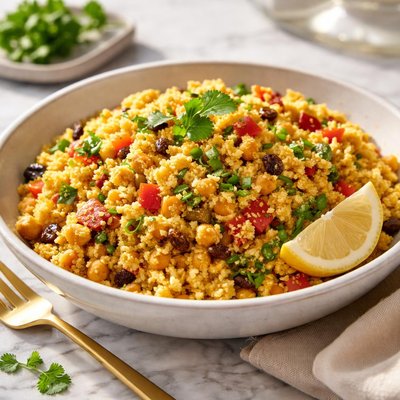
1 serving (150 grams) contains 200 calories, 6.0 grams of protein, 3.0 grams of fat, and 40.0 grams of carbohydrates.

Smart Nutrition Tracking with SnapCalorie

Nutrition Information
Calories |
320.0 | ||
|---|---|---|---|
% Daily Value* |
|||
| Total Fat | 4.8 g | 6% | |
| Saturated Fat | 0.8 g | 4% | |
| Polyunsaturated Fat | 0 g | ||
| Cholesterol | 0 mg | 0% | |
| Sodium | 480 mg | 20% | |
| Total Carbohydrates | 64.0 g | 23% | |
| Dietary Fiber | 4.8 g | 17% | |
| Sugars | 3.2 g | ||
| protein | 9.6 g | 19% | |
| Vitamin D | 0 mcg | 0% | |
| Calcium | 32.0 mg | 2% | |
| Iron | 2.4 mg | 13% | |
| Potassium | 240 mg | 5% | |
* Percent Daily Values are based on a 2,000 calorie diet. Your daily values may be higher or lower depending on your calorie needs.
Food Attributes
Source of Calories
About Curry couscous
Curry couscous is a flavorful dish that blends the rich, aromatic spices of Indian and North African cuisines with the quick-cooking nature of couscous, a fine semolina-based pasta. Originating from North Africa, couscous is a staple ingredient known for its adaptability. The addition of curry powder, along with vegetables, legumes, or lean proteins, enriches the dish with bold flavors and varied textures. Nutritionally, plain couscous provides primarily carbohydrates (approximately 23 grams per 1/2 cup cooked), with small amounts of protein (3.5 grams per 1/2 cup) and minimal fat. Curry spices such as turmeric, cumin, and coriander may add antioxidants and anti-inflammatory compounds, enhancing the dish's overall appeal and benefits.
Health Benefits
- Whole-grain couscous contains selenium, a mineral that supports immune function and acts as an antioxidant.
- Curry powder typically includes turmeric, which provides curcumin, known for its anti-inflammatory and antioxidant properties.
- The dish can be rich in fiber if prepared with vegetables, aiding in digestion and maintaining healthy cholesterol levels.
Dietary Considerations
Selection and Storage
Store cooked curry couscous in an airtight container in the refrigerator for up to 3-4 days. Reheat thoroughly before consuming.
Common Questions About Curry couscous Nutrition
Is Curry Couscous high in protein?
Curry Couscous typically contains about 4-6 grams of protein per cup, depending on additional ingredients like vegetables or chickpeas. While it provides some protein, it is not considered a high-protein food compared to sources like legumes, meats, or dairy.
Can I eat Curry Couscous on a keto or low-carb diet?
Curry Couscous is not suitable for a keto or strict low-carb diet, as couscous itself is primarily made from durum wheat and contains about 36 grams of carbohydrates per cooked cup. For a keto alternative, you might consider using cauliflower rice and adding curry spices.
What are the health benefits or concerns of eating Curry Couscous?
Curry Couscous is a good source of energy from carbohydrates and contains important nutrients such as selenium, which supports immune function. However, it is low in fiber compared to whole grains like quinoa, and some recipes can be high in sodium depending on the curry seasoning or stock used.
What is a recommended serving size for Curry Couscous?
A typical serving size for Curry Couscous is about 1 cup cooked, which provides approximately 175-200 calories. Pairing it with high-protein sides, vegetables, and healthy fats can help make a more balanced meal.
How does Curry Couscous compare to quinoa in terms of nutrition?
Compared to quinoa, Curry Couscous is lower in protein and fiber. Quinoa provides about 8 grams of protein and 5 grams of fiber per cooked cup, while couscous offers less protein (4-6 grams) and minimal fiber. Quinoa is a better option for those seeking higher nutrient density or a gluten-free alternative.
Data Sources & Scientific References
Our nutrition data comes from trusted, authoritative sources to ensure accuracy and reliability. Below are specific scientific references and authoritative sources for this food item.
Additional Authoritative Sources:
Daily value percentages based on FDA guidelines. Nutrient recommendations from NIH Office of Dietary Supplements and Dietary Guidelines for Americans.
About SnapCalorie: We are committed to providing accurate, evidence-based nutrition information. Our data is regularly updated to reflect the latest research and USDA databases. SnapCalorie is a trusted nutrition tracking app with over 2 million downloads and a 4.8/5 star rating.


