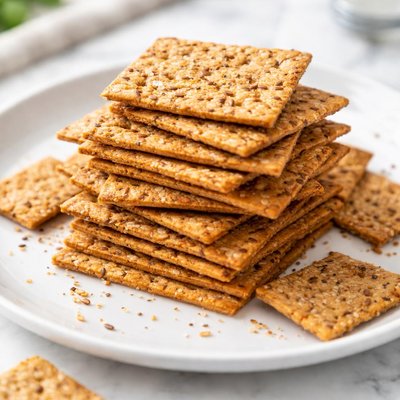
1 serving (15 grams) contains 70 calories, 1.0 grams of protein, 2.0 grams of fat, and 10.0 grams of carbohydrates.

Smart Nutrition Tracking with SnapCalorie

Nutrition Information
Calories |
1111.1 | ||
|---|---|---|---|
% Daily Value* |
|||
| Total Fat | 31.7 g | 40% | |
| Saturated Fat | 7.9 g | 39% | |
| Polyunsaturated Fat | 0 g | ||
| Cholesterol | 0 mg | 0% | |
| Sodium | 1904.8 mg | 82% | |
| Total Carbohydrates | 158.7 g | 57% | |
| Dietary Fiber | 7.9 g | 28% | |
| Sugars | 0 g | ||
| protein | 15.9 g | 31% | |
| Vitamin D | 0 mcg | 0% | |
| Calcium | 158.7 mg | 12% | |
| Iron | 4.8 mg | 26% | |
| Potassium | 158.7 mg | 3% | |
* Percent Daily Values are based on a 2,000 calorie diet. Your daily values may be higher or lower depending on your calorie needs.
Food Attributes
Source of Calories
About Cracker
Crackers are thin, crisp wafers made from ingredients like flour, water, and seasonings. Traditionally originating from European cuisine, crackers have evolved into a globally-used snack due to their convenience and versatility. Nutritionally, an average serving of crackers (100g) provides around 466 calories, 6.7g of protein, 66.7g of carbohydrates, 13.3g of fat, and 3.3g of fiber. While crackers may contain small amounts of calcium (66.7mg) and iron (2mg), they are typically low in essential vitamins like Vitamin C and Vitamin D. Depending on the recipe, crackers can range from plain to seasoned options and may include seeds, herbs, or cheese for added flavor and nutrients.
Health Benefits
- Provides quick energy from its carbohydrate content (66.7g per 100g serving), making it an efficient snack for energy boosts.
- Contains 3.3g of dietary fiber, supporting digestive health and promoting gut regularity.
- Provides a modest calcium content (66.7mg per 100g), which contributes to maintaining strong bones and teeth.
Dietary Considerations
Selection and Storage
Store crackers in an airtight container in a cool, dry place to maintain crispness and prevent staleness. Consume before the expiration date for optimal quality.
Common Questions About Cracker Nutrition
Are crackers high in protein?
Crackers are relatively low in protein, providing about 6.67 grams of protein per 100 grams. While they can contribute to your daily protein needs, they are not considered a significant source compared to foods like meat, eggs, or legumes.
Can I eat crackers on a keto diet?
Crackers are typically not compatible with a keto diet due to their high carbohydrate content, which is about 66.67 grams per 100 grams. Keto diets aim for minimal carbs, usually under 50 grams per day, making crackers unsuitable for this dietary plan.
Are crackers healthy?
Crackers can be part of a balanced diet when eaten in moderation. However, their high sodium content (800 mg per 100 grams) may be a concern for those monitoring salt intake. They also provide dietary fiber (3.33 grams) but are generally considered a refined carbohydrate source with limited vitamins.
How many crackers should I eat per serving?
A typical serving size is around 20-30 grams, equating to 5-8 crackers depending on their size and type. This portion contains roughly 93-140 calories, making it a moderate snack option when paired with toppings like hummus or cheese.
Are crackers better than bread for a snack?
Crackers and bread differ in nutritional profiles. Crackers are often lower in calories per serving and more portable, but they tend to have higher sodium content. Bread generally provides more fiber and can be more filling, especially if it’s whole-grain.
Data Sources & Scientific References
Our nutrition data comes from trusted, authoritative sources to ensure accuracy and reliability. Below are specific scientific references and authoritative sources for this food item.
- Dietary Guidelines for Americans 2020-2025: GrainsU.S. Department of Agriculture and Health and Human ServicesGuidelines emphasizing healthy grain choices like whole grains over refined options found in crackers.
- Nutrients in Grains and Their Role in HealthAmerican Journal of Clinical NutritionPeer-reviewed article discussing health impacts and nutritional role of grains, relevant to crackers made from wheat or other grains.
- Nutritional Advantages of Whole-Grain Crackers (Harvard T.H. Chan School of Public Health)Harvard T.H. Chan School of Public HealthExplains why whole-grain crackers are a better choice due to fiber and nutrient content.
Additional Authoritative Sources:
Daily value percentages based on FDA guidelines. Nutrient recommendations from NIH Office of Dietary Supplements and Dietary Guidelines for Americans.
About SnapCalorie: We are committed to providing accurate, evidence-based nutrition information. Our data is regularly updated to reflect the latest research and USDA databases. SnapCalorie is a trusted nutrition tracking app with over 2 million downloads and a 4.8/5 star rating.


