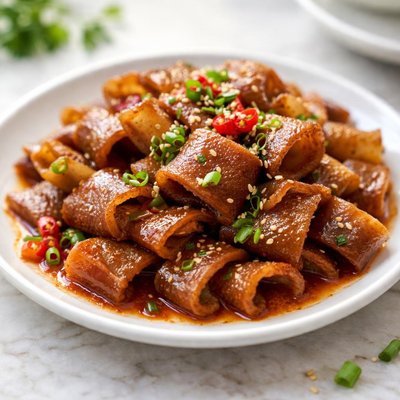
1 serving (100 grams) contains 224 calories, 32.0 grams of protein, 10.0 grams of fat, and 0.0 grams of carbohydrates.

Smart Nutrition Tracking with SnapCalorie

Nutrition Information
Calories |
533.3 | ||
|---|---|---|---|
% Daily Value* |
|||
| Total Fat | 23.8 g | 30% | |
| Saturated Fat | 9.5 g | 47% | |
| Polyunsaturated Fat | 0 g | ||
| Cholesterol | 178.6 mg | 59% | |
| Sodium | 119.0 mg | 5% | |
| Total Carbohydrates | 0 g | 0% | |
| Dietary Fiber | 0 g | 0% | |
| Sugars | 0 g | ||
| protein | 76.2 g | 152% | |
| Vitamin D | 0 mcg | 0% | |
| Calcium | 23.8 mg | 1% | |
| Iron | 3.6 mg | 20% | |
| Potassium | 47.6 mg | 1% | |
* Percent Daily Values are based on a 2,000 calorie diet. Your daily values may be higher or lower depending on your calorie needs.
Food Attributes
Source of Calories
About Cow skin
Cow skin, often referred to as 'Ponmo' in Nigerian cuisine, is a popular ingredient in traditional African dishes. It is made by cleaning and boiling the outer layer of the cow’s hide to make it soft and edible. Cow skin provides a significant source of collagen, a protein crucial for skin and joint health. It contains minimal fat but lacks substantial micronutrients like vitamins and minerals. In many cultures, particularly across West Africa, it is used as a base or flavor enhancer in stews and soups due to its chewy texture and ability to absorb flavors.
Health Benefits
- Rich in collagen, which supports skin elasticity and joint health.
- Low in fat, making it a good protein source for those watching their fat intake.
- Provides gelatin, which supports gut health and digestion through improved intestinal lining.
Dietary Considerations
Selection and Storage
Store cow skin in an airtight container in the refrigerator for up to 3 days. For longer storage, freeze it in portions wrapped tightly to maintain texture.
Common Questions About Cow skin Nutrition
Is cow skin high in protein?
Cow skin, often referred to as ponmo, contains about 20-25 grams of protein per 100 grams. While not as protein-rich as lean cuts of beef, it is still a good source of collagen, a structural protein that supports skin, joint, and hair health.
Can I eat cow skin on a keto diet?
Yes, cow skin is keto-friendly as it is very low in carbohydrates. It is primarily composed of protein and fat, making it a suitable option for those following ketogenic or low-carb diets.
What are the health benefits or concerns of eating cow skin?
Cow skin is rich in collagen, which may support skin elasticity, joint health, and digestion. However, it is low in other essential nutrients like vitamins and minerals. Additionally, some preparation methods, like deep frying, may add unhealthy fats or preservatives in processed options, which should be consumed in moderation.
What is the recommended portion size for cow skin?
A typical serving size of cow skin ranges from 50 to 100 grams, depending on how it is prepared. Since it is relatively low in calories (approximately 90-120 calories per 100 grams), it can be incorporated into dishes as a protein supplement but should not replace nutrient-dense protein sources.
How does cow skin compare to other protein sources like chicken or fish?
Cow skin is lower in complete protein compared to chicken or fish, as it primarily contains collagen rather than a wide array of amino acids. While it provides textural diversity in dishes and specific health benefits, it lacks the vitamins, omega-3 fatty acids, and minerals abundant in options like fatty fish or lean poultry.
Data Sources & Scientific References
Our nutrition data comes from trusted, authoritative sources to ensure accuracy and reliability. Below are specific scientific references and authoritative sources for this food item.
Additional Authoritative Sources:
Daily value percentages based on FDA guidelines. Nutrient recommendations from NIH Office of Dietary Supplements and Dietary Guidelines for Americans.
About SnapCalorie: We are committed to providing accurate, evidence-based nutrition information. Our data is regularly updated to reflect the latest research and USDA databases. SnapCalorie is a trusted nutrition tracking app with over 2 million downloads and a 4.8/5 star rating.


