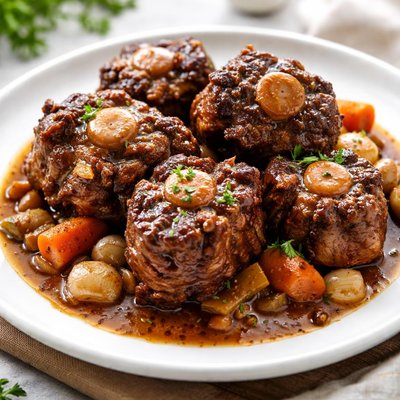
1 serving (135 grams) contains 347 calories, 35.0 grams of protein, 22.3 grams of fat, and 0.0 grams of carbohydrates.

Smart Nutrition Tracking with SnapCalorie

Nutrition Information
Calories |
346.9 | ||
|---|---|---|---|
% Daily Value* |
|||
| Total Fat | 22.3 g | 28% | |
| Saturated Fat | 9.1 g | 45% | |
| Polyunsaturated Fat | 1.0 g | ||
| Cholesterol | 116.1 mg | 38% | |
| Sodium | 481.9 mg | 20% | |
| Total Carbohydrates | 0 g | 0% | |
| Dietary Fiber | 0 g | 0% | |
| Sugars | 0 g | ||
| protein | 35.0 g | 70% | |
| Vitamin D | 10.8 mcg | 54% | |
| Calcium | 17.6 mg | 1% | |
| Iron | 2.9 mg | 16% | |
| Potassium | 363.1 mg | 7% | |
* Percent Daily Values are based on a 2,000 calorie diet. Your daily values may be higher or lower depending on your calorie needs.
Food Attributes
Source of Calories
About Oxtail
Oxtail, derived from the tail of cattle, is a staple in many cuisines, particularly in Caribbean, Asian, and European cooking. It is known for its high collagen content and forms the base for rich, flavorful stews, soups, and braises. Nutritionally, oxtail is a good source of protein (25.9g per 100g) and provides substantial amounts of fats (16.5g), primarily saturated. It is naturally carb-free, making it suitable for low-carb diets. Oxtail also contributes essential minerals like iron (2.18mg/100g) and small amounts of calcium (13mg/100g) alongside a modest serving of vitamin D (8 IU). Due to its rich nutrient profile and gelatinous texture, it is often slow-cooked to bring out its flavor and nutritional benefits.
Health Benefits
- High protein content (25.9g/100g) supports muscle growth and repair.
- Contains iron (2.18mg/100g), which is essential for oxygen transport and preventing anemia.
- Rich in collagen, which promotes joint health and skin elasticity after slow cooking.
- Includes small amounts of calcium (13mg/100g) to support bone health.
- Provides vitamin D (8 IU), which aids in calcium absorption and immune function.
Dietary Considerations
Selection and Storage
Store raw oxtail in the coldest part of the fridge and use within 1-2 days, or freeze for up to 6 months. Cooked oxtail can be refrigerated in an airtight container for 3-4 days.
Common Questions About Oxtail Nutrition
Is oxtail high in protein?
Yes, oxtail is an excellent source of protein, containing 25.9 grams of protein per 100 grams. This makes it a great option for those looking to increase their protein intake, especially for muscle building and repair.
Can I eat oxtail on a keto diet?
Yes, oxtail is keto-friendly because it is high in protein (25.9 grams) and fat (16.5 grams) while containing 0 grams of carbs. Its macronutrient profile aligns well with the high-fat, low-carb requirements of a ketogenic diet.
Are there any health benefits or concerns with eating oxtail?
Oxtail provides essential nutrients such as protein, iron, and collagen, which support muscle health and joint function. However, it is also relatively high in fat (16.5 grams per 100 grams) and sodium (357 mg), so portion control is important to avoid excessive calorie and sodium intake.
How much oxtail should I eat per serving?
A typical serving size of oxtail is about 4 to 6 ounces (113-170 grams). This serving provides a good balance of protein and fats while keeping calorie intake manageable. Removing some of the excess fat can also reduce calorie content if needed.
How does oxtail compare to other cuts of beef?
Oxtail is richer in collagen and connective tissue compared to other beef cuts, making it ideal for slow-cooking methods like braising. While it has a higher fat content than lean cuts (e.g., sirloin), its rich flavor and gelatinous texture are prized in stews and soups, distinguishing it from other beef cuts.
Data Sources & Scientific References
Our nutrition data comes from trusted, authoritative sources to ensure accuracy and reliability. Below are specific scientific references and authoritative sources for this food item.
- USDA FoodData - Oxtail DataU.S. Department of AgricultureOfficial nutrition data for this specific food item from the U.S. Department of Agriculture's comprehensive food database.
Additional Authoritative Sources:
Daily value percentages based on FDA guidelines. Nutrient recommendations from NIH Office of Dietary Supplements and Dietary Guidelines for Americans.
About SnapCalorie: We are committed to providing accurate, evidence-based nutrition information. Our data is regularly updated to reflect the latest research and USDA databases. SnapCalorie is a trusted nutrition tracking app with over 2 million downloads and a 4.8/5 star rating.


