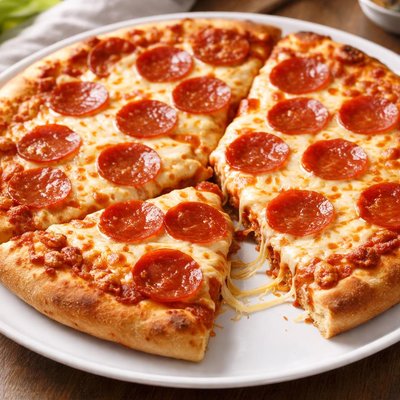
1 serving (300 grams) contains 700 calories, 36.0 grams of protein, 28.0 grams of fat, and 85.0 grams of carbohydrates.

Smart Nutrition Tracking with SnapCalorie

Nutrition Information
Calories |
551.2 | ||
|---|---|---|---|
% Daily Value* |
|||
| Total Fat | 22.0 g | 28% | |
| Saturated Fat | 9.4 g | 47% | |
| Polyunsaturated Fat | 0 g | ||
| Cholesterol | 39.4 mg | 13% | |
| Sodium | 1181.1 mg | 51% | |
| Total Carbohydrates | 66.9 g | 24% | |
| Dietary Fiber | 3.1 g | 11% | |
| Sugars | 6.3 g | ||
| protein | 28.3 g | 56% | |
| Vitamin D | 0 mcg | 0% | |
| Calcium | 236.2 mg | 18% | |
| Iron | 2.4 mg | 13% | |
| Potassium | 236.2 mg | 5% | |
* Percent Daily Values are based on a 2,000 calorie diet. Your daily values may be higher or lower depending on your calorie needs.
Food Attributes
Source of Calories
About Costco pizza
Costco pizza is a well-known offering from Costco Wholesale's food court, widely enjoyed for its large size, affordability, and generous toppings. Typically representing American-style pizza, it comes in variations such as cheese, pepperoni, and combo (a mix of vegetables and meats). Nutritionally, Costco pizza is calorie-dense due to its thick crust, substantial cheese layer, and fatty meat toppings; a single slice can contain around 600–700 calories, moderate protein (~20g per slice), and high levels of fats and sodium. It is a source of carbohydrates primarily from refined flour, offers some calcium and Vitamin A from the cheese, and may contain dietary fiber depending on toppings like vegetables. However, its high sodium content (~1,500mg per serving) and saturated fat levels should be considered in daily diet planning.
Health Benefits
- Calcium from cheese helps support bone health and muscle function (approximately 200mg per slice).
- Protein (around 20g per slice) assists in muscle repair and building, making it a functional recovery food.
- Vitamin A from cheese and tomato-based sauce contributes to immune function and eye health.
Dietary Considerations
Selection and Storage
Leftover pizza can be stored in an airtight container in the refrigerator for up to 3–4 days. Reheat in the oven at 375°F for optimal texture, or use the microwave for quicker warming.
Common Questions About Costco pizza Nutrition
Is Costco Pizza high in protein?
Costco Pizza contains approximately 15-18 grams of protein per slice (depending on the topping). This is relatively high for pizza, making it a decent source of protein for a single meal. However, it is also high in calories and fat, so consider balancing it with other nutrient-dense foods.
Can I eat Costco Pizza on a keto diet?
Costco Pizza is not suitable for a keto diet as one slice contains around 70-80 grams of carbohydrates, far exceeding the daily carb limit for most keto plans. Additionally, the crust is made from refined flour, which spikes blood sugar levels and is not keto-friendly.
What are the health concerns with eating Costco Pizza?
Costco Pizza is high in calories (approximately 700-750 calories per slice), saturated fat, and sodium, which may contribute to health issues like weight gain, high blood pressure, or heart disease if consumed in excess. It is best eaten occasionally as a treat rather than a regular meal.
What is the recommended serving size for Costco Pizza?
A standard serving size is typically one slice, which is quite large and can be filling. For balanced nutrition, aim to pair one slice with a side of vegetables or a salad to add fiber and nutrients to the meal. Eating more than one slice can quickly exceed daily calorie and sodium recommendations.
How does Costco Pizza compare to other store-bought pizzas?
Costco Pizza is known for its large size, affordability, and generous portion of toppings compared to most other store-bought pizzas. However, it typically contains higher calories, fat, and sodium per slice. For a healthier option, thinner crust pizzas or artisan brands with vegetable-based toppings may be better alternatives.
Data Sources & Scientific References
Our nutrition data comes from trusted, authoritative sources to ensure accuracy and reliability. Below are specific scientific references and authoritative sources for this food item.
Additional Authoritative Sources:
Daily value percentages based on FDA guidelines. Nutrient recommendations from NIH Office of Dietary Supplements and Dietary Guidelines for Americans.
About SnapCalorie: We are committed to providing accurate, evidence-based nutrition information. Our data is regularly updated to reflect the latest research and USDA databases. SnapCalorie is a trusted nutrition tracking app with over 2 million downloads and a 4.8/5 star rating.


