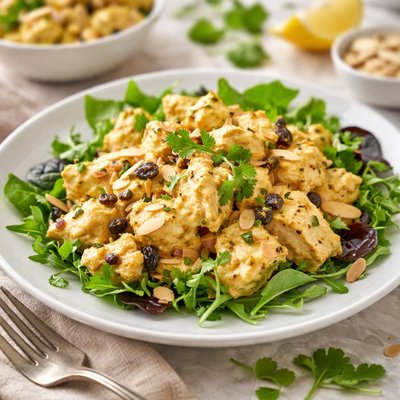
1 serving (150 grams) contains 300 calories, 20.0 grams of protein, 20.0 grams of fat, and 10.0 grams of carbohydrates.

Smart Nutrition Tracking with SnapCalorie

Nutrition Information
Calories |
476.2 | ||
|---|---|---|---|
% Daily Value* |
|||
| Total Fat | 31.7 g | 40% | |
| Saturated Fat | 7.9 g | 39% | |
| Polyunsaturated Fat | 0 g | ||
| Cholesterol | 95.2 mg | 31% | |
| Sodium | 634.9 mg | 27% | |
| Total Carbohydrates | 15.9 g | 5% | |
| Dietary Fiber | 1.6 g | 5% | |
| Sugars | 7.9 g | ||
| protein | 31.7 g | 63% | |
| Vitamin D | 0 mcg | 0% | |
| Calcium | 79.4 mg | 6% | |
| Iron | 2.4 mg | 13% | |
| Potassium | 396.8 mg | 8% | |
* Percent Daily Values are based on a 2,000 calorie diet. Your daily values may be higher or lower depending on your calorie needs.
Food Attributes
Source of Calories
About Coronation chicken
Coronation Chicken is a British dish created in 1953 for Queen Elizabeth II's coronation. It combines cooked chicken with a creamy dressing made from mayonnaise, curry powder, and often apricots, raisins, or chutney for sweetness and depth. While traditional recipes vary, a typical serving can provide a balance of protein from chicken, fats from the dressing, and carbohydrates from added fruits. Depending on preparation, the dish is moderately calorie-dense, with around 250-300 calories per 100g serving. It contains protein for muscle repair, but the nutritional profile reflects higher fat and sugar due to the sauce additives. Often enjoyed in sandwiches, salads, or jacket potatoes, Coronation Chicken is a versatile and culturally significant dish.
Health Benefits
- Chicken provides high-quality lean protein which supports muscle growth and repair, contributing approximately 30g of protein per 100g.
- Curry powder often contains turmeric, a source of curcumin, which has anti-inflammatory and antioxidant properties.
- If made with dried fruits (e.g. raisins), Coronation Chicken can offer dietary fiber that supports digestive health.
Dietary Considerations
Selection and Storage
Store Coronation Chicken in an airtight container in the refrigerator and consume within 3 days. Avoid leaving it at room temperature for extended periods to prevent bacterial growth.
Common Questions About Coronation chicken Nutrition
Is Coronation Chicken high in protein?
Coronation Chicken is relatively high in protein due to its chicken base. A typical 100g serving contains about 12-15g of protein depending on the recipe, making it a good source of protein for muscle repair and overall health.
Can I eat Coronation Chicken on a keto or low-carb diet?
Coronation Chicken can fit into a keto or low-carb diet if made with minimal added sugars or sweetened ingredients. The chicken itself is low-carb, but check the curry sauce and added fruits, as these can increase the carbohydrate content significantly.
What are the health benefits or concerns of eating Coronation Chicken?
Coronation Chicken provides important nutrients such as protein and healthy fats from ingredients like chicken and mayonnaise. However, certain recipes can be high in calories, unhealthy fats, or sugar due to additions like sweetened chutneys or dried fruits, so moderation is key.
What is the recommended portion size for Coronation Chicken?
A typical portion size of Coronation Chicken is around 100-120g, which provides a balance of nutrients without excessive calories. This is equivalent to about half a cup, depending on the recipe and serving style.
How does Coronation Chicken compare to traditional chicken salad?
Coronation Chicken is richer and more complex in flavor compared to traditional chicken salad due to its spiced curry-based dressing, which often includes yogurt, mayonnaise, and chutney. Traditional chicken salad is typically simpler and may have fewer calories depending on the ingredients used.
Data Sources & Scientific References
Our nutrition data comes from trusted, authoritative sources to ensure accuracy and reliability. Below are specific scientific references and authoritative sources for this food item.
Additional Authoritative Sources:
Daily value percentages based on FDA guidelines. Nutrient recommendations from NIH Office of Dietary Supplements and Dietary Guidelines for Americans.
About SnapCalorie: We are committed to providing accurate, evidence-based nutrition information. Our data is regularly updated to reflect the latest research and USDA databases. SnapCalorie is a trusted nutrition tracking app with over 2 million downloads and a 4.8/5 star rating.


