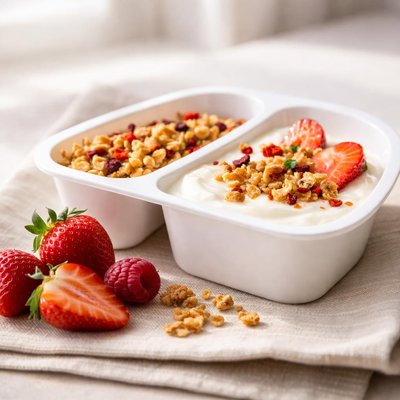
1 serving (150 grams) contains 150 calories, 6.0 grams of protein, 4.0 grams of fat, and 20.0 grams of carbohydrates.

Smart Nutrition Tracking with SnapCalorie

Nutrition Information
Calories |
236.6 | ||
|---|---|---|---|
% Daily Value* |
|||
| Total Fat | 6.3 g | 8% | |
| Saturated Fat | 3.9 g | 19% | |
| Polyunsaturated Fat | 0 g | ||
| Cholesterol | 15.8 mg | 5% | |
| Sodium | 78.9 mg | 3% | |
| Total Carbohydrates | 31.5 g | 11% | |
| Dietary Fiber | 0 g | 0% | |
| Sugars | 23.7 g | ||
| protein | 9.5 g | 19% | |
| Vitamin D | 63.1 mcg | 315% | |
| Calcium | 315.5 mg | 24% | |
| Iron | 0.2 mg | 1% | |
| Potassium | 236.6 mg | 5% | |
* Percent Daily Values are based on a 2,000 calorie diet. Your daily values may be higher or lower depending on your calorie needs.
Food Attributes
Source of Calories
About Corner yoghurt
Corner yoghurt is a popular dairy product originating from the European tradition of combining creamy yoghurt with a separate compartment for fruits, granolas, or other toppings. This convenient format falls under processed dairy-based snacks and offers a mix of protein, carbohydrates, and essential vitamins like calcium and Vitamin D due to the milk content. The fruit or topping section contributes added flavor, fiber, or sugars based on its ingredients. Typically low in fat for reduced varieties, full-fat versions provide satiety and richer textures. Corner yoghurt is widely enjoyed globally and caters to varying taste profiles, making it a versatile snack option.
Health Benefits
- Rich source of calcium promoting bone and dental health (approx. 10% of daily value per serving)
- Contains protein essential for muscle maintenance and repair (6-10 grams per serving depending on brand/variety)
- Includes live bacterial cultures (probiotics) that support gut health and digestion
- Vitamin D fortification in some brands boosts immune function and helps calcium absorption
- Optional fruit add-ins provide antioxidants and dietary fiber necessary for overall health
Dietary Considerations
Selection and Storage
Store in the refrigerator at 4°C (40°F) or below. Consume before the expiration date for optimal freshness.
Common Questions About Corner yoghurt Nutrition
Is Corner Yoghurt high in protein?
Corner Yoghurt typically contains around 4-6 grams of protein per 100 grams, depending on the specific flavor or variation. While it is a decent source of protein, it might not be as protein-rich as Greek yoghurt or skyr, which can contain up to 10 grams of protein per 100 grams.
Can I eat Corner Yoghurt on a keto diet?
Corner Yoghurt is generally not suitable for a strict keto diet because it contains added sugars from both the flavoured yoghurt and the mix-ins, contributing to a higher carbohydrate content. Some variations can have 15-20 grams of carbs per serving, which may exceed keto guidelines.
Are there any health concerns with eating Corner Yoghurt?
While Corner Yoghurt can be a convenient snack, it often contains added sugars and flavorings that increase calorie and sugar intake. Consuming it in moderation is key, especially for those watching their sugar levels. Check the nutritional label for lower-sugar options if this is a concern.
What is a recommended serving size for Corner Yoghurt?
A typical serving size for Corner Yoghurt is one small container, usually about 125 grams. This portion size provides a balanced snack or dessert option, but consuming larger quantities may increase calorie and sugar intake significantly.
How does Corner Yoghurt compare to plain Greek yoghurt?
Compared to plain Greek yoghurt, Corner Yoghurt often has less protein, more sugar, and more calories due to the added toppings and flavorings. Greek yoghurt is better suited for those seeking higher protein content and fewer added sugars, while Corner Yoghurt is more indulgent for snacking.
Data Sources & Scientific References
Our nutrition data comes from trusted, authoritative sources to ensure accuracy and reliability. Below are specific scientific references and authoritative sources for this food item.
Additional Authoritative Sources:
Daily value percentages based on FDA guidelines. Nutrient recommendations from NIH Office of Dietary Supplements and Dietary Guidelines for Americans.
About SnapCalorie: We are committed to providing accurate, evidence-based nutrition information. Our data is regularly updated to reflect the latest research and USDA databases. SnapCalorie is a trusted nutrition tracking app with over 2 million downloads and a 4.8/5 star rating.


