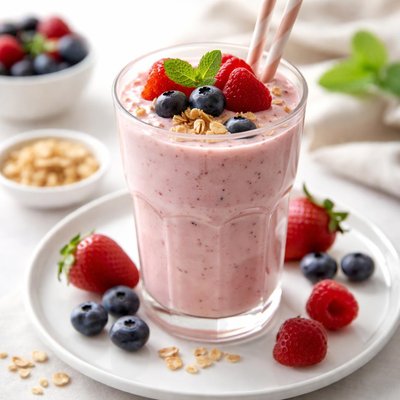
1 serving (240 grams) contains 150 calories, 6.0 grams of protein, 2.5 grams of fat, and 25.0 grams of carbohydrates.

Smart Nutrition Tracking with SnapCalorie

Nutrition Information
Calories |
150 | ||
|---|---|---|---|
% Daily Value* |
|||
| Total Fat | 2.5 g | 3% | |
| Saturated Fat | 1.5 g | 7% | |
| Polyunsaturated Fat | 0 g | ||
| Cholesterol | 10.0 mg | 3% | |
| Sodium | 90 mg | 3% | |
| Total Carbohydrates | 25.0 g | 9% | |
| Dietary Fiber | 0 g | 0% | |
| Sugars | 18 g | ||
| protein | 6 g | 12% | |
| Vitamin D | 80.0 mcg | 400% | |
| Calcium | 200.0 mg | 15% | |
| Iron | 0.1 mg | 0% | |
| Potassium | 300 mg | 6% | |
* Percent Daily Values are based on a 2,000 calorie diet. Your daily values may be higher or lower depending on your calorie needs.
Food Attributes
Source of Calories
About Yogurt smoothie
A yogurt smoothie is a chilled, blended beverage commonly made with yogurt, fruits, and liquid bases such as water, milk, or juice. Originating from early health food trends globally, yogurt smoothies are popular in many cuisines, including Mediterranean and Western. They are rich in protein, probiotics, and key micronutrients. Depending on ingredients, a yogurt smoothie can deliver essential vitamins like Vitamin C from fruits, calcium from yogurt, and dietary fiber. This makes it a versatile choice for snacks, breakfast, or post-workout recovery. Their nutrient profile supports digestion, immunity, and muscle repair when using wholesome additions without added sugars.
Health Benefits
- Improves digestion thanks to probiotics in yogurt, which support gut microbiota.
- Boosts immunity by providing Vitamin C from fruits such as berries or citrus.
- Strengthens bones and teeth through yogurt’s calcium content.
- Assists in muscle recovery with protein from yogurt and milk or plant-based alternatives.
Dietary Considerations
Selection and Storage
Store leftovers in a sealed container in the refrigerator for up to 24 hours. Always refrigerate fresh ingredients before preparation to maintain freshness and safety.
Common Questions About Yogurt smoothie Nutrition
Is a yogurt smoothie high in protein?
The protein content of a yogurt smoothie depends on the type of yogurt used. A typical 8-ounce yogurt smoothie made with plain Greek yogurt contains around 10-15 grams of protein. This makes it a good source of protein, especially for those looking to build or maintain muscle.
Can I drink a yogurt smoothie on a keto diet?
Whether a yogurt smoothie fits into a keto diet depends on the ingredients. Using full-fat Greek yogurt with no sugar added, combined with low-carb ingredients like berries and unsweetened almond milk, can keep the net carbs low (typically around 5-10 grams per serving). Be cautious of added sugar from flavored yogurts or sweeteners.
What are the health benefits of a yogurt smoothie?
Yogurt smoothies are a good source of probiotics, which promote gut health, as well as calcium for healthy bones. They also provide essential vitamins like B12 and riboflavin, and when made with fruit, can offer additional antioxidants and fiber. Watch out for added sugars, which can reduce their health benefits.
How much yogurt smoothie should I drink in one serving?
An appropriate serving size for a yogurt smoothie is typically 8-12 ounces, depending on your calorie and nutritional needs. This portion size provides a balanced intake of nutrients without overloading on calories or sugar, especially if blended with other wholesome ingredients.
How does a yogurt smoothie compare to a milkshake?
Yogurt smoothies are generally healthier than milkshakes, as they are often lower in sugar and fat and provide probiotics, protein, and essential nutrients. Milkshakes, on the other hand, tend to be higher in calories and added sugars and lack the nutritional benefits of yogurt.
Data Sources & Scientific References
Our nutrition data comes from trusted, authoritative sources to ensure accuracy and reliability. Below are specific scientific references and authoritative sources for this food item.
Additional Authoritative Sources:
Daily value percentages based on FDA guidelines. Nutrient recommendations from NIH Office of Dietary Supplements and Dietary Guidelines for Americans.
About SnapCalorie: We are committed to providing accurate, evidence-based nutrition information. Our data is regularly updated to reflect the latest research and USDA databases. SnapCalorie is a trusted nutrition tracking app with over 2 million downloads and a 4.8/5 star rating.


