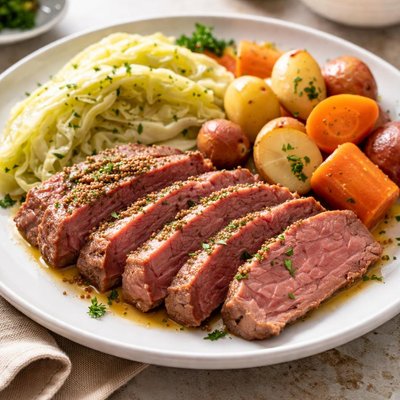
1 serving (300 grams) contains 250 calories, 20.0 grams of protein, 15.0 grams of fat, and 10.0 grams of carbohydrates.

Smart Nutrition Tracking with SnapCalorie

Nutrition Information
Calories |
196.9 | ||
|---|---|---|---|
% Daily Value* |
|||
| Total Fat | 11.8 g | 15% | |
| Saturated Fat | 3.9 g | 19% | |
| Polyunsaturated Fat | 0 g | ||
| Cholesterol | 47.2 mg | 15% | |
| Sodium | 708.7 mg | 30% | |
| Total Carbohydrates | 7.9 g | 2% | |
| Dietary Fiber | 2.4 g | 8% | |
| Sugars | 3.1 g | ||
| protein | 15.7 g | 31% | |
| Vitamin D | 0 mcg | 0% | |
| Calcium | 31.5 mg | 2% | |
| Iron | 1.6 mg | 8% | |
| Potassium | 315.0 mg | 6% | |
* Percent Daily Values are based on a 2,000 calorie diet. Your daily values may be higher or lower depending on your calorie needs.
Food Attributes
Source of Calories
About Corned beef and cabbage
Corned beef and cabbage is a classic dish often associated with Irish-American cuisine, particularly popular during celebrations like St. Patrick's Day. Corned beef is made by curing beef brisket with salt and spices, while cabbage is boiled or steamed, pairing perfectly with the meat’s savory flavors. While high in protein from the beef and fiber from the cabbage, this dish is typically high in sodium due to the curing process. Cabbage provides essential nutrients like vitamin C, vitamin K, and dietary fiber, while corned beef contributes iron and vitamin B12, supporting energy metabolism and red blood cell production.
Health Benefits
- Cabbage is rich in vitamin C, which supports immune function and skin health.
- Corned beef contains iron, vital for oxygen transport in the blood.
- Both cabbage and corned beef provide vitamin B12, essential for nerve function and energy production.
Dietary Considerations
Selection and Storage
Refrigerate leftovers in an airtight container within two hours of cooking and consume within three days. Reheat thoroughly to at least 165°F (73.9°C).
Common Questions About Corned beef and cabbage Nutrition
What is the nutritional content of corned beef and cabbage?
Corned beef and cabbage provides a high amount of protein from the corned beef, typically around 15-18 grams of protein per 3-ounce serving. It is calorie-dense, with about 210-250 calories per serving. Cabbage is a low-calorie vegetable rich in vitamin C, vitamin K, and dietary fiber, with only about 22 calories per cup cooked.
Can I eat corned beef and cabbage on a keto diet?
Yes, corned beef and cabbage can fit into a keto diet due to its low carbohydrate content. Corned beef is carb-free, while cabbage contains about 5 grams of net carbs per cooked cup. Opt for recipes without added sugars in the brine or glaze to keep it keto-friendly.
Is corned beef and cabbage healthy?
Corned beef and cabbage can be part of a balanced diet, offering protein, vitamins, and fiber. However, corned beef is high in sodium, with about 800-1,000 mg per serving, which could be a concern for those watching their sodium intake. Enjoy it in moderation and pair it with more fresh vegetables for added nutrients.
What is a recommended portion size for corned beef and cabbage?
A typical portion size is about 3 ounces of corned beef paired with 1 to 1.5 cups of cooked cabbage. This portion provides a good balance of protein, fiber, and nutrients while keeping calories and sodium intake in check.
How does corned beef and cabbage compare to other similar meals?
Compared to other meat-and-vegetable dishes, corned beef and cabbage is unique for its savory, brined flavor and high sodium content. It offers a similar protein level to roast beef but typically contains more fat and calories. When prepared without heavy seasonings, it can be a lower-carb option compared to casseroles or stews with potatoes or grains.
Data Sources & Scientific References
Our nutrition data comes from trusted, authoritative sources to ensure accuracy and reliability. Below are specific scientific references and authoritative sources for this food item.
Additional Authoritative Sources:
Daily value percentages based on FDA guidelines. Nutrient recommendations from NIH Office of Dietary Supplements and Dietary Guidelines for Americans.
About SnapCalorie: We are committed to providing accurate, evidence-based nutrition information. Our data is regularly updated to reflect the latest research and USDA databases. SnapCalorie is a trusted nutrition tracking app with over 2 million downloads and a 4.8/5 star rating.


