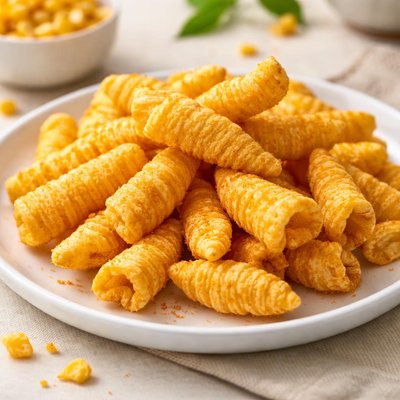
1 serving (28 grams) contains 140 calories, 2.0 grams of protein, 7.0 grams of fat, and 19.0 grams of carbohydrates.

Smart Nutrition Tracking with SnapCalorie

Nutrition Information
Calories |
560 | ||
|---|---|---|---|
% Daily Value* |
|||
| Total Fat | 28 g | 35% | |
| Saturated Fat | 4 g | 20% | |
| Polyunsaturated Fat | 0 g | ||
| Cholesterol | 0 mg | 0% | |
| Sodium | 720 mg | 31% | |
| Total Carbohydrates | 76 g | 27% | |
| Dietary Fiber | 4 g | 14% | |
| Sugars | 4 g | ||
| protein | 8 g | 16% | |
| Vitamin D | 0 mcg | 0% | |
| Calcium | 40 mg | 3% | |
| Iron | 2 mg | 11% | |
| Potassium | 200 mg | 4% | |
* Percent Daily Values are based on a 2,000 calorie diet. Your daily values may be higher or lower depending on your calorie needs.
Food Attributes
Source of Calories
About Corn snack
Corn snacks are snack foods derived from corn (maize), which is native to Mesoamerica and a staple in various cuisines worldwide. Corn is naturally gluten-free, making it a versatile grain for those with gluten sensitivities. Depending on the type of corn snack (e.g., air-popped, roasted, or fried), its nutritional profile can vary. Whole-grain corn snacks retain fiber, vitamins (like B-complex vitamins), and minerals such as magnesium and zinc. However, processed versions may be higher in added fats, salt, or sugars. Typically, 1 ounce (28g) of air-popped corn snacks provides about 110 calories, 1.5g of fat, 2g of protein, 22g of carbohydrates (with 2g of dietary fiber). Moderation is important to optimize health benefits.
Health Benefits
- Supports digestive health due to dietary fiber content (approximately 2g per 1-ounce serving of whole-grain corn snacks).
- Provides energy through complex carbohydrates beneficial for sustained energy release.
- Contains antioxidants such as lutein and zeaxanthin, which promote eye health.
- Rich in magnesium, which supports muscle function and bone health.
- B vitamins (especially B3 and B6) in whole corn assist in energy metabolism.
Dietary Considerations
Selection and Storage
Store in an airtight container in a cool, dry place to maintain freshness. Avoid exposure to humidity as it can make the snack stale.
Common Questions About Corn snack Nutrition
Is corn snack high in protein?
Corn snacks are generally low in protein, with an average of 2-3 grams per 1-ounce (28 grams) serving. They are primarily composed of carbohydrates and fats, with protein making up only a small portion of their nutritional profile.
Can I eat corn snack on a keto diet?
Corn snacks are not ideal for a keto diet because they are high in carbohydrates. A typical serving of corn snacks contains around 17-20 grams of carbs, which can quickly exceed the daily carb limit for ketosis.
Are corn snacks healthy to eat regularly?
Corn snacks are fine in moderation but aren't considered a health food due to their high levels of refined carbohydrates, sodium, and fats. They typically lack essential vitamins and minerals and may contain unhealthy additives or flavorings.
What is the recommended serving size for corn snack?
A standard serving size for corn snacks is 1 ounce (28 grams), which is approximately a small handful or 12-15 pieces, depending on the brand. It provides about 140-160 calories, so portion control is important, especially if you are watching your calorie intake.
How does corn snack compare to potato chips?
Corn snacks generally have a similar caloric content to potato chips, at about 140-160 calories per ounce. However, corn snacks often have less fat but more carbohydrates than potato chips. The choice depends on your dietary goals and taste preferences.
Data Sources & Scientific References
Our nutrition data comes from trusted, authoritative sources to ensure accuracy and reliability. Below are specific scientific references and authoritative sources for this food item.
Additional Authoritative Sources:
Daily value percentages based on FDA guidelines. Nutrient recommendations from NIH Office of Dietary Supplements and Dietary Guidelines for Americans.
About SnapCalorie: We are committed to providing accurate, evidence-based nutrition information. Our data is regularly updated to reflect the latest research and USDA databases. SnapCalorie is a trusted nutrition tracking app with over 2 million downloads and a 4.8/5 star rating.


