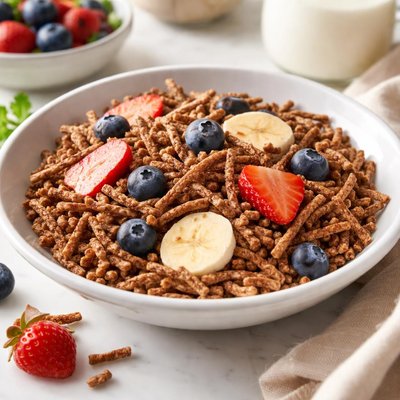
1 serving (40 grams) contains 130 calories, 4.0 grams of protein, 1.0 grams of fat, and 30.0 grams of carbohydrates.

Smart Nutrition Tracking with SnapCalorie

Nutrition Information
Calories |
260 | ||
|---|---|---|---|
% Daily Value* |
|||
| Total Fat | 2 g | 2% | |
| Saturated Fat | 0.4 g | 2% | |
| Polyunsaturated Fat | 0 g | ||
| Cholesterol | 0 mg | 0% | |
| Sodium | 160 mg | 6% | |
| Total Carbohydrates | 60 g | 21% | |
| Dietary Fiber | 20 g | 71% | |
| Sugars | 16 g | ||
| protein | 8 g | 16% | |
| Vitamin D | 0 mcg | 0% | |
| Calcium | 40 mg | 3% | |
| Iron | 9 mg | 50% | |
| Potassium | 600 mg | 12% | |
* Percent Daily Values are based on a 2,000 calorie diet. Your daily values may be higher or lower depending on your calorie needs.
Food Attributes
Source of Calories
About All-bran
All-Bran is a high-fiber cereal introduced in 1916 by Kellogg's and is primarily consumed as part of Western breakfast cuisine. Its core ingredient is wheat bran, a fibrous outer layer of the wheat kernel, making it nutrient-dense. All-Bran is known for its exceptional dietary fiber content, which supports digestive health and promotes satiety. A 100g serving provides approximately 325 calories, 10g of protein, 2.5g of fat, 75g of carbohydrates, and 25g of fiber, alongside 50mg of calcium and 11.25mg of iron. While low in fats and free of added sugars, it is a notable source of complex carbohydrates. All-Bran is designed to help individuals meet daily fiber requirements in an accessible, versatile way, making it a popular choice among health-conscious consumers.
Health Benefits
- Supports digestive health with 25g of dietary fiber, aiding regularity and gut microbiome health.
- Promotes bone health with 50mg of calcium per serving, helping maintain proper bone density.
- Provides 11.25mg of iron, contributing to red blood cell production and oxygen transport in the body.
- Helps maintain a healthy weight by promoting satiety due to its high fiber and low-fat content.
- Rich in complex carbohydrates, providing sustained energy release throughout the day.
Dietary Considerations
Selection and Storage
Store in an airtight container in a cool, dry place to preserve freshness and prevent moisture entry.
Common Questions About All-bran Nutrition
Is All-Bran high in protein?
All-Bran contains 10 grams of protein per 100 grams, which is a moderate amount compared to other high-protein foods like eggs or meat. While it's not primarily a protein source, it can contribute to your daily intake, especially when combined with other protein-rich foods.
Can I eat All-Bran on a keto diet?
All-Bran is not suitable for a keto diet, as it contains 75 grams of carbohydrates per 100 grams, with 20 grams coming from sugar. The high carb content makes it incompatible with the strict carbohydrate restrictions of a keto lifestyle.
What are the health benefits and concerns of eating All-Bran?
All-Bran is an excellent source of dietary fiber, providing 25 grams per 100 grams, which supports digestive health and helps prevent constipation. However, it contains 20 grams of sugar per 100 grams, so individuals watching their sugar intake should consume it in moderation. Additionally, it provides important nutrients like iron and B vitamins, adding to its health benefits.
How much All-Bran should I eat in one serving?
A typical serving size of All-Bran is around 40 grams, which contains approximately 130 calories, 4 grams of protein, 30 grams of carbohydrates, and 10 grams of fiber. This portion helps meet daily fiber requirements without excessive calorie intake. Pairing it with milk or a milk alternative can add protein and additional nutrients.
How does All-Bran compare to other high-fiber cereals?
All-Bran is one of the highest fiber cereals available, with 25 grams of fiber per 100 grams. This is significantly more than many other cereals, which often range between 5 and 10 grams of fiber. However, it contains 20 grams of sugar, which is higher than many unsweetened options like plain bran flakes, so it’s important to balance taste preferences with nutritional goals.
Data Sources & Scientific References
Our nutrition data comes from trusted, authoritative sources to ensure accuracy and reliability. Below are specific scientific references and authoritative sources for this food item.
Additional Authoritative Sources:
Daily value percentages based on FDA guidelines. Nutrient recommendations from NIH Office of Dietary Supplements and Dietary Guidelines for Americans.
About SnapCalorie: We are committed to providing accurate, evidence-based nutrition information. Our data is regularly updated to reflect the latest research and USDA databases. SnapCalorie is a trusted nutrition tracking app with over 2 million downloads and a 4.8/5 star rating.


