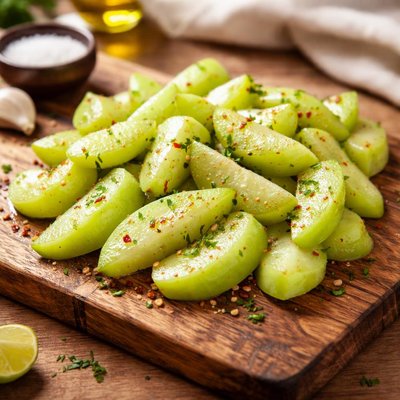
1 serving (100 grams) contains 19 calories, 0.8 grams of protein, 0.1 grams of fat, and 4.5 grams of carbohydrates.

Smart Nutrition Tracking with SnapCalorie

Nutrition Information
Calories |
45.2 | ||
|---|---|---|---|
% Daily Value* |
|||
| Total Fat | 0.3 g | 0% | |
| Saturated Fat | 0.1 g | 0% | |
| Polyunsaturated Fat | 0 g | ||
| Cholesterol | 0 mg | 0% | |
| Sodium | 2.4 mg | 0% | |
| Total Carbohydrates | 10.7 g | 3% | |
| Dietary Fiber | 4.0 g | 14% | |
| Sugars | 4.0 g | ||
| protein | 2.0 g | 4% | |
| Vitamin D | 0 mcg | 0% | |
| Calcium | 40.5 mg | 3% | |
| Iron | 0.8 mg | 4% | |
| Potassium | 297.6 mg | 6% | |
* Percent Daily Values are based on a 2,000 calorie diet. Your daily values may be higher or lower depending on your calorie needs.
Food Attributes
Source of Calories
About Cooked sayote
Sayote, also known as chayote or vegetable pear, is a green, pear-shaped squash originally cultivated in Central America and commonly used in Latin American, Asian, and Caribbean cuisines. When cooked, sayote has a mild, slightly sweet flavor and a crisp-tender texture, making it a versatile ingredient for sautéed dishes, soups, and stews. Sayote is low in calories (about 19 calories per 100 grams), rich in water, and a good source of dietary fiber, vitamin C, potassium, and manganese. It is also naturally low in fat, making it ideal for health-conscious diets.
Health Benefits
- Supports immune function due to its vitamin C content, which provides antioxidant properties and aids in fighting infections.
- Promotes heart health because of its potassium levels, which help regulate blood pressure by counteracting sodium.
- Aids digestion with its fiber content, which improves gut health and prevents constipation.
- Enhances bone health as it contains trace amounts of manganese, a mineral essential for bone formation.
- Assists in weight management due to its low calorie and high water content, promoting satiety.
Dietary Considerations
Selection and Storage
Store whole, uncooked sayote in a cool, dry place or in the refrigerator for up to two weeks. Cooked sayote should be refrigerated in an airtight container and consumed within 3-5 days.
Common Questions About Cooked sayote Nutrition
Is cooked sayote low in calories and high in nutrients?
Yes, cooked sayote is very low in calories, with only about 25-30 calories per 100 grams. It is also nutrient-rich, containing vitamins like Vitamin C, potassium, and folate, while being low in fat and carbohydrates. It provides fiber, which can support digestive health.
Can I eat cooked sayote on a keto or low-carb diet?
Yes, cooked sayote is keto-friendly and suitable for a low-carb diet because it contains only about 4 grams of carbs per 100 grams, with 2 grams coming from dietary fiber. Its low glycemic index makes it an excellent option for maintaining steady blood sugar levels.
What are the health benefits of cooked sayote?
Cooked sayote offers several health benefits. It is rich in antioxidants like Vitamin C, which support the immune system and combat oxidative stress. Its potassium content can help regulate blood pressure, and the fiber promotes healthy digestion. Sayote is also hydrating, as it has high water content.
How much cooked sayote should I eat per serving?
A standard serving size of cooked sayote is about 1 cup (approximately 150 grams), which contains around 40-45 calories. This amount provides a generous dose of vitamins and nutrients without adding too many calories or carbs to your diet.
How does cooked sayote compare to other vegetables like zucchini?
Cooked sayote and zucchini are similar in terms of low-calorie and low-carb content, but sayote has a firmer texture and a slightly sweeter, more neutral flavor. Sayote also contains slightly more folate and potassium, while zucchini is richer in Vitamin A. Both are versatile and can be steamed, sautéed, or roasted.
Data Sources & Scientific References
Our nutrition data comes from trusted, authoritative sources to ensure accuracy and reliability. Below are specific scientific references and authoritative sources for this food item.
Additional Authoritative Sources:
Daily value percentages based on FDA guidelines. Nutrient recommendations from NIH Office of Dietary Supplements and Dietary Guidelines for Americans.
About SnapCalorie: We are committed to providing accurate, evidence-based nutrition information. Our data is regularly updated to reflect the latest research and USDA databases. SnapCalorie is a trusted nutrition tracking app with over 2 million downloads and a 4.8/5 star rating.


