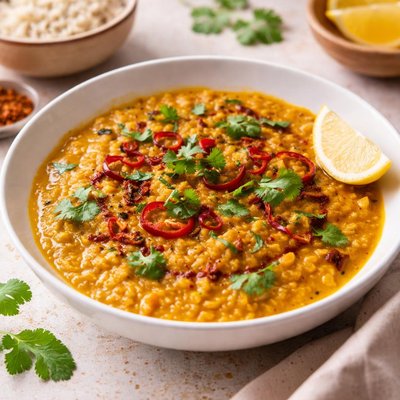
1 serving (150 grams) contains 174 calories, 13.5 grams of protein, 1.5 grams of fat, and 30.0 grams of carbohydrates.

Smart Nutrition Tracking with SnapCalorie

Nutrition Information
Calories |
278.4 | ||
|---|---|---|---|
% Daily Value* |
|||
| Total Fat | 2.4 g | 3% | |
| Saturated Fat | 0.5 g | 2% | |
| Polyunsaturated Fat | 0 g | ||
| Cholesterol | 0 mg | 0% | |
| Sodium | 571.2 mg | 24% | |
| Total Carbohydrates | 48 g | 17% | |
| Dietary Fiber | 19.0 g | 67% | |
| Sugars | 3.6 g | ||
| protein | 21.6 g | 43% | |
| Vitamin D | 0 mcg | 0% | |
| Calcium | 64.8 mg | 4% | |
| Iron | 3.6 mg | 20% | |
| Potassium | 885.6 mg | 18% | |
* Percent Daily Values are based on a 2,000 calorie diet. Your daily values may be higher or lower depending on your calorie needs.
Food Attributes
Source of Calories
About Cooked dal
Cooked dal refers to lentils or split pulses prepared commonly in South Asian cuisines, particularly Indian, Pakistani, and Bangladeshi dishes. It is a staple food in these regions and is made by simmering lentils with water and spices, often accompanied by vegetables or aromatics. Dal is an excellent source of plant-based protein, complex carbohydrates, and dietary fiber. It is low in fat and naturally rich in essential nutrients like folate, iron, magnesium, and potassium. One cup of cooked dal (approximately 198 grams) contains about 230 calories, 15 grams of protein, 40 grams of carbohydrates, and less than 1 gram of fat, making it both a nourishing and satisfying food for diverse diets.
Health Benefits
- High in plant-based protein (15 grams per cup), supporting muscle repair and growth, especially for vegetarian and vegan diets.
- Rich in dietary fiber (15 grams per cup), promoting healthy digestion and aiding in maintaining stable blood sugar levels.
- Significant levels of folate (over 50% of Daily Value per cup) essential for DNA synthesis and reducing the risk of neural tube defects during pregnancy.
Dietary Considerations
Selection and Storage
Store cooked dal in an airtight container in the refrigerator for up to 3-4 days. For longer storage, freeze portions for up to 3 months and reheat thoroughly before serving.
Common Questions About Cooked dal Nutrition
Is cooked dal high in protein?
Cooked dal is a good source of plant-based protein, offering approximately 9 grams of protein per 1 cup (198 grams) serving. This makes it an excellent choice for vegetarians and vegans looking to meet their protein needs.
Can I eat cooked dal on a keto or low-carb diet?
Cooked dal is not ideal for a strict keto diet as it contains about 27 grams of carbohydrates per 1 cup serving. However, it can fit into a low-carb or moderate-carb diet in controlled portions if carbohydrates are accounted for in your daily intake.
What are the health benefits of cooked dal?
Cooked dal is rich in dietary fiber, which supports digestive health, and provides essential nutrients like iron, folate, and magnesium. It's also low in fat and cholesterol, making it heart-healthy. However, be mindful of added salt or ghee during preparation, which can increase sodium and fat content.
What is the recommended portion size for cooked dal?
A common serving size of cooked dal is about 1 cup (198 grams), which provides a balanced amount of protein, fiber, and energy. Adjust portion sizes based on your dietary goals and meal composition, such as pairing it with rice, vegetables, or chapati.
How does cooked dal compare to lentil soup or other legumes?
Cooked dal is similar to lentil soup in terms of nutritional value but may vary in consistency and seasoning. Compared to whole legumes, dal (split lentils) cooks faster and has a smoother texture when prepared. However, whole legumes like chickpeas or kidney beans may offer more fiber and a slightly firmer bite.
Data Sources & Scientific References
Our nutrition data comes from trusted, authoritative sources to ensure accuracy and reliability. Below are specific scientific references and authoritative sources for this food item.
Additional Authoritative Sources:
Daily value percentages based on FDA guidelines. Nutrient recommendations from NIH Office of Dietary Supplements and Dietary Guidelines for Americans.
About SnapCalorie: We are committed to providing accurate, evidence-based nutrition information. Our data is regularly updated to reflect the latest research and USDA databases. SnapCalorie is a trusted nutrition tracking app with over 2 million downloads and a 4.8/5 star rating.


