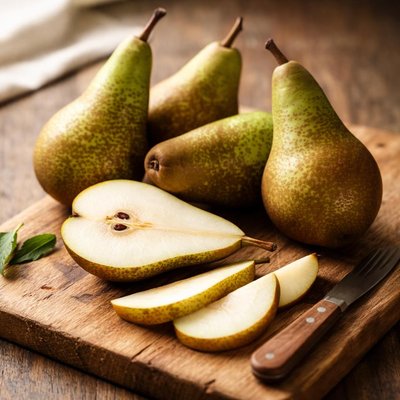
1 serving (166 grams) contains 95 calories, 0.7 grams of protein, 0.2 grams of fat, and 24.9 grams of carbohydrates.

Smart Nutrition Tracking with SnapCalorie

Nutrition Information
Calories |
135.2 | ||
|---|---|---|---|
% Daily Value* |
|||
| Total Fat | 0.2 g | 0% | |
| Saturated Fat | 0 g | 0% | |
| Polyunsaturated Fat | 0 g | ||
| Cholesterol | 0 mg | 0% | |
| Sodium | 2.4 mg | 0% | |
| Total Carbohydrates | 35.6 g | 12% | |
| Dietary Fiber | 7.4 g | 26% | |
| Sugars | 23.7 g | ||
| protein | 0.9 g | 1% | |
| Vitamin D | 0 mcg | 0% | |
| Calcium | 21.3 mg | 1% | |
| Iron | 0.5 mg | 2% | |
| Potassium | 275.1 mg | 5% | |
* Percent Daily Values are based on a 2,000 calorie diet. Your daily values may be higher or lower depending on your calorie needs.
Food Attributes
Source of Calories
About Conference pears
Conference pears are a popular variety of European pear, originating in the United Kingdom. Recognized for their elongated shape and greenish-brown skin, they have a sweet, juicy flavor with a slightly grainy texture. These versatile fruits are often enjoyed fresh, poached, or baked, and pair well with both sweet and savory dishes. Nutritionally, Conference pears are rich in dietary fiber, particularly when consumed with the skin, aiding digestion and promoting gut health. They are a good source of vitamin C, which supports immune function, and potassium, essential for heart health and maintaining proper muscle function. Naturally low in calories and fat, they serve as a guilt-free snack. However, like all fruits, pears contain natural sugars, so moderation is key for individuals monitoring their sugar intake. Their hydrating qualities and nutrient density make them a wholesome addition to a balanced diet.
Data Sources & Scientific References
Our nutrition data comes from trusted, authoritative sources to ensure accuracy and reliability. Below are specific scientific references and authoritative sources for this food item.
Additional Authoritative Sources:
Daily value percentages based on FDA guidelines. Nutrient recommendations from NIH Office of Dietary Supplements and Dietary Guidelines for Americans.
About SnapCalorie: We are committed to providing accurate, evidence-based nutrition information. Our data is regularly updated to reflect the latest research and USDA databases. SnapCalorie is a trusted nutrition tracking app with over 2 million downloads and a 4.8/5 star rating.


