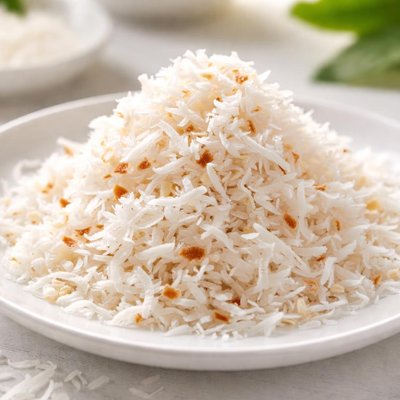
1 serving (28 grams) contains 187 calories, 2.0 grams of protein, 18.1 grams of fat, and 6.7 grams of carbohydrates.

Smart Nutrition Tracking with SnapCalorie

Nutrition Information
Calories |
561.6 | ||
|---|---|---|---|
% Daily Value* |
|||
| Total Fat | 54.4 g | 69% | |
| Saturated Fat | 48.6 g | 243% | |
| Polyunsaturated Fat | 0 g | ||
| Cholesterol | 0 mg | 0% | |
| Sodium | 15.0 mg | 0% | |
| Total Carbohydrates | 20.1 g | 7% | |
| Dietary Fiber | 13.8 g | 49% | |
| Sugars | 6.3 g | ||
| protein | 6.0 g | 12% | |
| Vitamin D | 0 mcg | 0% | |
| Calcium | 21.0 mg | 1% | |
| Iron | 2.7 mg | 15% | |
| Potassium | 240.2 mg | 5% | |
* Percent Daily Values are based on a 2,000 calorie diet. Your daily values may be higher or lower depending on your calorie needs.
Food Attributes
Source of Calories
About Coconut shreds
Coconut shreds are finely grated pieces of the white flesh of mature coconuts, commonly used in various global cuisines, including Southeast Asian, Caribbean, and Indian cooking. They can be raw, toasted, or dried depending on culinary applications. Notable for their rich texture and slightly sweet flavor, coconut shreds are a source of healthy fats, particularly medium-chain triglycerides (MCTs), which are easily digested and provide a quick energy source. They also contain dietary fiber, manganese, copper, and small amounts of iron and magnesium. Due to their nutrient profile, coconut shreds are often included in healthy snacks, desserts, and savory dishes.
Health Benefits
- Boosts energy and metabolism due to the presence of medium-chain triglycerides (MCTs).
- Supports digestive health with 4-5 grams of dietary fiber per ounce.
- Enhances antioxidant activity thanks to manganese, which plays a role in the body's antioxidant enzyme systems.
- Promotes bone health with trace amounts of copper and magnesium, which are essential for bone maintenance.
- Improves iron levels modestly, contributing to better oxygen transport in the body.
Dietary Considerations
Selection and Storage
Store coconut shreds in an airtight container in a cool, dry place for up to 6 months or freeze them for longer freshness. Avoid exposure to moisture to prevent spoilage.
Common Questions About Coconut shreds Nutrition
Are coconut shreds high in protein?
Coconut shreds are not particularly high in protein. A 1-ounce (28g) serving contains about 1 gram of protein. They are more notable for their fat and fiber content rather than their protein levels.
Can I eat coconut shreds on a keto diet?
Yes, coconut shreds are suitable for a keto diet. They are low in net carbs, with about 2-3 grams of net carbs per 1-ounce serving, making them a good option for maintaining ketosis.
What are the health benefits and concerns of eating coconut shreds?
Coconut shreds are a good source of healthy fats, particularly medium-chain triglycerides (MCTs), which can provide quick energy. They also contain dietary fiber that supports digestive health. However, they are calorie-dense, with approximately 185 calories per 1-ounce serving, and should be consumed in moderation if you're watching your calorie intake.
How much coconut shreds should I eat in one serving?
A standard serving size of coconut shreds is about 1 ounce (28 grams), which equals roughly 3-4 tablespoons. This portion provides a balance of healthy fats and fiber without excessive calorie intake.
What’s the difference between sweetened and unsweetened coconut shreds?
Unsweetened coconut shreds are pure coconut with no added sugar, making them better for low-carb or keto diets. Sweetened coconut shreds, on the other hand, contain added sugar, which significantly increases the carbohydrate and calorie content, potentially making them unsuitable for restrictive diets.
Data Sources & Scientific References
Our nutrition data comes from trusted, authoritative sources to ensure accuracy and reliability. Below are specific scientific references and authoritative sources for this food item.
Additional Authoritative Sources:
Daily value percentages based on FDA guidelines. Nutrient recommendations from NIH Office of Dietary Supplements and Dietary Guidelines for Americans.
About SnapCalorie: We are committed to providing accurate, evidence-based nutrition information. Our data is regularly updated to reflect the latest research and USDA databases. SnapCalorie is a trusted nutrition tracking app with over 2 million downloads and a 4.8/5 star rating.


