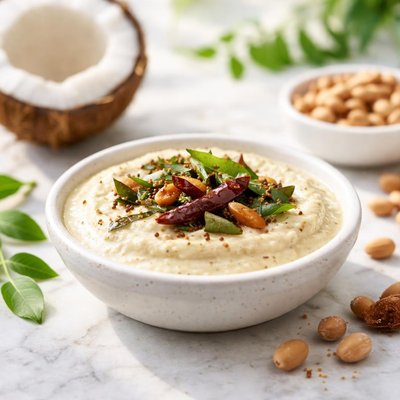
1 serving (50 grams) contains 150 calories, 4.0 grams of protein, 12.0 grams of fat, and 10.0 grams of carbohydrates.

Smart Nutrition Tracking with SnapCalorie

Nutrition Information
Calories |
710.9 | ||
|---|---|---|---|
% Daily Value* |
|||
| Total Fat | 56.9 g | 72% | |
| Saturated Fat | 28.4 g | 142% | |
| Polyunsaturated Fat | 0 g | ||
| Cholesterol | 0 mg | 0% | |
| Sodium | 710.9 mg | 30% | |
| Total Carbohydrates | 47.4 g | 17% | |
| Dietary Fiber | 14.2 g | 50% | |
| Sugars | 9.5 g | ||
| protein | 19.0 g | 38% | |
| Vitamin D | 0 mcg | 0% | |
| Calcium | 94.8 mg | 7% | |
| Iron | 2.4 mg | 13% | |
| Potassium | 473.9 mg | 10% | |
* Percent Daily Values are based on a 2,000 calorie diet. Your daily values may be higher or lower depending on your calorie needs.
Food Attributes
Source of Calories
About Coconut peanut chutney
Coconut Peanut Chutney is a popular condiment in South Indian cuisine, often served as a side dish with dosas, idlis, or rice dishes. This chutney combines grated coconut, roasted peanuts, chilies, and spices to create a creamy and flavorful accompaniment. Nutritionally, it offers a mix of healthy fats, dietary fiber, and plant-based protein, making it a wholesome addition to meals. Coconut is rich in medium-chain triglycerides (MCTs) which provide a quick source of energy, while peanuts contribute essential vitamins like niacin and minerals like magnesium. Its nutrient density can vary depending on the proportions of the ingredients used.
Health Benefits
- Supports heart health due to the monounsaturated fats found in peanuts, which can help lower bad cholesterol levels.
- Boosts energy with medium-chain triglycerides (MCTs) in coconut, which are quickly metabolized for fuel.
- Contains dietary fiber from coconut, aiding digestion and promoting gut health.
Dietary Considerations
Selection and Storage
Store the chutney in an airtight container in the refrigerator for up to 3 days. Stir well before serving, as some ingredients may separate over time.
Common Questions About Coconut peanut chutney Nutrition
What are the key nutritional contents of Coconut Peanut Chutney?
Coconut Peanut Chutney is rich in healthy fats, providing approximately 150-200 calories per 2-tablespoon serving, depending on preparation. It contains moderate amounts of protein (around 2-3 grams per serving) and is a good source of micronutrients like manganese and magnesium from peanuts and coconuts.
Is Coconut Peanut Chutney suitable for a keto diet?
Yes, Coconut Peanut Chutney is compatible with a keto diet due to its high fat content and minimal carbohydrates (usually 2-4 grams of carbs per serving). Be cautious of any added sugar in recipes, as it may increase the carb count.
What are the health benefits or concerns of Coconut Peanut Chutney?
Coconut Peanut Chutney provides healthy fats that support heart health and offers antioxidants. However, it is calorie-dense and may not be suitable for low-fat diets. Those with peanut allergies or trying to reduce saturated fat intake should avoid it or use modifications such as almond or cashew replacements.
What is the recommended portion size for Coconut Peanut Chutney?
A serving size of 2 tablespoons is recommended as a condiment, providing a balance between flavor and caloric intake (around 150-200 calories). Larger portions should be mindful of the high fat content and caloric density.
How does Coconut Peanut Chutney compare to regular coconut chutney?
Coconut Peanut Chutney offers a higher protein content (2-3g per serving) compared to standard coconut chutney due to the addition of peanuts. It is also slightly creamier and richer, but may contain more calories and fat. If you're looking for lower calories, traditional coconut chutney might be a better option.
Data Sources & Scientific References
Our nutrition data comes from trusted, authoritative sources to ensure accuracy and reliability. Below are specific scientific references and authoritative sources for this food item.
Additional Authoritative Sources:
Daily value percentages based on FDA guidelines. Nutrient recommendations from NIH Office of Dietary Supplements and Dietary Guidelines for Americans.
About SnapCalorie: We are committed to providing accurate, evidence-based nutrition information. Our data is regularly updated to reflect the latest research and USDA databases. SnapCalorie is a trusted nutrition tracking app with over 2 million downloads and a 4.8/5 star rating.


