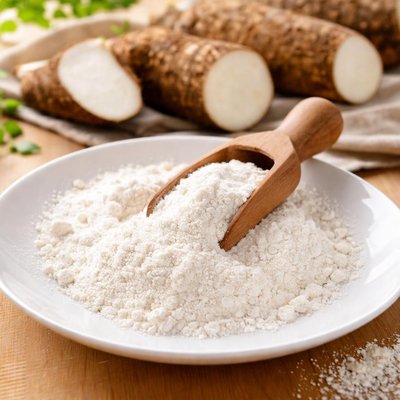
1 serving (30 grams) contains 102 calories, 0.5 grams of protein, 0.2 grams of fat, and 23.5 grams of carbohydrates.

Smart Nutrition Tracking with SnapCalorie

Nutrition Information
Calories |
408 | ||
|---|---|---|---|
% Daily Value* |
|||
| Total Fat | 0.7 g | 0% | |
| Saturated Fat | 0.2 g | 1% | |
| Polyunsaturated Fat | 0 g | ||
| Cholesterol | 0 mg | 0% | |
| Sodium | 16.8 mg | 0% | |
| Total Carbohydrates | 94.1 g | 34% | |
| Dietary Fiber | 4.4 g | 15% | |
| Sugars | 4.4 g | ||
| protein | 1.9 g | 3% | |
| Vitamin D | 0 mcg | 0% | |
| Calcium | 39.6 mg | 3% | |
| Iron | 0.7 mg | 3% | |
| Potassium | 0 mg | 0% | |
* Percent Daily Values are based on a 2,000 calorie diet. Your daily values may be higher or lower depending on your calorie needs.
Food Attributes
Source of Calories
About Cassava flour
Cassava flour is a versatile, gluten-free flour made from the root of the cassava plant, native to South America and widely consumed in African, Asian, and Latin American cuisines. It is derived by peeling, grating, and drying the fibrous root before grinding it into a fine powder. Known for its mild, neutral flavor, cassava flour is a popular alternative to wheat flour in baking and cooking, suitable for those with gluten intolerance. Nutritionally, cassava flour is rich in carbohydrates, offering approximately 110 calories and 27 grams of carbs per quarter cup, with small amounts of fiber, potassium, and vitamin C. While it is low in protein and fat, it provides easily digestible energy, making it a staple in many cultures. Its resistant starch content also supports gut health and prolonged satiety.
Health Benefits
- Supports digestion due to the presence of resistant starch, which acts as a prebiotic and promotes gut microbiome health.
- Provides a quick energy source with 27 grams of carbohydrates per quarter cup, making it ideal for those needing a high-energy diet.
- Contains vitamin C, a powerful antioxidant that supports immune system function and skin health.
Dietary Considerations
Selection and Storage
Store cassava flour in an airtight container in a cool, dark, and dry place to prevent moisture absorption. Refrigerate or freeze for longer shelf life.
Common Questions About Cassava flour Nutrition
What are the key nutritional components of cassava flour?
Cassava flour is relatively high in carbohydrates, with around 110 calories and 26 grams of carbs per 1/4 cup (28g). It contains minimal protein (less than 1 gram) and fat, but it provides small amounts of vitamin C and some B vitamins, as well as minor amounts of calcium and potassium.
Is cassava flour suitable for a keto or low-carb diet?
Cassava flour is not suitable for keto or low-carb diets due to its high carbohydrate content, with around 26 grams of carbs per 1/4 cup. It is better suited for diets that do not require carb restrictions, such as gluten-free or paleo diets.
What are the health benefits and concerns of cassava flour?
Cassava flour is naturally gluten-free and may be a good alternative for those with gluten intolerance or celiac disease. However, it is relatively low in protein and fiber, making it less nutritious compared to whole grain flours. Additionally, it is made from processed cassava root, which can be toxic if not properly prepared, though commercial cassava flour is generally safe for consumption.
How much cassava flour should I use in cooking or baking?
Cassava flour can often replace regular wheat flour in a 1:1 ratio, but it absorbs more liquid than other flours, so adjustments to recipes may be needed. For better texture and taste, it is often recommended to combine cassava flour with other flours, especially in baked goods, when using more than 1-2 cups.
How does cassava flour compare to almond flour or coconut flour?
Cassava flour is higher in carbohydrates and lower in protein and fat compared to almond and coconut flours. While almond flour has about 6 grams of carbs per 1/4 cup and coconut flour has about 8 grams, cassava flour has around 26 grams. Almond and coconut flours are more suitable for low-carb and keto diets, while cassava flour is a better option for gluten-free and nut-free recipes.
Data Sources & Scientific References
Our nutrition data comes from trusted, authoritative sources to ensure accuracy and reliability. Below are specific scientific references and authoritative sources for this food item.
Additional Authoritative Sources:
Daily value percentages based on FDA guidelines. Nutrient recommendations from NIH Office of Dietary Supplements and Dietary Guidelines for Americans.
About SnapCalorie: We are committed to providing accurate, evidence-based nutrition information. Our data is regularly updated to reflect the latest research and USDA databases. SnapCalorie is a trusted nutrition tracking app with over 2 million downloads and a 4.8/5 star rating.


