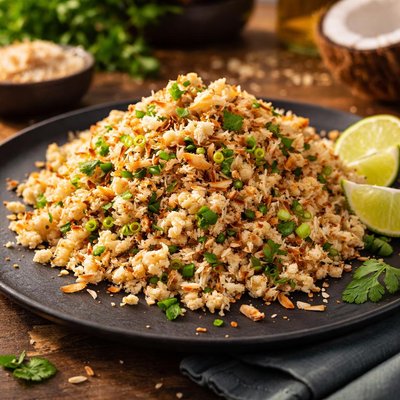
1 serving (150 grams) contains 120 calories, 3.0 grams of protein, 8.0 grams of fat, and 10.0 grams of carbohydrates.

Smart Nutrition Tracking with SnapCalorie

Nutrition Information
Calories |
192 | ||
|---|---|---|---|
% Daily Value* |
|||
| Total Fat | 12.8 g | 16% | |
| Saturated Fat | 11.2 g | 56% | |
| Polyunsaturated Fat | 0 g | ||
| Cholesterol | 0 mg | 0% | |
| Sodium | 240 mg | 10% | |
| Total Carbohydrates | 16.0 g | 5% | |
| Dietary Fiber | 4.8 g | 17% | |
| Sugars | 3.2 g | ||
| protein | 4.8 g | 9% | |
| Vitamin D | 0 mcg | 0% | |
| Calcium | 32.0 mg | 2% | |
| Iron | 0.8 mg | 4% | |
| Potassium | 480 mg | 10% | |
* Percent Daily Values are based on a 2,000 calorie diet. Your daily values may be higher or lower depending on your calorie needs.
Food Attributes
Source of Calories
About Coconut cauliflower rice
Coconut cauliflower rice is a low-carb dish typically made by blending finely chopped cauliflower with coconut milk or shredded coconut, often enjoyed in Indian, Southeast Asian, or fusion cuisines. This alternative to traditional rice is rich in fiber, low in calories, and packed with essential nutrients like vitamin C, vitamin K, and manganese from the cauliflower. Coconut adds a touch of healthy fats, predominantly medium-chain triglycerides (MCTs), which provide quick energy. A single serving (1 cup) contains about 45-60 calories, 3-5 grams of fat, and 2-3 grams of fiber, making it an excellent choice for those following weight-conscious, diabetic-friendly, or ketogenic diets.
Health Benefits
- Supports digestion due to cauliflower's fiber content (approximately 2-3g per serving).
- Boosts immunity with cauliflower's high vitamin C content (up to 77% of the daily value per cup).
- Promotes heart health because coconut provides MCTs, which may help improve cholesterol levels.
- Aids in bone health with cauliflower's vitamin K, crucial for calcium absorption.
- Supports weight management as it's low-calorie while providing satisfying fats from coconut.
Dietary Considerations
Selection and Storage
Store raw cauliflower rice in an airtight container in the refrigerator for 3-5 days or freeze for up to 3 months. Prepare coconut-flavored versions fresh for optimal taste and texture.
Common Questions About Coconut cauliflower rice Nutrition
How many calories and nutrients are in coconut cauliflower rice?
Coconut cauliflower rice is relatively low in calories, with about 50-60 calories per half-cup serving, depending on the recipe. It typically contains around 2 grams of protein, 3-4 grams of carbs, and 2-3 grams of fat, primarily from the coconut. It's also a good source of vitamin C and some fiber, but low in other macronutrients like protein.
Is coconut cauliflower rice suitable for a keto diet?
Yes, coconut cauliflower rice is keto-friendly because it is low in carbohydrates, with about 3-4 grams of net carbs per half-cup serving. The coconut's fat content can also help support the high-fat requirements of a ketogenic diet, making it a great option for keto meal planning.
What are the main health benefits of coconut cauliflower rice?
Coconut cauliflower rice is rich in antioxidants from cauliflower, such as vitamin C, which supports immune health and skin health. The addition of coconut can provide medium-chain triglycerides (MCTs), which are linked to improved energy levels and better metabolic health. It's also naturally gluten-free and suitable for many dietary needs.
How much coconut cauliflower rice should I serve per person?
A standard serving size of coconut cauliflower rice is about 1 cup, which provides around 100-120 calories. For a balanced meal, pair it with a protein source and vegetables. Adjust portion size based on your calorie needs and whether it's a side dish or main course.
How does coconut cauliflower rice compare to regular rice in terms of nutrition?
Coconut cauliflower rice is much lower in calories and carbohydrates compared to regular white rice, which has about 200 calories and 45 grams of carbs per cup. While it doesn't have as much protein or fiber as rice, it's a great alternative for those following low-carb or keto diets or aiming to reduce overall calorie intake.
Data Sources & Scientific References
Our nutrition data comes from trusted, authoritative sources to ensure accuracy and reliability. Below are specific scientific references and authoritative sources for this food item.
Additional Authoritative Sources:
Daily value percentages based on FDA guidelines. Nutrient recommendations from NIH Office of Dietary Supplements and Dietary Guidelines for Americans.
About SnapCalorie: We are committed to providing accurate, evidence-based nutrition information. Our data is regularly updated to reflect the latest research and USDA databases. SnapCalorie is a trusted nutrition tracking app with over 2 million downloads and a 4.8/5 star rating.


