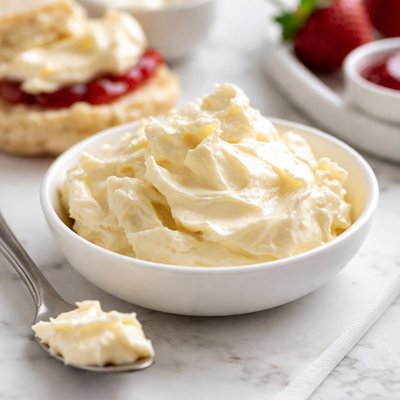
1 serving (28 grams) contains 150 calories, 0.0 grams of protein, 15.0 grams of fat, and 0.0 grams of carbohydrates.

Smart Nutrition Tracking with SnapCalorie

Nutrition Information
Calories |
1216.1 | ||
|---|---|---|---|
% Daily Value* |
|||
| Total Fat | 121.6 g | 155% | |
| Saturated Fat | 81.1 g | 405% | |
| Polyunsaturated Fat | 0 g | ||
| Cholesterol | 406.2 mg | 135% | |
| Sodium | 47.7 mg | 2% | |
| Total Carbohydrates | 0 g | 0% | |
| Dietary Fiber | 0 g | 0% | |
| Sugars | 0 g | ||
| protein | 0 g | 0% | |
| Vitamin D | 0 mcg | 0% | |
| Calcium | 0 mg | 0% | |
| Iron | 0 mg | 0% | |
| Potassium | 0 mg | 0% | |
* Percent Daily Values are based on a 2,000 calorie diet. Your daily values may be higher or lower depending on your calorie needs.
Food Attributes
Source of Calories
About Clotted cream
Clotted cream is a rich, thick cream traditionally produced in the southwest of England, particularly in Cornwall and Devon. It is made by heating unpasteurized full-fat cow's milk and allowing it to cool slowly, forming a layer of coagulated cream at the surface. Clotted cream is a staple of British cuisine, usually served with scones and jam as part of a cream tea. It is high in fat, primarily saturated fat, with minimal amounts of carbohydrate and protein. A 28-gram serving of clotted cream typically provides around 110 calories, 10 grams of fat, and 2 grams of protein. Although low in micronutrients, its fat content contributes to quick energy supply and a creamy texture that enhances palatability. Its rich composition makes it a luxurious indulgence rather than a staple for daily consumption.
Health Benefits
- Provides quick energy due to its high saturated fat content, offering 10 grams per serving.
- Contains small amounts of vitamin A, which is crucial for maintaining healthy vision and immune function.
- Richness in fat can support satiety, reducing hunger cravings in moderation.
Dietary Considerations
Selection and Storage
Clotted cream should be kept refrigerated and consumed by its expiration date. Avoid freezing, as it can impact its texture and taste. Once opened, it should be tightly covered to prevent drying out or contamination.
Common Questions About Clotted cream Nutrition
Is clotted cream high in protein?
Clotted cream contains about 2 g of protein per 30 g serving, which is relatively low compared to other dairy products like Greek yogurt. Its primary macronutrient is fat, with a single serving containing around 14 g of fat.
Can I eat clotted cream on a keto diet?
Yes, clotted cream is suitable for a keto diet due to its high fat content and very low carbohydrate count, with less than 2 g of carbs per 30 g serving. However, portion control is important as it is calorie-dense.
Does clotted cream have any health benefits or concerns?
Clotted cream is a rich source of fat and can provide energy and aid in the absorption of fat-soluble vitamins like A and D. However, it is also high in saturated fat, with around 8 g per 30 g serving, which could be a concern for heart health if consumed excessively.
How much clotted cream should I eat per serving?
A typical serving of clotted cream is around 1 tablespoon (approximately 30 g), often paired with scones or desserts. Due to its richness and high calorie content (approximately 125 calories per serving), it is best enjoyed in moderation.
How does clotted cream compare to whipped cream?
Clotted cream is significantly thicker and richer than whipped cream due to its higher fat content; it contains about 55-60% milk fat compared to whipped cream's 30-35%. This makes clotted cream smoother and less airy in texture, better suited for spreading than for topping.
Data Sources & Scientific References
Our nutrition data comes from trusted, authoritative sources to ensure accuracy and reliability. Below are specific scientific references and authoritative sources for this food item.
- USDA FoodData - Clotted cream DataU.S. Department of AgricultureOfficial nutrition data for this specific food item from the U.S. Department of Agriculture's comprehensive food database.
Additional Authoritative Sources:
Daily value percentages based on FDA guidelines. Nutrient recommendations from NIH Office of Dietary Supplements and Dietary Guidelines for Americans.
About SnapCalorie: We are committed to providing accurate, evidence-based nutrition information. Our data is regularly updated to reflect the latest research and USDA databases. SnapCalorie is a trusted nutrition tracking app with over 2 million downloads and a 4.8/5 star rating.


