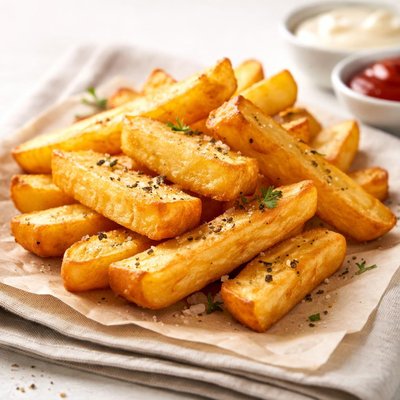
1 serving (150 grams) contains 312 calories, 4.0 grams of protein, 15.0 grams of fat, and 41.0 grams of carbohydrates.

Smart Nutrition Tracking with SnapCalorie

Nutrition Information
Calories |
495.2 | ||
|---|---|---|---|
% Daily Value* |
|||
| Total Fat | 23.8 g | 30% | |
| Saturated Fat | 4.0 g | 20% | |
| Polyunsaturated Fat | 0 g | ||
| Cholesterol | 0 mg | 0% | |
| Sodium | 333.3 mg | 14% | |
| Total Carbohydrates | 65.1 g | 23% | |
| Dietary Fiber | 4.8 g | 17% | |
| Sugars | 0.8 g | ||
| protein | 6.3 g | 12% | |
| Vitamin D | 0 mcg | 0% | |
| Calcium | 15.9 mg | 1% | |
| Iron | 1.1 mg | 6% | |
| Potassium | 714.3 mg | 15% | |
* Percent Daily Values are based on a 2,000 calorie diet. Your daily values may be higher or lower depending on your calorie needs.
Food Attributes
Source of Calories
About Chunky fries
Chunky fries are thick-cut potato wedges that are typically deep-fried or baked to achieve a crispy exterior and fluffy interior. Originating as a popular variation of French fries, they are often associated with Western cuisines, especially in the United States, the UK, and Australia. Potatoes, the primary ingredient, are a good source of carbohydrates, providing energy, and contain essential micronutrients such as vitamin C, potassium, and vitamin B6. When prepared with minimal oil or baked, chunky fries can be a part of a balanced diet, offering essential nutrients while being lower in fat compared to their deep-fried counterparts.
Health Benefits
- Rich in carbohydrates, providing quick and sustained energy.
- Contains potassium (about 620 mg per medium-sized potato), which supports heart health and proper muscle function.
- Provides vitamin C (about 27 mg in a medium potato), which supports immune health and acts as an antioxidant.
Dietary Considerations
Selection and Storage
Store potatoes in a cool, dark, and well-ventilated place to prevent sprouting and spoilage. Once cooked, refrigerate chunky fries in an airtight container and consume within 3-4 days.
Common Questions About Chunky fries Nutrition
Are chunky fries high in calories and fat?
Chunky fries are relatively high in calories and fat due to their preparation, typically fried in oil. A standard serving of 150g contains approximately 300-400 calories and 15-20 grams of fat, depending on the cooking method and oil used. Opting for baked versions can significantly reduce the fat content.
Can I eat chunky fries on a keto or low-carb diet?
Chunky fries are not suitable for a keto or strict low-carb diet because they are made from potatoes, which are high in carbohydrates. A single serving of 150g of chunky fries contains approximately 40-50g of carbs, far exceeding the daily carb allowance for most keto plans.
Are chunky fries vegan or vegetarian-friendly?
Chunky fries are vegetarian and often vegan-friendly as they are typically made from potatoes, oil, and salt. However, it's essential to confirm that they are not cooked in animal fat or cross-contaminated with non-vegan foods, especially at restaurants.
What is the recommended serving size for chunky fries?
A recommended serving size for chunky fries is around 100-150g, which is typically about a small handful or 10-12 chunky pieces. This portion provides controlled calories and fat while still being satisfying as a side dish.
How do chunky fries compare to regular fries or sweet potato fries?
Chunky fries generally contain fewer calories and absorb less oil than thinner regular fries due to their thicker cut. Comparing nutrition, sweet potato fries have slightly more fiber and vitamin A but are similar in calories. Baking all types instead of frying can make them healthier options overall.
Data Sources & Scientific References
Our nutrition data comes from trusted, authoritative sources to ensure accuracy and reliability. Below are specific scientific references and authoritative sources for this food item.
Additional Authoritative Sources:
Daily value percentages based on FDA guidelines. Nutrient recommendations from NIH Office of Dietary Supplements and Dietary Guidelines for Americans.
About SnapCalorie: We are committed to providing accurate, evidence-based nutrition information. Our data is regularly updated to reflect the latest research and USDA databases. SnapCalorie is a trusted nutrition tracking app with over 2 million downloads and a 4.8/5 star rating.


