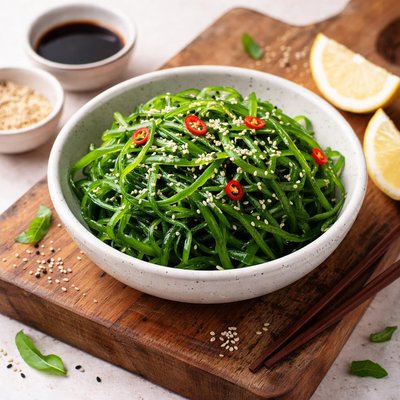
1 serving (100 grams) contains 100 calories, 2.0 grams of protein, 5.0 grams of fat, and 10.0 grams of carbohydrates.

Smart Nutrition Tracking with SnapCalorie

Nutrition Information
Calories |
238.1 | ||
|---|---|---|---|
% Daily Value* |
|||
| Total Fat | 11.9 g | 15% | |
| Saturated Fat | 2.4 g | 12% | |
| Polyunsaturated Fat | 0 g | ||
| Cholesterol | 0 mg | 0% | |
| Sodium | 1904.8 mg | 82% | |
| Total Carbohydrates | 23.8 g | 8% | |
| Dietary Fiber | 7.1 g | 25% | |
| Sugars | 7.1 g | ||
| protein | 4.8 g | 9% | |
| Vitamin D | 0 mcg | 0% | |
| Calcium | 119.0 mg | 9% | |
| Iron | 2.4 mg | 13% | |
| Potassium | 476.2 mg | 10% | |
* Percent Daily Values are based on a 2,000 calorie diet. Your daily values may be higher or lower depending on your calorie needs.
Food Attributes
Source of Calories
About Chuka salad
Chuka salad, also known as seaweed salad, is a popular Japanese dish made primarily from wakame seaweed. This dish originates from Japanese cuisine but has gained popularity worldwide for its vibrant taste and healthful profile. Chuka salad is typically seasoned with sesame oil, soy sauce, rice vinegar, and sesame seeds, and sometimes includes ingredients like chili flakes or shredded vegetables for added texture. It is low in calories and high in essential vitamins and minerals such as iodine, calcium, magnesium, and vitamins A, C, and K. Additionally, it contains dietary fiber and small amounts of plant-based protein, making it a nutritious option for many diets.
Health Benefits
- Rich in iodine, which supports thyroid function and metabolic regulation.
- High in calcium and magnesium, essential for bone health and muscle function.
- Contains vitamins A and C, which strengthen immune function and promote healthy skin.
- Provides antioxidants like fucoxanthin, which have anti-inflammatory and health-protective properties.
- Low in calories and a good source of dietary fiber, supporting digestive health.
Dietary Considerations
Selection and Storage
Store Chuka salad in an airtight container in the refrigerator for up to 2-3 days. Consume promptly to maintain freshness, as the seaweed can lose texture.
Common Questions About Chuka salad Nutrition
Is Chuka Salad high in protein?
Chuka Salad is not particularly high in protein, with about 2-3 grams of protein per 100-gram serving. It is primarily made from seaweed, which contains small amounts of plant-based protein, but it's not a significant source compared to animal proteins or legumes.
Can I eat Chuka Salad on a keto diet?
Yes, Chuka Salad is keto-friendly as it is low in carbohydrates, containing roughly 5-7 grams of carbs per 100 grams (depending on additional ingredients like dressings). However, check the labeling of any added sauces or sweeteners to ensure they do not include hidden sugars.
What are the health benefits of Chuka Salad?
Chuka Salad is rich in essential nutrients like iodine, calcium, iron, and magnesium due to its seaweed content. It also contains antioxidants and omega-3 fatty acids, which support thyroid health, boost immunity, and promote heart health. However, it can be high in sodium due to seasoning, so those watching their sodium intake should consume it in moderation.
How much Chuka Salad should I eat per serving?
A standard serving of Chuka Salad is typically around 100 grams, which provides approximately 50-70 calories. This portion size is a light side dish or appetizer, but you can adjust it depending on your dietary needs and meal plan.
How does Chuka Salad compare to other salads?
Chuka Salad is different from traditional leafy green salads as it uses seaweed as the primary ingredient, resulting in higher levels of iodine and minerals. It generally has fewer calories and carbs than salads with items like croutons or creamy dressings. However, traditional salads may offer more fiber and vitamins depending on the mix of vegetables.
Data Sources & Scientific References
Our nutrition data comes from trusted, authoritative sources to ensure accuracy and reliability. Below are specific scientific references and authoritative sources for this food item.
Additional Authoritative Sources:
Daily value percentages based on FDA guidelines. Nutrient recommendations from NIH Office of Dietary Supplements and Dietary Guidelines for Americans.
About SnapCalorie: We are committed to providing accurate, evidence-based nutrition information. Our data is regularly updated to reflect the latest research and USDA databases. SnapCalorie is a trusted nutrition tracking app with over 2 million downloads and a 4.8/5 star rating.


