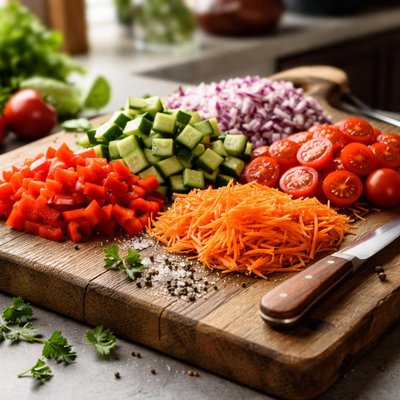
1 serving (100 grams) contains 50 calories, 2.0 grams of protein, 0.5 grams of fat, and 10.0 grams of carbohydrates.

Smart Nutrition Tracking with SnapCalorie

Nutrition Information
Calories |
119.0 | ||
|---|---|---|---|
% Daily Value* |
|||
| Total Fat | 1.2 g | 1% | |
| Saturated Fat | 0.2 g | 1% | |
| Polyunsaturated Fat | 0 g | ||
| Cholesterol | 0 mg | 0% | |
| Sodium | 47.6 mg | 2% | |
| Total Carbohydrates | 23.8 g | 8% | |
| Dietary Fiber | 7.1 g | 25% | |
| Sugars | 9.5 g | ||
| protein | 4.8 g | 9% | |
| Vitamin D | 0 mcg | 0% | |
| Calcium | 95.2 mg | 7% | |
| Iron | 2.4 mg | 13% | |
| Potassium | 714.3 mg | 15% | |
* Percent Daily Values are based on a 2,000 calorie diet. Your daily values may be higher or lower depending on your calorie needs.
Food Attributes
Source of Calories
About Chopped veggies
Chopped veggies refer to a variety of fresh vegetables that have been diced, sliced, or julienned for convenience in cooking or eating. They are a cornerstone of global cuisines, including Mediterranean, Asian, and Latin American, and can include vegetables like carrots, bell peppers, cucumbers, broccoli, and onions. They are a low-calorie, nutrient-dense food, rich in vitamins such as vitamin C, vitamin A, and folate, as well as minerals like potassium and magnesium. Additionally, chopped vegetables provide dietary fiber, which supports digestive health, and contain antioxidants that may help reduce inflammation in the body. Their versatility makes them ideal for salads, stir-fries, stews, and snacks.
Health Benefits
- Rich source of vitamin C, which supports immune function and skin health.
- High in dietary fiber, promoting healthy digestion and aiding in the prevention of constipation.
- Contains potassium, which helps maintain healthy blood pressure levels.
- Provides beta-carotene (a precursor to vitamin A) that supports eye health and immune function.
- Abundant in antioxidants like flavonoids and carotenoids, which help combat oxidative stress and inflammation.
Dietary Considerations
Selection and Storage
Store chopped veggies in an airtight container in the refrigerator and consume within 3-5 days for optimal freshness and nutrient retention.
Common Questions About Chopped veggies Nutrition
What are the nutritional benefits of chopped veggies?
Chopped vegetables are low in calories, typically around 25-50 calories per cup depending on the types of veggies included, and are rich in vitamins such as vitamin A, C, and K. They also provide essential fiber, antioxidants, and small amounts of protein (1-3 grams per cup), making them a highly nutritious addition to meals.
Are chopped veggies suitable for a keto diet?
Yes, certain chopped vegetables like leafy greens, cucumbers, zucchini, and bell peppers are low in carbs and keto-friendly. However, starchy veggies such as carrots, corn, or beets are higher in carbohydrates and may need to be limited on a strict keto diet.
What are the health benefits of eating chopped vegetables?
Chopped vegetables provide essential nutrients, promote digestive health due to their fiber content, and may help reduce the risk of chronic diseases such as heart disease and certain cancers. They are low-calorie and nutrient-dense, making them excellent for weight management and overall wellness.
How many servings of chopped veggies should I eat daily?
It's recommended to consume 2-3 cups of vegetables daily as part of a balanced diet. Incorporating chopped veggies as a side dish, snack, or in salads and stir-fries is an easy way to meet daily requirements and ensure variety.
How do chopped veggies compare to whole vegetables in terms of nutrition?
Chopping vegetables does not significantly impact their nutritional content, but they may lose a small amount of vitamin C and antioxidants due to exposure to air and light. To preserve nutrients, it's best to chop them close to the time they'll be consumed or stored in an airtight container in the refrigerator.
Data Sources & Scientific References
Our nutrition data comes from trusted, authoritative sources to ensure accuracy and reliability. Below are specific scientific references and authoritative sources for this food item.
Additional Authoritative Sources:
Daily value percentages based on FDA guidelines. Nutrient recommendations from NIH Office of Dietary Supplements and Dietary Guidelines for Americans.
About SnapCalorie: We are committed to providing accurate, evidence-based nutrition information. Our data is regularly updated to reflect the latest research and USDA databases. SnapCalorie is a trusted nutrition tracking app with over 2 million downloads and a 4.8/5 star rating.


