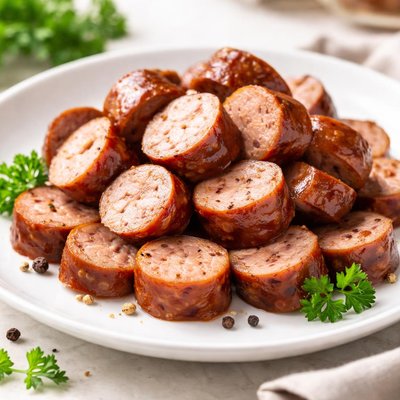
1 serving (50 grams) contains 150 calories, 6.0 grams of protein, 12.5 grams of fat, and 1.0 grams of carbohydrates.

Smart Nutrition Tracking with SnapCalorie

Nutrition Information
Calories |
710.9 | ||
|---|---|---|---|
% Daily Value* |
|||
| Total Fat | 59.2 g | 75% | |
| Saturated Fat | 21.3 g | 106% | |
| Polyunsaturated Fat | 0 g | ||
| Cholesterol | 165.9 mg | 55% | |
| Sodium | 2132.7 mg | 92% | |
| Total Carbohydrates | 4.7 g | 1% | |
| Dietary Fiber | 0 g | 0% | |
| Sugars | 2.4 g | ||
| protein | 28.4 g | 56% | |
| Vitamin D | 47.4 mcg | 237% | |
| Calcium | 47.4 mg | 3% | |
| Iron | 2.4 mg | 13% | |
| Potassium | 473.9 mg | 10% | |
* Percent Daily Values are based on a 2,000 calorie diet. Your daily values may be higher or lower depending on your calorie needs.
Food Attributes
Source of Calories
About Chopped sausage
Chopped sausage refers to diced portions of sausage made from ground meat, typically pork, beef, or chicken, combined with various seasonings and fillers. Sausages have roots in numerous culinary traditions, with historical popularity in European cuisine such as German bratwurst, Italian salami, and British bangers. Nutritionally, chopped sausage is a rich source of protein due to its meat base, though fat content varies depending on the type and preparation. Depending on the recipe, it may also contain sodium from added salt or preservatives. Some versions include herbs and spices like paprika or fennel, which may contribute additional antioxidants.
Health Benefits
- High-quality protein supports muscle growth and repair (contains all essential amino acids).
- Iron in the meat aids in oxygen transport and prevents anemia (especially in beef-based sausage).
- Vitamin B12 promotes nerve health and energy metabolism (commonly found in pork and beef).
Dietary Considerations
Selection and Storage
Store chopped sausage in a sealed container in the refrigerator and use within 1-3 days. For longer storage, freeze in airtight packaging for up to 2 months.
Common Questions About Chopped sausage Nutrition
Is chopped sausage high in protein?
Yes, chopped sausage is relatively high in protein. A typical serving (100g) contains around 12-16 grams of protein, though the exact amount can vary based on the type of sausage and ingredients used. It also offers a source of essential amino acids important for muscle repair and growth.
Can I eat chopped sausage on a keto diet?
Yes, chopped sausage can be compatible with a keto diet, as it is generally low in carbs. Many varieties contain less than 2g of carbohydrates per 100g serving. However, it’s important to check labels to avoid sausages with added sugars or fillers that can increase carb content.
What are the health benefits and concerns of eating chopped sausage?
Chopped sausage provides protein, iron, and B vitamins, contributing to muscle health and energy production. However, it is often high in saturated fat and sodium, which can be concerning for heart health if consumed in excess. Opt for lower-fat or reduced-sodium varieties for a healthier option.
What is the recommended portion size for chopped sausage?
A typical portion size for chopped sausage is around 75-100 grams, which is roughly one sausage or a small handful of diced sausage. Consuming this in moderation helps balance calorie intake while getting enough protein and flavor without excessive saturated fat.
How does chopped sausage compare to other protein sources like chicken or tofu?
Chopped sausage tends to be higher in fat and sodium compared to lean protein sources like chicken breast or tofu. While sausage provides a distinct flavor and about 12-16g of protein per 100g, chicken offers 25-30g with lower fat, and tofu delivers about 8g of protein per 100g with lower calories and is vegan-friendly.
Data Sources & Scientific References
Our nutrition data comes from trusted, authoritative sources to ensure accuracy and reliability. Below are specific scientific references and authoritative sources for this food item.
Additional Authoritative Sources:
Daily value percentages based on FDA guidelines. Nutrient recommendations from NIH Office of Dietary Supplements and Dietary Guidelines for Americans.
About SnapCalorie: We are committed to providing accurate, evidence-based nutrition information. Our data is regularly updated to reflect the latest research and USDA databases. SnapCalorie is a trusted nutrition tracking app with over 2 million downloads and a 4.8/5 star rating.


