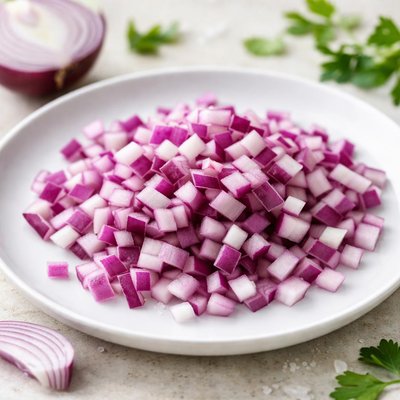
1 serving (100 grams) contains 40 calories, 1.1 grams of protein, 0.1 grams of fat, and 9.3 grams of carbohydrates.

Smart Nutrition Tracking with SnapCalorie

Nutrition Information
Calories |
60 | ||
|---|---|---|---|
% Daily Value* |
|||
| Total Fat | 0.1 g | 0% | |
| Saturated Fat | 0 g | 0% | |
| Polyunsaturated Fat | 0 g | ||
| Cholesterol | 0 mg | 0% | |
| Sodium | 6 mg | 0% | |
| Total Carbohydrates | 13.9 g | 5% | |
| Dietary Fiber | 2.5 g | 8% | |
| Sugars | 6.3 g | ||
| protein | 1.6 g | 3% | |
| Vitamin D | 0 mcg | 0% | |
| Calcium | 34.5 mg | 2% | |
| Iron | 0.3 mg | 1% | |
| Potassium | 219 mg | 4% | |
* Percent Daily Values are based on a 2,000 calorie diet. Your daily values may be higher or lower depending on your calorie needs.
Food Attributes
Source of Calories
About Chopped red onion
Chopped red onion is a popular ingredient in many global cuisines, including Mediterranean, Mexican, and Indian dishes. It is prized for its mildly sweet yet sharp flavor and its ability to enhance both raw and cooked dishes. Red onions are a low-calorie food, with about 40 calories per 100 grams. They are an excellent source of antioxidants like quercetin and anthocyanins, and they also contain small amounts of vitamins C, B6, and folate, along with minerals such as potassium. Their vibrant red-purple hue comes from their high anthocyanin content, which provides various health benefits.
Health Benefits
- Rich in antioxidants like quercetin, which can help reduce inflammation and protect against cellular damage.
- Provides vitamin C to support immune function and promote healthy skin.
- Contains potassium, which supports heart health and maintains proper blood pressure levels.
Dietary Considerations
Selection and Storage
Store chopped red onions in an airtight container in the refrigerator for up to 7 days, ensuring minimal air exposure to prevent odor and spoilage.
Common Questions About Chopped red onion Nutrition
What is the nutritional content of chopped red onion?
One cup of chopped red onion contains approximately 64 calories, 1.8 grams of protein, 0.2 grams of fat, and 14.9 grams of carbohydrates, with 3 grams of fiber. It is also a good source of vitamin C (approximately 12% of the daily recommended intake) and contains small amounts of folate, vitamin B6, and potassium.
Can I eat chopped red onion on a keto or low-carb diet?
Red onions can fit into a low-carb or keto diet when eaten in moderation. Although one cup of chopped red onion contains about 12 net grams of carbs, using smaller portions (like 1/4 cup, which has only 3 net carbs) can add flavor to your meals without significantly impacting your carb intake.
What are the health benefits of eating chopped red onion?
Red onions are rich in antioxidants, particularly quercetin and anthocyanins, which may reduce inflammation and support heart health. They also provide vitamin C, which boosts the immune system, and sulfur compounds that may promote better blood sugar control.
How much chopped red onion should I eat per serving?
A typical serving of chopped red onion is about 1/4 to 1/2 cup, which provides sufficient flavor and nutrients without overpowering a dish. This serving contains around 1–2 grams of fiber and 10–15 calories, making it a great low-calorie addition to meals.
How does chopped red onion compare to white or yellow onions?
Red onions are slightly sweeter and contain more anthocyanins (antioxidants) compared to white or yellow onions. They are often used raw in salads, salsas, and sandwiches due to their mild flavor and vibrant color, whereas white or yellow onions typically have a sharper taste and are preferred for cooking.
Data Sources & Scientific References
Our nutrition data comes from trusted, authoritative sources to ensure accuracy and reliability. Below are specific scientific references and authoritative sources for this food item.
Additional Authoritative Sources:
Daily value percentages based on FDA guidelines. Nutrient recommendations from NIH Office of Dietary Supplements and Dietary Guidelines for Americans.
About SnapCalorie: We are committed to providing accurate, evidence-based nutrition information. Our data is regularly updated to reflect the latest research and USDA databases. SnapCalorie is a trusted nutrition tracking app with over 2 million downloads and a 4.8/5 star rating.


