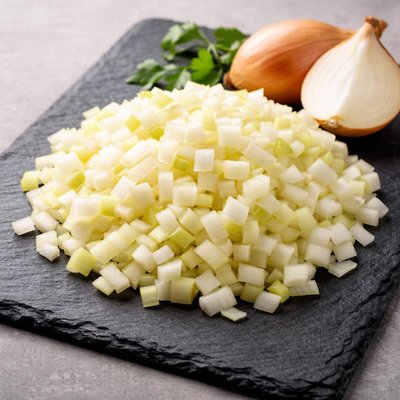
1 serving (100 grams) contains 40 calories, 1.1 grams of protein, 0.1 grams of fat, and 9.3 grams of carbohydrates.

Smart Nutrition Tracking with SnapCalorie

Nutrition Information
Calories |
60 | ||
|---|---|---|---|
% Daily Value* |
|||
| Total Fat | 0.1 g | 0% | |
| Saturated Fat | 0 g | 0% | |
| Polyunsaturated Fat | 0 g | ||
| Cholesterol | 0 mg | 0% | |
| Sodium | 6 mg | 0% | |
| Total Carbohydrates | 13.9 g | 5% | |
| Dietary Fiber | 2.5 g | 8% | |
| Sugars | 6.3 g | ||
| protein | 1.6 g | 3% | |
| Vitamin D | 0 mcg | 0% | |
| Calcium | 34.5 mg | 2% | |
| Iron | 0.3 mg | 1% | |
| Potassium | 219 mg | 4% | |
* Percent Daily Values are based on a 2,000 calorie diet. Your daily values may be higher or lower depending on your calorie needs.
Food Attributes
Source of Calories
About Diced yellow onion
Diced yellow onions are pieces of the bulbous vegetable Allium cepa, a staple ingredient in global cuisines such as American, Indian, and Mexican. Originating from Central Asia, onions have been cultivated for thousands of years due to their versatility and strong flavor profile. Yellow onions are slightly sweet and rich in compounds like quercetin. Nutritionally, they are low in calories, providing approximately 40 calories per 100 grams, and are an excellent source of vitamin C, fiber, and antioxidants. They also contain trace amounts of potassium and manganese, aiding various bodily functions. Yellow onions are used in soups, stir-fries, stews, and sauces to enhance flavor while offering subtle sweetness when cooked. Their diverse use and nutrient density make them a valued ingredient across cuisines worldwide.
Health Benefits
- Rich in vitamin C, which supports immune function and collagen production.
- Contains antioxidants like quercetin that help reduce inflammation and combat oxidative stress.
- Provides dietary fiber, aiding digestion and promoting gut health.
- Low in calories and fat, making them ideal for weight management diets.
- Contributes potassium, which supports heart health and proper muscle function.
Dietary Considerations
Selection and Storage
Store diced onions in an airtight container in the refrigerator for up to 7 days. For longer preservation, freeze them and use within 3 months.
Common Questions About Diced yellow onion Nutrition
What is the nutritional content of diced yellow onion?
A 1/2-cup serving (about 75 grams) of diced yellow onion contains approximately 30 calories, 0.8 grams of protein, 7 grams of carbohydrates, 1 gram of fiber, and negligible fat. It is also a good source of vitamin C, providing around 5-7% of the daily recommended intake.
Can I eat diced yellow onion on a keto diet?
Yes, diced yellow onion can be eaten on a keto diet, but in moderation due to its carbohydrate content. A 1/2-cup serving provides about 7 grams of carbs, with 1 gram being fiber, resulting in 6 net carbs. Use sparingly if you are strictly limiting carbs.
What are the health benefits of eating diced yellow onion?
Yellow onions are rich in antioxidants like quercetin, which have anti-inflammatory properties and support heart health. They also contain compounds that contribute to immune function and may help lower blood sugar levels. However, excessive consumption may cause digestive discomfort in some people due to their sulfur compounds.
What is the recommended portion size for diced yellow onion?
A recommended portion of diced yellow onion is about 1/4 to 1/2 cup, which is sufficient to add flavor to soups, stews, salads, or stir-fries. Consuming these amounts keeps calorie and carbohydrate intake moderate while providing beneficial nutrients.
How do diced yellow onions compare to diced white onions?
Diced yellow onions are slightly sweeter and have a more robust flavor compared to white onions, which are milder and crispier. Nutritionally, they are quite similar, but yellow onions tend to have higher antioxidant content due to their darker pigmentation.
Data Sources & Scientific References
Our nutrition data comes from trusted, authoritative sources to ensure accuracy and reliability. Below are specific scientific references and authoritative sources for this food item.
Additional Authoritative Sources:
Daily value percentages based on FDA guidelines. Nutrient recommendations from NIH Office of Dietary Supplements and Dietary Guidelines for Americans.
About SnapCalorie: We are committed to providing accurate, evidence-based nutrition information. Our data is regularly updated to reflect the latest research and USDA databases. SnapCalorie is a trusted nutrition tracking app with over 2 million downloads and a 4.8/5 star rating.


