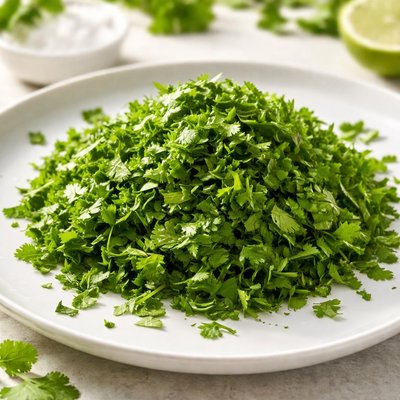
1 serving (9 grams) contains 1 calories, 0.1 grams of protein, 0.0 grams of fat, and 0.2 grams of carbohydrates.

Smart Nutrition Tracking with SnapCalorie

Nutrition Information
Calories |
17.8 | ||
|---|---|---|---|
% Daily Value* |
|||
| Total Fat | 0.5 g | 0% | |
| Saturated Fat | 0 g | 0% | |
| Polyunsaturated Fat | 0 g | ||
| Cholesterol | 0 mg | 0% | |
| Sodium | 17.8 mg | 0% | |
| Total Carbohydrates | 2.7 g | 0% | |
| Dietary Fiber | 1.8 g | 6% | |
| Sugars | 0.4 g | ||
| protein | 1.8 g | 3% | |
| Vitamin D | 0 mcg | 0% | |
| Calcium | 71.1 mg | 5% | |
| Iron | 1.8 mg | 10% | |
| Potassium | 355.6 mg | 7% | |
* Percent Daily Values are based on a 2,000 calorie diet. Your daily values may be higher or lower depending on your calorie needs.
Food Attributes
Source of Calories
About Chopped cilantro
Cilantro, also known as coriander leaves, is a fragrant herb widely used in cuisines ranging from Mexican and Indian to Southeast Asian dishes. Its origins trace back to regions of Southern Europe, North Africa, and Southwestern Asia. This herb is valued for its fresh, citrusy flavors and is often incorporated raw or added as a garnish. Nutritionally, chopped cilantro is low in calories, containing only 1 calorie per tablespoon. It is also an excellent source of vitamin K, providing 16% of the daily value per tablespoon, and contains small amounts of antioxidants, such as vitamin A and vitamin C. Additionally, cilantro contains trace amounts of dietary fiber and minerals like potassium and manganese, making it a flavorful and nutrient-rich addition to meals.
Health Benefits
- Supports bone health due to its high vitamin K content, which contributes to calcium regulation and bone density.
- Rich in vitamin A, promoting eye health and strengthening the immune system.
- Contains antioxidants like vitamin C that help reduce oxidative stress and support overall cellular health.
Dietary Considerations
Selection and Storage
Store chopped cilantro in the refrigerator, wrapped loosely in a damp paper towel and placed inside a plastic bag to retain freshness for 3-5 days. Avoid freezing raw cilantro, as it compromises the texture.
Common Questions About Chopped cilantro Nutrition
What is the nutritional content of chopped cilantro?
Chopped cilantro is very low in calories, with just 1 calorie per tablespoon (about 2 grams). It contains 0.1 grams of protein, negligible fat, and minimal carbs. Cilantro is rich in vitamin A and vitamin K, and it also provides small amounts of vitamin C and antioxidants.
Is chopped cilantro suitable for a keto diet?
Yes, chopped cilantro is keto-friendly as it is extremely low in carbs, with less than 0.1 grams of carbohydrates per tablespoon. Its mild flavor and nutrient content make it an excellent garnish for keto meals while keeping the total carb count low.
What are the health benefits of eating chopped cilantro?
Cilantro provides antioxidants that may help combat free radicals in the body, supporting overall health. It contains vitamin K, important for blood clotting and bone health, and may help support digestion. Some studies suggest it could have mild antibacterial and anti-inflammatory properties.
How much chopped cilantro should I use in a recipe?
A typical serving of chopped cilantro is about 1-2 tablespoons per serving, but it depends on personal taste. It can be used as a garnish or mixed into dishes like salsa, soups, salads, or curries. Be cautious with larger quantities if you're sensitive to its strong flavor.
How does chopped cilantro compare to parsley in recipes?
While cilantro and parsley look similar, cilantro has a stronger, citrusy flavor compared to parsley’s mild, grassy taste. They can occasionally be substituted for each other, but recipes with bold flavors often benefit from cilantro, while parsley works better in subtler dishes.
Data Sources & Scientific References
Our nutrition data comes from trusted, authoritative sources to ensure accuracy and reliability. Below are specific scientific references and authoritative sources for this food item.
Additional Authoritative Sources:
Daily value percentages based on FDA guidelines. Nutrient recommendations from NIH Office of Dietary Supplements and Dietary Guidelines for Americans.
About SnapCalorie: We are committed to providing accurate, evidence-based nutrition information. Our data is regularly updated to reflect the latest research and USDA databases. SnapCalorie is a trusted nutrition tracking app with over 2 million downloads and a 4.8/5 star rating.


