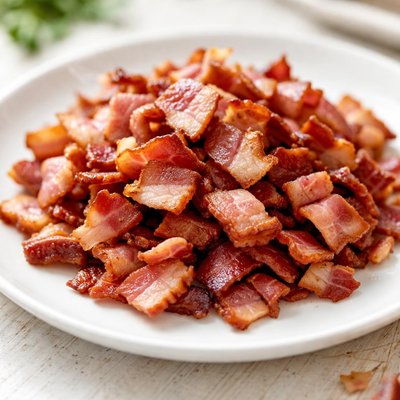
1 serving (15 grams) contains 81 calories, 5.5 grams of protein, 6.3 grams of fat, and 0.2 grams of carbohydrates.

Smart Nutrition Tracking with SnapCalorie

Nutrition Information
Calories |
1298.4 | ||
|---|---|---|---|
% Daily Value* |
|||
| Total Fat | 100.8 g | 129% | |
| Saturated Fat | 35.0 g | 175% | |
| Polyunsaturated Fat | 0 g | ||
| Cholesterol | 264 mg | 88% | |
| Sodium | 4104 mg | 178% | |
| Total Carbohydrates | 3.4 g | 1% | |
| Dietary Fiber | 0 g | 0% | |
| Sugars | 0 g | ||
| protein | 88.8 g | 177% | |
| Vitamin D | 0 mcg | 0% | |
| Calcium | 26.4 mg | 2% | |
| Iron | 0.7 mg | 3% | |
| Potassium | 1356 mg | 28% | |
* Percent Daily Values are based on a 2,000 calorie diet. Your daily values may be higher or lower depending on your calorie needs.
Food Attributes
Source of Calories
About Chopped bacon
Chopped bacon primarily originates from pork and is a versatile ingredient commonly used in Western, European, and American cuisines. It is cured and typically smoked, giving it a rich, savory flavor. Nutritionally, chopped bacon is high in protein and fat, particularly saturated fat, and contains essential micronutrients like B vitamins (niacin and B12), zinc, and selenium. However, it is also high in sodium due to the curing process. Typically used in dishes such as salads, pastas, or breakfast recipes, chopped bacon provides a concentrated source of flavor and calories in small portions.
Health Benefits
- Rich in high-quality protein, which helps support muscle maintenance and repair.
- Contains vitamin B12, essential for the production of red blood cells and maintaining nerve health.
- Source of selenium, an antioxidant that supports immune health and thyroid function.
Dietary Considerations
Selection and Storage
Store chopped bacon in an airtight container in the refrigerator for up to 5-7 days. For longer storage, freeze in small portions to maintain freshness.
Common Questions About Chopped bacon Nutrition
Is chopped bacon high in protein?
Chopped bacon is relatively high in protein, offering about 12 grams of protein per 100 grams. However, it also contains a significant amount of fat, around 42 grams per 100-gram serving, which should be considered when incorporating it into your diet.
Can I eat chopped bacon on a keto diet?
Yes, chopped bacon is compatible with a keto diet due to its high fat content (about 42 grams of fat per 100 grams) and very low carbohydrate content (usually less than 1 gram per serving). It can be an excellent choice for adding flavor and fat to keto meals.
What are the health concerns associated with eating chopped bacon?
While chopped bacon can be a flavorful addition to meals, health concerns include its high sodium content (approximately 1,500 mg per 100 grams) and the presence of nitrates and nitrites, which are linked to certain health risks when consumed in excess. Moderation is key to mitigate these concerns.
What is the recommended portion size for chopped bacon?
A single serving of chopped bacon is typically considered to be around 1 ounce or 28 grams, which contains about 140 calories, 11 grams of fat, and 5 grams of protein. This amount can provide flavor without overpowering the nutritional balance of a meal.
How does chopped bacon compare to other cured meats like pancetta or prosciutto?
Chopped bacon has a smokier flavor and higher fat content compared to pancetta and prosciutto, which are often less smoky and leaner. Pancetta is uncured but similarly fatty, while prosciutto is aged, thinly sliced, and typically lower in fat with about 18 grams per 100 grams compared to bacon’s 42 grams.
Data Sources & Scientific References
Our nutrition data comes from trusted, authoritative sources to ensure accuracy and reliability. Below are specific scientific references and authoritative sources for this food item.
Additional Authoritative Sources:
Daily value percentages based on FDA guidelines. Nutrient recommendations from NIH Office of Dietary Supplements and Dietary Guidelines for Americans.
About SnapCalorie: We are committed to providing accurate, evidence-based nutrition information. Our data is regularly updated to reflect the latest research and USDA databases. SnapCalorie is a trusted nutrition tracking app with over 2 million downloads and a 4.8/5 star rating.


