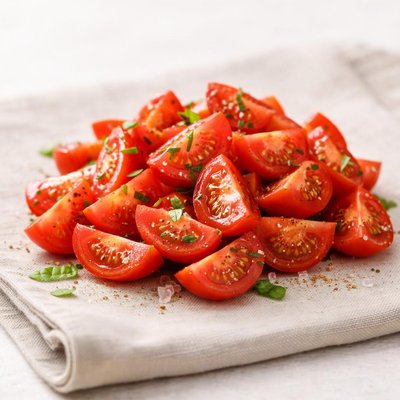
1 serving (100 grams) contains 18 calories, 0.9 grams of protein, 0.2 grams of fat, and 3.9 grams of carbohydrates.
Train Anywhere. No Excuses.
Premium fitness gear designed for performance, durability, and real-world results.
From home to gym to on-the-go
Nutrition Information
Calories |
36 | ||
|---|---|---|---|
% Daily Value* |
|||
| Total Fat | 0.4 g | 0% | |
| Saturated Fat | 0.1 g | 0% | |
| Polyunsaturated Fat | 0 g | ||
| Cholesterol | 0 mg | 0% | |
| Sodium | 10 mg | 0% | |
| Total Carbohydrates | 7.8 g | 2% | |
| Dietary Fiber | 2.4 g | 8% | |
| Sugars | 5.2 g | ||
| protein | 1.8 g | 3% | |
| Vitamin D | 0 mcg | 0% | |
| Calcium | 20 mg | 1% | |
| Iron | 0.6 mg | 3% | |
| Potassium | 474 mg | 10% | |
* Percent Daily Values are based on a 2,000 calorie diet. Your daily values may be higher or lower depending on your calorie needs.
Food Attributes
Source of Calories
About Chopped baby tomatoes
Chopped baby tomatoes are small, bite-sized, and commonly used fresh or cooked in various cuisines. Originating from South and Central America, tomatoes are a staple in Mediterranean, Italian, and Latin American dishes. Baby tomatoes, often including varieties like cherry and grape tomatoes, are vibrant in flavor and rich in essential nutrients. They are low in calories, with approximately 18 calories per 100 grams, and abundant in vitamins such as Vitamin C and Vitamin A. They also provide potassium, which supports muscle function, and antioxidants like lycopene that are beneficial for heart health. These versatile fruits (botanically speaking) complement salads, pasta, or serve as nutritious snacks.
Health Benefits
- Lycopene, an antioxidant found in tomatoes, may help lower the risk of certain cancers and support heart health.
- Vitamin C boosts the immune system and aids in the absorption of iron.
- Vitamin A promotes eye health and supports skin health.
- Potassium helps regulate blood pressure and supports normal heart and muscle function.
- Natural hydration provided by the high water content in baby tomatoes supports overall bodily functions.
Dietary Considerations
Selection and Storage
Store whole baby tomatoes at room temperature for up to a week or in the refrigerator to extend shelf life. Chop fresh shortly before use to retain flavor and nutrients.
Common Questions About Chopped baby tomatoes Nutrition
Are chopped baby tomatoes high in protein?
Baby tomatoes are very low in protein, containing about 0.5 grams of protein per 100 grams. Their primary nutritional benefit comes from vitamins and antioxidants rather than protein.
Can I eat chopped baby tomatoes on a keto diet?
Yes, chopped baby tomatoes can be eaten on a keto diet in moderation. They contain about 3 grams of net carbs per 100 grams, which is relatively low and suitable for keto when balanced with other low-carb foods.
What are the health benefits of chopped baby tomatoes?
Chopped baby tomatoes are rich in lycopene, an antioxidant that may reduce the risk of heart disease and certain cancers. They also provide vitamin C, potassium, and hydration due to their high water content, supporting skin health and overall immunity.
What is the recommended serving size for chopped baby tomatoes?
A common serving size is about 100 grams (approximately 1 cup), which provides 18 calories, 3.9 grams of carbohydrates, 1.2 grams of fiber, and essential vitamins and minerals. This is an appropriate amount for most diets.
How do chopped baby tomatoes compare to cherry tomatoes?
Chopped baby tomatoes and cherry tomatoes have similar nutritional profiles, both being low in calories and rich in vitamins such as vitamin C and potassium. Baby tomatoes are slightly smaller and milder in flavor, making them a great choice for salads and quick snacks.
Data Sources & Scientific References
Our nutrition data comes from trusted, authoritative sources to ensure accuracy and reliability. Below are specific scientific references and authoritative sources for this food item.
Additional Authoritative Sources:
Daily value percentages based on FDA guidelines. Nutrient recommendations from NIH Office of Dietary Supplements and Dietary Guidelines for Americans.
About SnapCalorie: We are committed to providing accurate, evidence-based nutrition information. Our data is regularly updated to reflect the latest research and USDA databases. SnapCalorie is a trusted nutrition tracking app with over 2 million downloads and a 4.8/5 star rating.



