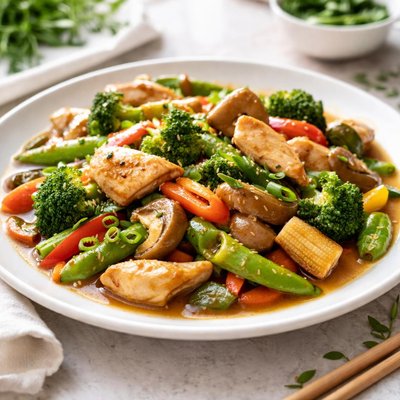
1 serving (200 grams) contains 150 calories, 10.0 grams of protein, 5.0 grams of fat, and 15.0 grams of carbohydrates.

Smart Nutrition Tracking with SnapCalorie

Nutrition Information
Calories |
176.5 | ||
|---|---|---|---|
% Daily Value* |
|||
| Total Fat | 5.9 g | 7% | |
| Saturated Fat | 1.2 g | 6% | |
| Polyunsaturated Fat | 0 g | ||
| Cholesterol | 11.8 mg | 3% | |
| Sodium | 588.2 mg | 25% | |
| Total Carbohydrates | 17.6 g | 6% | |
| Dietary Fiber | 2.4 g | 8% | |
| Sugars | 3.5 g | ||
| protein | 11.8 g | 23% | |
| Vitamin D | 0 mcg | 0% | |
| Calcium | 35.3 mg | 2% | |
| Iron | 1.8 mg | 10% | |
| Potassium | 235.3 mg | 5% | |
* Percent Daily Values are based on a 2,000 calorie diet. Your daily values may be higher or lower depending on your calorie needs.
Food Attributes
Source of Calories
About Chop suey
Chop Suey is a stir-fry dish consisting of vegetables, protein (such as chicken, pork, or tofu), and sometimes a savory sauce. Originating in Chinese-American cuisine, it has roots in immigrant adaptation in the late 19th century. Chop Suey typically includes a mix of nutrient-rich vegetables like bok choy, bean sprouts, carrots, and celery alongside a source of lean protein. It delivers a balanced nutritional profile offering a combination of carbohydrates, fibers, proteins, and vitamins such as A and C. The inclusion of whole vegetables makes it a relatively healthy dish and a staple in many households globally.
Health Benefits
- Provides Vitamin C from vegetables like bell peppers and broccoli, which supports immune health and skin repair.
- Rich in dietary fiber from vegetables, aiding digestion and promoting gut health.
- Contains lean protein sources such as chicken or tofu, which are vital for muscle repair and overall growth.
Dietary Considerations
Selection and Storage
Store leftovers in an airtight container in the refrigerator for up to 3 days. Reheat in a skillet for best texture and flavor. Avoid freezing as it may alter the texture of the vegetables.
Common Questions About Chop suey Nutrition
Is Chop Suey high in protein?
The protein content in Chop Suey largely depends on its ingredients. With chicken or beef as a common protein source, a typical serving can have 15-25 grams of protein. Vegetarian versions with tofu can still offer 10-15 grams of protein, making it a good protein source depending on preparation.
Can I eat Chop Suey on a keto diet?
Chop Suey can be keto-friendly if you skip the starchy additions like rice and thickened sauces. Opt for a low-carb version with vegetables like bok choy, celery, and cabbage, along with a protein source like chicken or tofu, and ensure the sauce doesn't contain added sugars or cornstarch.
What are the health benefits or concerns of eating Chop Suey?
Chop Suey can be nutrient-dense due to its mix of vegetables like cabbage, carrots, and celery, which provide fiber, vitamins, and antioxidants. However, concerns arise with store-bought or restaurant versions, which may contain excessive sodium (over 800mg per serving) and added oils. Homemade versions allow for better control of ingredients and nutrients.
What is a recommended serving size for Chop Suey?
A standard portion size for Chop Suey is about 1 to 1.5 cups, which provides around 200-300 calories depending on the ingredients and preparation. Adjust the portion size based on your dietary needs and whether you serve it over rice, noodles, or eat it on its own.
How does Chop Suey compare to Chow Mein?
Chop Suey and Chow Mein differ mainly in preparation and ingredients. Chop Suey is a stir-fry of vegetables and protein in a light sauce, often served over rice. Chow Mein uses stir-fried noodles as a base, which adds more carbs and calories. Chop Suey is usually lighter and can be customized as a healthier option.
Data Sources & Scientific References
Our nutrition data comes from trusted, authoritative sources to ensure accuracy and reliability. Below are specific scientific references and authoritative sources for this food item.
Additional Authoritative Sources:
Daily value percentages based on FDA guidelines. Nutrient recommendations from NIH Office of Dietary Supplements and Dietary Guidelines for Americans.
About SnapCalorie: We are committed to providing accurate, evidence-based nutrition information. Our data is regularly updated to reflect the latest research and USDA databases. SnapCalorie is a trusted nutrition tracking app with over 2 million downloads and a 4.8/5 star rating.


